Browse the page as: Customer
MENU
trapezoidal sheets, roof panels, roofing materials, roofs, metal roof tiles

What laboratory tests are roofing metal sheets subjected to? | The Facts About Roofs

Choosing a roof covering is one of the most important investment decisions, as it affects the safety and lifespan of the entire building. Despite its light weight, metal roofing must withstand heavy rainfall, wind, and fluctuating temperatures; therefore, every batch of material should undergo rigorous laboratory testing. Verifying technical properties is essential to ensure that the selected product will maintain its durability, aesthetic appeal, and full functionality, and that the associated roofing services will not require corrections due to material defects.
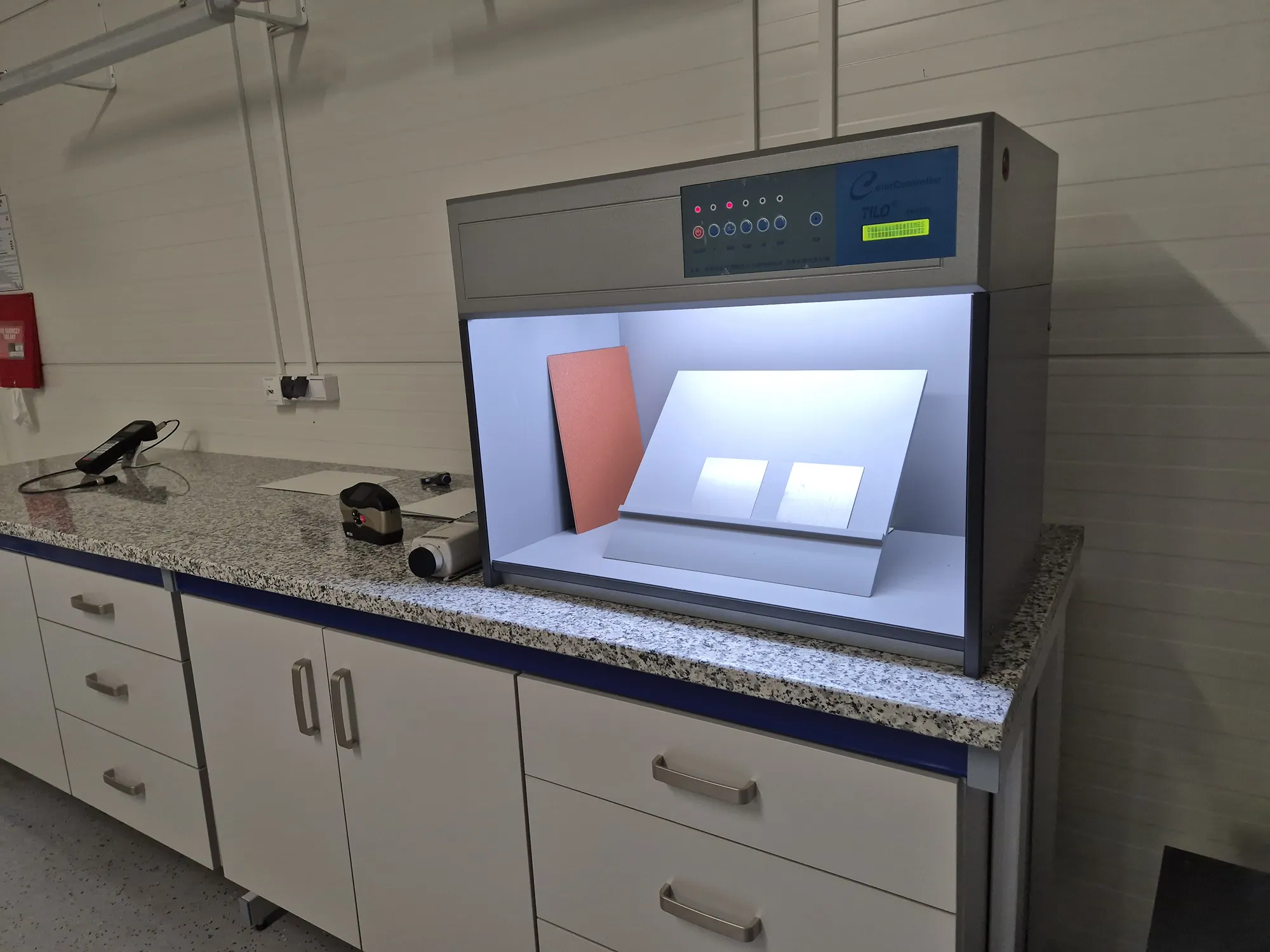
Blachy Pruszyński Company Laboratory

Blog and How-To Series – “Roofing in Practice”

In a series of articles, we’d like to introduce you to the specifics of roof construction—its physics, essential elements, key components, and the most common types of roofs found in Poland. The series,titled “The Ins and Outs of Roofs,will consist of separate, standalone posts, all aimed at familiarizing our customers with the topic of roofs. These posts are created in collaboration with our experts, professionals, and master roofers—who have been working in the field for many years—and are based on educational materials published by the Polish Roofers’ Association (PSD). If you are interested in learning more about this topic, we encourage you to contact the PSD and Roofing Training Centers directly, as well as to review the publications issued by the PSD.

In this article, you’ll learn about the testing stages roofing metal sheets go through before they reach the construction site—and why this knowledge matters when choosing a roofing material. Every batch of material from a reputable manufacturer is tested three times: at the raw material stage, during profiling, and after production is complete. It is in the laboratory—not on the roof after several seasons—that tests verify whether the zinc coating provides sufficient protection against corrosion, whether the paint will crack at the first frost, and whether the sheets will fit together properly once installed. In this article, you’ll find an explanation of how sheet metal compliant with PN-EN standards differs from a product based solely on an external certificate, what a zinc coating weight of 275 g/m² means, and why two sheets from the same manufacturer may differ in shade — and how to read the Declaration of Performance to make an informed assessment of a product’s quality before purchasing.

Why are laboratory tests crucial for the durability of a roof?

The production of roofing metal sheets is a complex process in which monitoring product quality is of the utmost importance. Advanced testing verifies whether the use of specific components ensures the product’s durability under varying climatic conditions. Testing allows for the detection of hidden defects in the material that would otherwise only become apparent after years of use. It is extremely important to verify the physical and chemical properties of products at every stage of production—from the delivery of raw materials to the finished product. As a result, the proper selection of materials becomes a fundamental part of the process rather than a matter of chance, which is crucial for the longevity of the structure. The testing methods used allow for ongoing monitoring of the entire sheet metal production process.

Remember! Proper testing is a key component of modern sheet metal quality control technology. Effectively detecting any nonconformities at this stage directly impacts the quality of the finished product.

Blachy Pruszyński Company Laboratory

What tests do roofing metal sheets undergo?

The production process for roofing metal sheets is a multi-step challenge in which quality testing is of critical importance. To meet stringent standards, manufacturers use various methods and techniques—they conduct systematic tests that are divided into three main stages. The quality verification methods employed ensure that the sheet metal’s specifications remain consistent at every stage of the production process.

  • Raw material testing (incoming inspection). Before the steel reaches the production line, each shipment of coils undergoes a multi-stage laboratory analysis—a proper technical evaluation of the feedstock helps eliminate potential risks right from the start. In addition to the critical core thickness and zinc coating weight (which determines corrosion resistance), the chemical composition of the steel and its mechanical properties, such as the yield strength, are also tested. The material’s resistance to the loads encountered during subsequent roll forming is also evaluated. Thanks to this detailed verification before production even begins, it is possible to reject batches of material that might not meet the rigorous quality requirements. The chemical stability and uniformity of the material’s mechanical properties are extremely important for the long-term durability of the metal roof, as well as for determining the forming limit curve — a parameter determined in the laboratory for each qualified batch of steel, which then serves as a reference point when setting up the profiling line.
  • Testing during profiling (production phase). During the forming of sheet metal, operators take samples from the line at regular intervals to perform a series of measurements. It is extremely important that the material entering the forming line have a previously determined (in the laboratory, during the raw material qualification stage)—a parameter describing the limits of steel deformation before cracks or necking occur. Knowledge of this parameter allows the machine’s roller pressures to be properly adjusted to the properties of a specific batch of material, which prevents the formation of microcracks in the steel’s structure—invisible to the naked eye—during profiling. At the same time, ongoing verification of dimensions (e.g., width, profile height, joint accuracy) is performed, ensuring a perfect fit of the sheet metal panels during Assembly. In addition, optical systems on the line monitor the continuity of the paint coating, detecting any scratches on the material or application defects caused by machine operation. This process utilizes modern measurement techniques that enable the rapid detection of irregularities.
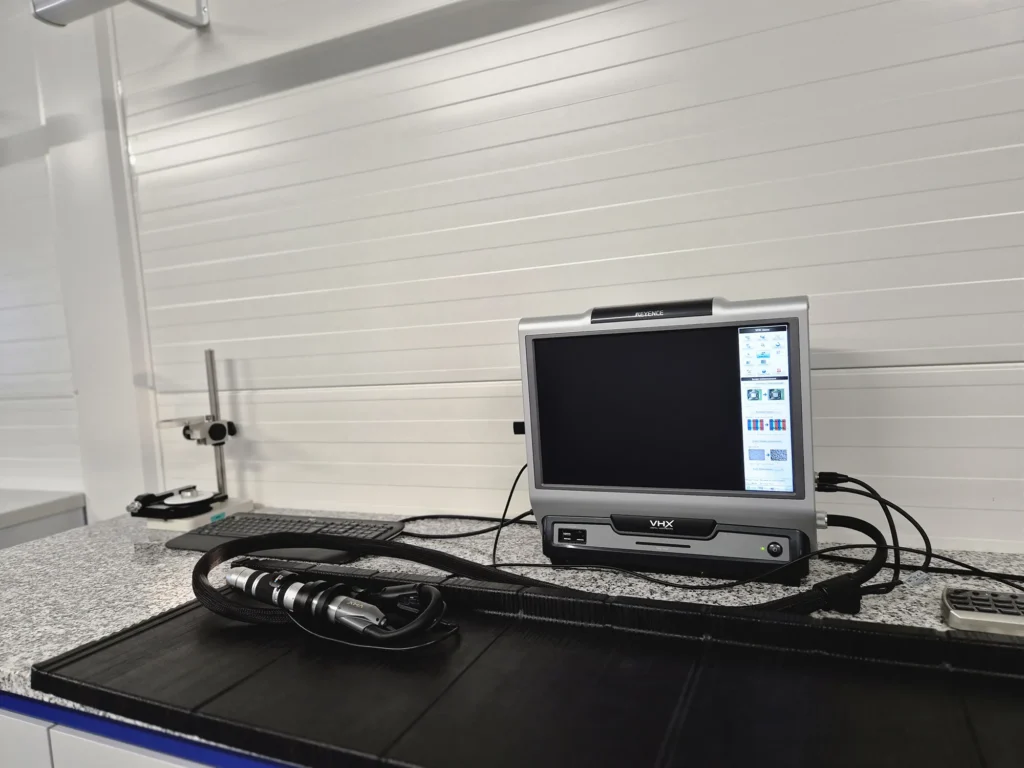
  • Testing of the finished product and paint coatings (final stage). Sheets are sampled from finished production batches for detailed laboratory testing. A bending test is performed (including the cylindrical mandrel method per ISO 1519 or the Erichsen test per ISO 1520), which verifies the flexibility and adhesion of the paint coating to the substrate after plastic deformation. This is supplemented by a cross-cut adhesion test (ISO 2409), in which a grid of lines cut through the coating down to the substrate reveals whether the paint peels away from the steel under stress. Other paint coating tests are also extremely important: the pencil hardness test (scratch resistance), gloss testing, and rigorous corrosion resistance testing in a salt spray chamber.The methods used allow for the assessment of accelerated material aging, which provides a precise answer to the question of how the paint will react to aggressive atmospheric conditions over the years. It is worth noting that the material’s mechanical properties, such as tensile strength, are verified during the raw material inspection stage, which ensures the consistency of the entire product’s properties. After testing is complete, each sheet of material is entered into the quality records. This makes it possible to verify the product’s declared performance characteristics even before it is launched on the market.

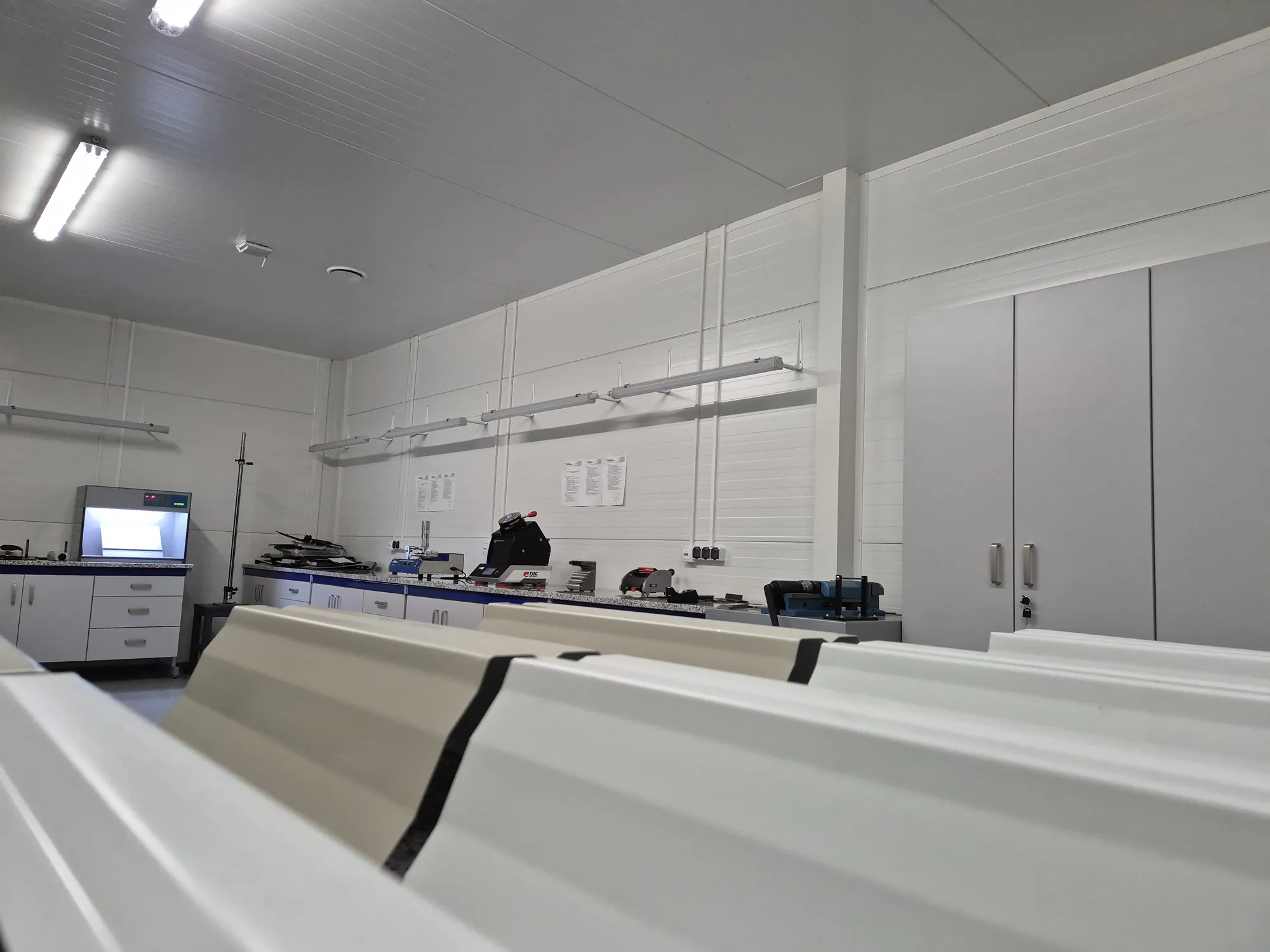
In practice, only the largest manufacturers, such as Blachy Pruszyński Company, use their own laboratories to continuously monitor sheet metal production. For them, testing the quality of raw materials is a way to avoid customer complaints. It is also extremely important to conduct additional tests at accredited foreign centers, which provides objective confirmation that the sheet metal products offered and the accompanying technical services meet the highest standards— which smaller processors—who rely solely on external certifications—are often unable to guarantee.

Attention! Conducting tests properly and selecting the appropriate measurement methods and technologies ensures the reliability of the results obtained.
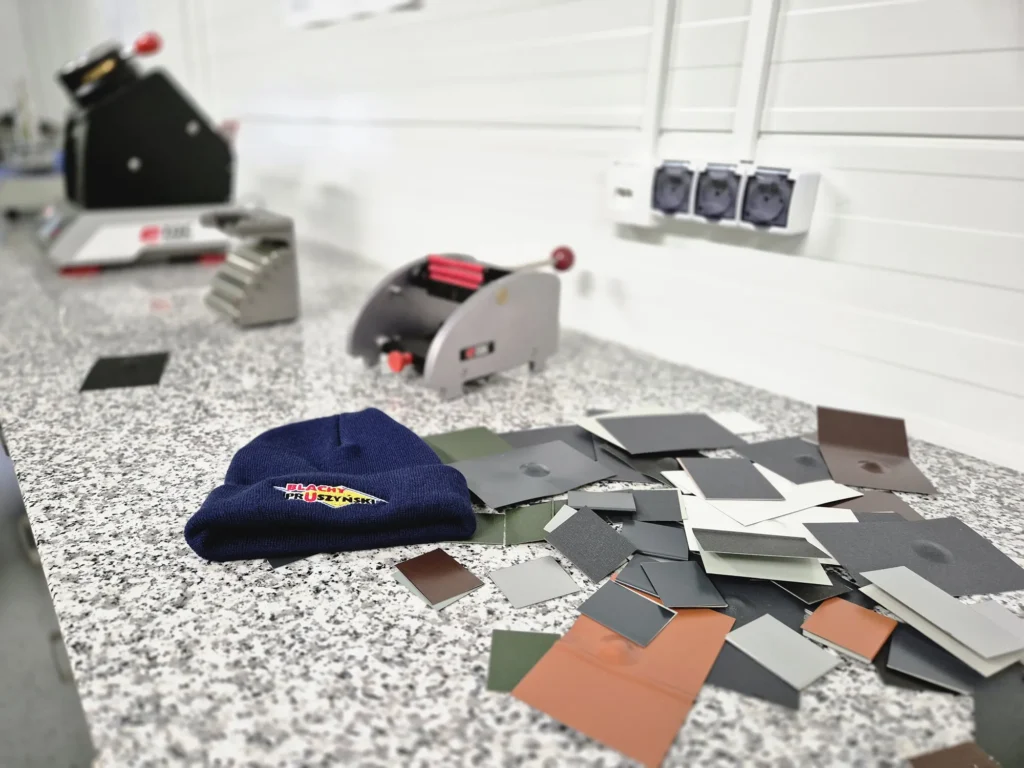
Blachy Pruszyński Company Laboratory

Why might two sheets of metal from the same manufacturer differ from one another?

Even when the technical specifications and coating are identical, steel sheets from different production runs may exhibit differences in geometry and shade. This is due to technical factors inherent in the production process, not to defects in the material.

  • Variability within the normative tolerance limits. Every batch of steel must meet strict standards, although these standards allow for a range of tolerances regarding chemical composition or core hardness. Forming machines are calibrated for a specific material resistance; using steel in the production process that exhibits even minimal variations in mechanical properties within the permissible range causes the material to react differently to the pressure exerted by the rollers, resulting in subtle differences in the profiling (e.g., in bending angles, embossing depths, or lock geometries). This also means slight differences in how the forming limit curve is shaped for individual batches of material.
  • The impactof the coil coating process. Differences in the perceived shade of the sheet metal result from the physics of the coating application process. Minimal variations in the thickness of the coating layer (measured in microns), differences in curing temperature in the oven (which affect the degree of gloss), and permissible color tolerances in different batches of coating chemicals cause light to reflect off the surface in different ways. Due to these technical factors, even colors with identical names may exhibit microscopic differences in gloss or color depth, which is unavoidable in large-scale production of the material.
  • Tool wear. Profiling rollers are subject to natural wear and tear. A part produced using new rollers will have a different level of precision in the lock details than a part produced after the machine has run for thousands of meters, which affects the appearance of the joints.
  • Substrate texture. Even a slight difference in the roughness of a sheet of metal (resulting from the rolling process at the steel mill) changes the way the surface scatters light, which the human eye interprets as a shift in hue or texture.

Extremely important! Sheet metal panels from a single production run should be installed on a single roof section. This eliminates the risk of variations that—although technically within quality standards—are visually noticeable when the sheets are laid side by side.

What standards must roofing metal sheets meet?

The requirements for roofing metal sheets are governed by European standards, which, once adopted by the Polish Committee for Standardization, function as Polish Standards (PN-EN). For manufacturers, these are not merely a set of guidelines, but a strict table of numerical values that must be verified through laboratory testing. Two standards are of key importance:

  • PN-EN 10346: specifies the strength properties of the steel core. The manufacturer must provide specific values in megapascals (MPa) for the yield strength (Re) and tensile strength (Rm). This standard defines various classes of zinc coating (including Z100, Z200, Z275, Z350), and for roofing metal sheets used under typical weather conditions, it is generally accepted in the industry that the minimum grade ensuring adequate corrosion resistance is Z275, i.e., a coating with a weight of at least 275 g/m². It also specifies that the measurement must be taken at specific points across the width of the coil to rule out spot errors and ensure full corrosion protection across the entire surface of the sheet;
  • PN-EN 10169: specifies the quality requirements for organic (paint) coatings. It covers parameters such as: coating thickness in micrometers (μm), gloss level, flexural resistance, and pencil hardness. The latter is a method for testing the scratch resistance of paint, involving the use of pencils with varying degrees of graphite hardness that are dragged across the surface. The result is determined by the highest pencil hardness that did not damage the coating’s structure, which directly translates to the metal roof’s resistance to mechanical damage during assembly or use. It is extremely important here to use the appropriate coating technology, which allows for the creation of a coating with precisely defined properties. Advanced techniques for evaluating the quality of protective coatings are also used in these tests. Each of these requirements has its own limits; exceeding them disqualifies the product.

Compliance with these standards is formally confirmed in the Declaration of Performance (DWU), which serves as the basis for affixing the CE mark to the product. This document is not merely a formality—it is the result of the manufacturer’s Factory Production Control (FPC). This means that each batch of sheet metal has a “test report” in which the above properties have been measured and verified. It also confirms that the product’s key functionalities comply with the requirements specified in the standards.

Please note! Roofing metal sheets that comply with PN-EN are a product with strictly defined technical requirements, which is the only warranty of consistent quality throughout the entire production process. This directly translates to the durability and continued performance of all essential functions of the roof coverings over many years of use. A manufacturer’s conscious adherence to these standards is an indicator of its reliability and safety, as it helps eliminate products with questionable material composition from the market.
Blachy Pruszyński Company Laboratory

Why does the quality of sheet metal only become apparent after several years?

The quality of roofing metal sheets is not apparent at the time of purchase, because their performance characteristics are determined by photochemical and electrochemical processes that occur within the material under the influence of external conditions. The reliability of the manufacturing process is verified over time through the use of various testing methods and techniques, as well as by observing the material’s actual behavior during use. This makes it possible to assess the longevity of the metal roofing.

  • Photochemical degradation of the coating. UV radiation causes the resins that make up the paint to degrade. In cheaper coatings, this process leads to chalking (loss of binder) and a change in color. A high-quality coating (compliant with the PN-EN 10169 standard) is one that maintains the chemical stability of the pigments and the material’s structure for years.
  • Edge corrosion kinetics. The edges of sheet metal created during cutting are critical areas. In the case of high-quality sheet metal, passivation (electrochemical protection) processes prevent corrosion from developing in these areas. Poor-quality corrosion protection (e.g., insufficient zinc coating weight) results in rust forming at the cut edges much faster than the product’s expected lifespan.
  • Material and thermal fatigue. Cyclic temperature changes cause the material to expand due to thermal expansion. If the steel and the paint coating have poor adhesion, microcracks form in the paint’s structure. In addition, improper use of fastening systems during sheet metal assembly can increase stresses, which allow moisture to reach the steel core.

Although these tests and laboratory studies are of great importance, they are merely simulations of these processes at an accelerated rate. The true reliability of the roofing metal sheets depends on the chemical properties of the core and the coating, which must remain stable in the face of these physical phenomena over the long term. The durability of the entire roofing system over many years of use is also of great importance.

The UV resistance of a paint coating is one of the parameters tested under the PN-EN 10169 standard. The European classification distinguishes four categories of UV resistance—from RUV1 to RUV4, where RUV4 indicates the highest durability of pigments and binder structure under prolonged exposure to sunlight. Polyurethane coatings, such as PURMAT used by Blachy Pruszyński Company, achieve precisely this highest classification, which ensures that color and gloss are preserved for many years of use — without chalking and without significant changes in shade visible to the naked eye.

Frequently Asked Questions – FAQ

Is every roofing metal sheet tested before it is sold?

This is the case with leading manufacturers—each batch undergoes a three-stage inspection process: raw material testing, monitoring during profiling, and testing of the finished product. Smaller processors often rely solely on external certifications from the steel supplier, without conducting their own production inspections.

What does a zinc coating weight of 275 g/m² mean, and why is it important?

This is the minimum mass of the zinc coating per square meter of sheet metal, corresponding to class Z275 according to the PN-EN 10346 standard. The higher the weight per square meter, the thicker the protective layer and the longer it takes for corrosion to reach the steel core—which is particularly important at the cut edges of the sheets.

How can you check whether roofing metal sheets meet European standards?

You should ask the manufacturer for a Declaration of Performance (DoP)—a document confirming CE marking, as required by the PN-EN 14782 standard. It contains measured values of key parameters, such as core strength and paint coating thickness.

Why might sheets from the same series vary in shade?

Minor differences in shade between batches result from technical tolerances in the painting process—variations in coating thickness measured in micrometers and differences in the temperature at which the paint cures in the oven. Therefore, sheets from the same production run should be installed on a single roof section.

How long does it take for the defects in low-quality sheet metal to become apparent?

It depends on the degradation mechanism. Chalking and color fading (photochemical degradation of the coating) may become visible after just a few years. Corrosion at cut edges occurs more quickly when the zinc coating weight is too low. Microcracks in the paint coating resulting from poor adhesion gradually become apparent under the influence of cyclic temperature changes.
Blachy Pruszyński Company Laboratory

Share the article

Facebook Twitter Copy link

Related articles

construction, roofs
Thermal Expansion of Roofing Metal Sheets – Why Does a Roof “Move”? | Roofing in Practice

Every material reacts to temperature, changing its dimensions to a greater or lesser extent. The phenomenon […]

Read more
ventilation, pre-covering, roofing materials
Roof Ventilation and Construction Details: Their Impact on the Durability and Watertightness of the Roof Covering | Everything You Need to Know About Roofs

Proper roof ventilation and careful attention to details—such as the air inlet at the eaves, the […]

Read more
insulation, roofing materials, heat loss, roofs
How Does a Roof Affect a Home’s Energy Efficiency and Thermal Comfort? | All About Roofs

In older, uninsulated buildings, as much as 30–40% of heat can escape through the roof. In […]

Read more
roof panels, roofing materials, roofs, metal roof tiles
Roof Aesthetics and Style – How to Choose a Roofing Material That Complements the Building’s Architecture | Everything You Need to Know About Roofs

The roof influences the proportions of the building and how it is perceived within its surroundings. […]

Read more
trapezoidal sheets, A Fact-Based Look at Roofs, roofing materials
Trapezoidal Sheets – The Perfect Roofing Solution for Halls, Sheds, and Outbuildings | Everything You Need to Know About Roofs

Trapezoidal sheets are one of the most popular choices in industrial, warehouse, and residential construction. They […]

Read more
roofing materials, roofs, metal roof tiles
Modular roof tile – the most popular solution for modern roofs | Modular roof tiles

When choosing modular roof tiles, we don’t have to worry about their quality—they’re one of the […]

Read more
trapezoidal sheets, A Fact-Based Look at Roofs, roof panels, roofing materials, roofs, metal roof tiles
Blacha trapezowa, blachodachówka czy panel na rąbek? | Merytorycznie o dachach

Blaszane pokrycia dachowe są uniwersalne, łatwe w montażu i pasują do nowoczesnej architektury. Blacha trapezowa, blachodachówka […]

Read more


See more