Although the pre-covering is not visible, it plays a crucial role in roof construction. Typically, highly vapor-permeable membranes and foils are used; when installed beneath the main roof covering, they protect the roof structure and the attic from moisture. Their selection depends on the type of roof framing, the roofing material, and how the attic is used. It is important to ensure the proper selection and correct installation of the pre-covering layers, because replacing them—while possible—involves the cumbersome and costly process of re-roofing the entire roof.

In this post, you’ll learn about the most common problems:
The “Knowledge Around the Roof” series is a practical guide to roof maintenance and renovation. The articles go beyond simply discussing material selection, offering solutions to real-world problems faced by homeowners. The series covers legal formalities, budget planning, and modern technologies such as Photovoltaics and energy efficiency. Safety is a key focus—from protection against storms and martens to roof access systems. The series is rounded out with advice on aesthetics and durability, ensuring thermal comfort for decades to come.
The article focuses on selecting the pre-covering for a roof structure and the intended use of the attic, emphasizing its key role in protecting the roof framing and insulation from moisture. It explains which technical and functional factors—such as the roof pitch, type of roofing material, roof ventilation, insulation method, and intended use of the attic—influence the selection of appropriate membranes or foils. It also discusses the importance of proper ventilation, adapting the system to the roof’s geometry, and the consequences of incorrect selection, which can lead to the degradation of the entire structure and costly repairs. The guide explains how to consciously select the pre-covering to ensure the long-term durability and safety of the roof.
Many elements contribute to the proper functioning of a roof, including the pre-covering. Its purpose is to protect against moisture resulting from water vapor condensation beneath the roofing material —a natural phenomenon in insulated roofs that occurs under various types of roof coverings, including metal roof tiles, flat sheet metal, and ceramic and cement roof tiles. Generally , the pre-covering is installed to allow condensed moisture to drain away, to shield the entire insulation with a protective layer, and to protect the attic space from moisture. Additionally, thanks to the use of a special protective (hydrophobic) coating, the waterproofing layer effectively protects the structure from rainwater and meltwater in critical areas of the main roofing, supporting the proper functioning of the roof assembly.
In pitched roofs, the roof slope is particularly important, as it determines how water flows and places specific demands on the waterproofing layer. The type of roofing material is equally important, since different materials have varying requirements in terms of watertightness and resistance to localized leaks. Based on this, roof membranes are selected that work in conjunction with the primary roofing material and allow for the efficient drainage of any leaks, thereby ensuring a watertight roof under various operating conditions.
The proper selection of waterproofing materials, taking into account the appropriate quality of the membrane, is crucial for the durability of the entire structure. In the case of pitched roofs, it is also important to prevent the infiltration of cold air, which affects both the airtightness of the roof and the conditions inside the building. The pre-covering limits the inflow of cold wind drafts, helping to protect the thermal insulation and improving the roof’s energy efficiency.
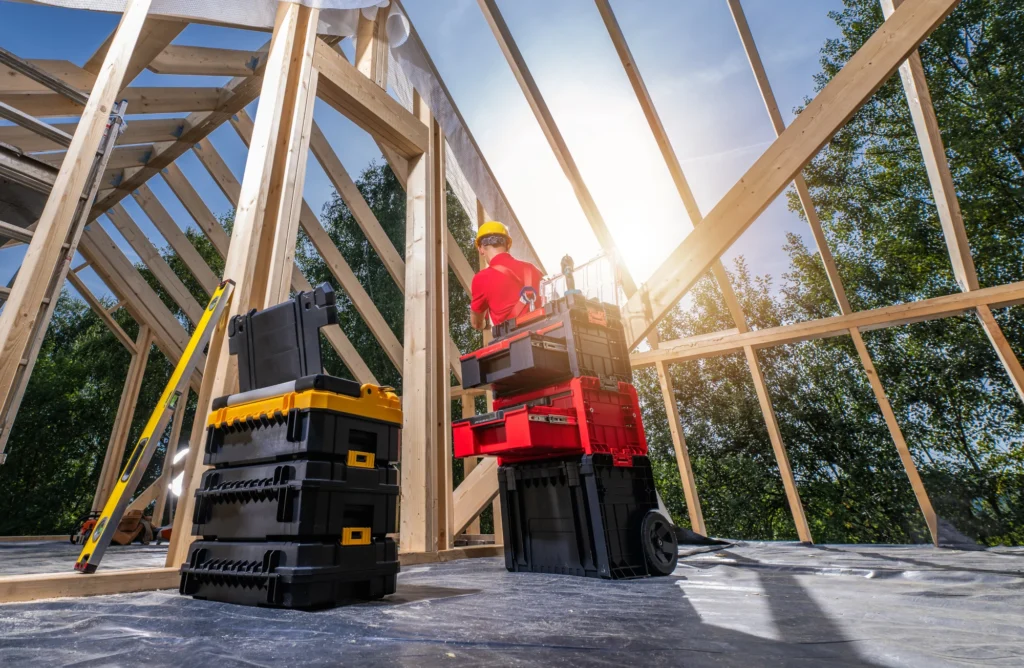
The choice depends primarily on the roof structure, and specifically on whether the material is installed on a rigid sheathing or directly on the rafters.
In this case, the waterproofing layer is installed directly on the rigid sheathing. In such roofs, the membrane is exposed to localized stresses and mechanical damage in critical areas: fastener attachment points, roof edges, and the areas around chimneys and roof windows. Therefore, for rigid sheathing, highly vapor-permeable membranes with performance characteristics that ensure safety are primarily used:
Lower-quality membranes may not provide adequate mechanical strength or effective moisture drainage, which jeopardizes the durability of the structure and the protection of the thermal insulation.
Bituminous roofing felt can also be laid on the sheathing, but it is rarely used in modern construction. It is most commonly used for roofs with a low pitch or for unused attics. Bituminous roofing felt is less flexible and less vapor-permeable than membranes, which is why it is not recommended for roofs with habitable attics.
Here, the pre-covering is not supported by a rigid substrate, so the membrane moves freely between the rafters and is less susceptible to localized punctures from below. Loads occur mainly during roof assembly at the fastener attachment points. In such roofs, highly vapor-permeable membranes are primarily used, which can come into contact with the insulation layer without a ventilation gap. Roof membranes with lower vapor permeability are also acceptable; however, in such cases, a ventilation gap must be left above the roof insulation to ensure proper vapor discharge and ventilation of the space beneath the roofing.
Typical technical specifications for membranes used in formwork-free roofs:
In practice, this means that the mechanical strength is slightly lower than in roofs with boarding, while the ability to wick away moisture and proper ventilation of the space under the roofing are of key importance.
The roof pitch directly affects the length of time water remains in contact with the waterproofing material. The choice of membranes is supported by their ability to drain any leaks and their high mechanical strength, which ensures the roof’s durability and protects the attic space.
The type of roof covering affects the loads acting on the membrane at the attachment points and how it performs under the roof covering.
In any case, the waterproofing material must ensure proper waterproofing and the drainage of any leaks that may occur beneath the roofing.
Roof ventilation is essential to the durability of a roof. Proper airflow beneath the roofing material is not just a manufacturer’s recommendation—it is a technical requirement that ensures the structure and insulation remain dry throughout the roof’s service life.
Under the roof covering, between the pre-covering and the main roofing material, water vapor naturally forms from the insulation and thermal insulation. Without proper ventilation, the vapor condenses under the roof covering, leading to:
Attention! The ventilation system must remove moisture before it begins to condense. To prevent this, ventilation gaps must be left between the membrane and the roofing material.
A ventilation eaves batten is a required component. It ensures the free flow of air through the ventilation duct.
Additional assembly requirements:
A ridge tape with mesh (e.g., VENTSOL 230) is a required component. It seals the joint between the roof slopes and provides ventilation. Mesh tape (not nonwoven fabric!) allows air to flow while protecting against:
Key requirements:
It is prohibited! Use of ridge tapes with nonwoven fabric—these must be mesh tapes that allow air to flow. Nonwoven fabric blocks ventilation and leads to condensation.
The pre-covering and the Ventilation system form a single, integrated system—the pre-covering alone is not enough. Even a well-chosen membrane (e.g., one with high vapor permeability of 250–300 g/m²/24h) allows water vapor to pass through, but it must be able to channel that vapor to the ventilation gaps.
Therefore:
Key takeaway: Selecting the membrane and designing the ventilation system are one and the same task—these elements cannot be optimized separately. Ventilation without a good membrane = a continued risk of leaks. A good membrane without ventilation = condensation and moisture buildup.
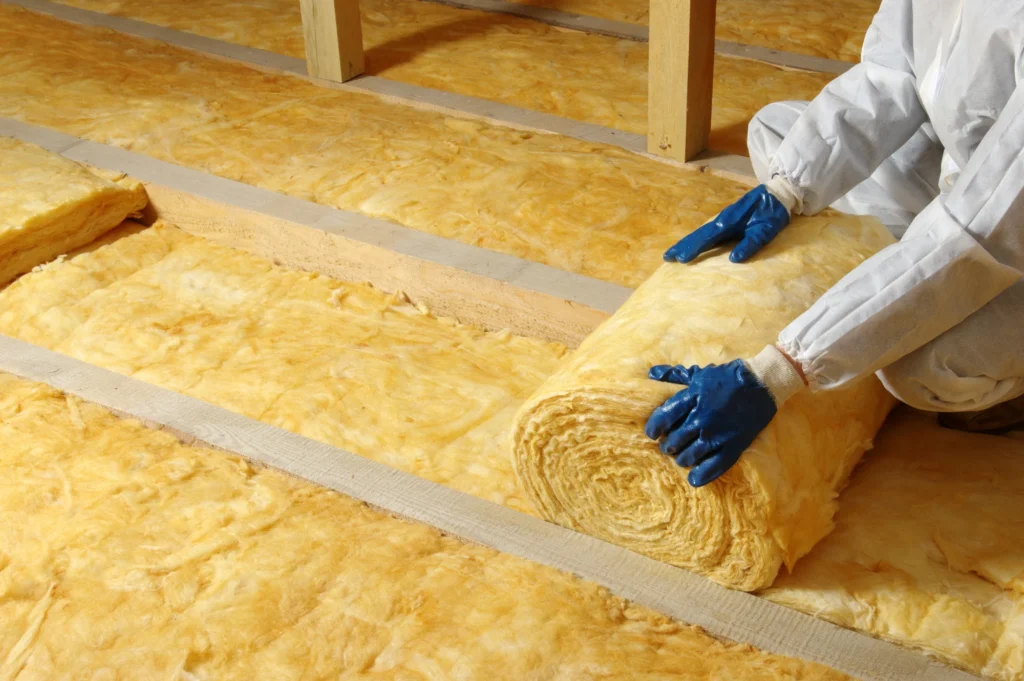
The intended use of the attic affects the requirements for the waterproofing layer and the method of moisture removal.
The shape of the roof surface affects water runoff and the number of places where water can accumulate or seep under the roofing material. The more complex the roof’s geometry, the greater the demands placed on the waterproofing material. Particularly critical areas include roof valleys, the areas around chimneys and roof windows, ridges, and eaves. In these areas, the waterproofing layer must remain continuous and effectively divert water that penetrates beneath the primary roofing material. In practice, this means that overlaps, seals, and system connections must be executed with great precision.
The drainage method—the direction and continuity of water flow—also determines the effectiveness of a roof membrane or roofing felt. The material must direct water down the roof slope toward the eaves, without allowing it to pool or flow back. Any break in continuity or installation error can lead to leaks.
In roofs with simple geometry, the requirements are less stringent, whereas in complex roofs, the waterproofing layer plays a more critical role—it absorbs water in areas subject to increased stress and safely drains it beyond the roof’s perimeter. The effectiveness of the layer therefore depends not only on the material’s properties, but also on the precision of the details and the continuity of the drainage system, which ensures a fully functional roof.

A roof is not just the crown of a building, but above all its protective shield. […]
Read moreChoosing a roof covering is one of the most important decisions when building a house or […]
Read moreIn older, uninsulated buildings, as much as 30–40% of heat can escape through the roof. In […]
Read moreThe roof influences the proportions of the building and how it is perceived within its surroundings. […]
Read moreWysokie temperatury oraz intensywne promieniowanie słoneczne wpływają na każdy dach, w tym także pokryty blachodachówką. I […]
Read moreWybór odpowiedniej izolacji termicznej to jedna z najważniejszych decyzji podczas budowy lub remontu. Materiały izolacyjne wpływają […]
Read more