Condensation under a metal roof is a phenomenon that should not be overlooked. Water vapor condensation on the underside of the roofing may remain invisible for a long time, but over time it leads to moisture penetration in the thermal insulation, corrosion of metal components, mold growth, and a reduction in the roof structure’s durability. This problem can occur in single-family homes as well as in metal garages, carports, and outbuildings.
In short: water condenses under the metal roofing when warm air containing water vapor comes into contact with the cooled surface of the roof coverings. This problem most often occurs due to a lack of proper ventilation, inadequate insulation, poorly installed vapor barriers, or in uninsulated buildings, where metal reacts very quickly to temperature differences.
In this post, you’ll learn about the most common problems:
The “Roofs in Practice” series is a technical compendium of knowledge on the construction and maintenance of metal roofs. The articles cover a wide range of topics—from solid structural foundations, through the physics of materials and moisture management, to informed decisions regarding aesthetics and quality. The series organizes knowledge about how a roof really works: why the roof framing determines the durability of the roofing, how sheet metal reacts to temperature changes, and where condensation comes from. A key element is understanding materials—the guide teaches readers to distinguish between nonwoven fabric and membranes, interpret laboratory test results, and make informed assessments of structural solutions, such as a roof without an eave. Together, this forms a guide that enables you to build and renovate a roof based on technical knowledge, proven materials, and informed choices at every stage of the project.
In this article, you’ll learn what condensation under a metal roof is and why water droplets may appear on the underside of the roofing even though the roof remains watertight. We explain how the dew point forms, the significance of temperature differences and air humidity, and why the problem most often stems from improper roof ventilation or errors in the roof layer configuration. You’ll also learn about the role of the roof membrane, vapor barrier, and anti-condensation felt, what the most common causes of water vapor condensation under the metal roofing are, and how to design and construct a roof to effectively reduce the risk of moisture damage to the structure and thermal insulation.
Condensation under a metal roof is a natural physical phenomenon that occurs when water vapor in the air comes into contact with cold surfaces and reaches the dew point. In practice, this means that moisture condenses on the underside of the roof covering, most often on trapezoidal sheets, metal roof tiles, or other metal roof components.
The dew point is the temperature at which water vapor in the air begins to condense. If the underside of the metal sheet is cooler than the surrounding humid air, water begins to condense and droplets appear on the surface. In the case of metal roofs, condensation most often occurs on the underside of the sheet metal, especially when ventilation is poor and there is a large temperature difference.
Metal reacts very quickly to changes in temperature. When warm, humid air from inside the building comes into contact with the cooled trapezoidal sheets, metal roof tiles, or standing-seam roofing metal sheets, water vapor begins to condense. This is why the problem is particularly noticeable in the fall, winter, and early morning, when temperature differences are greatest.
It’s worth knowing that water droplets under the roof don’t always mean there’s a leak. Many homeowners notice moisture on the underside of the roofing or signs of dampness and assume the roof is damaged. However, the source of the problem is often not a leak in the roofing, but rather the dew point being exceeded and moisture condensing on the underside of the metal sheet.
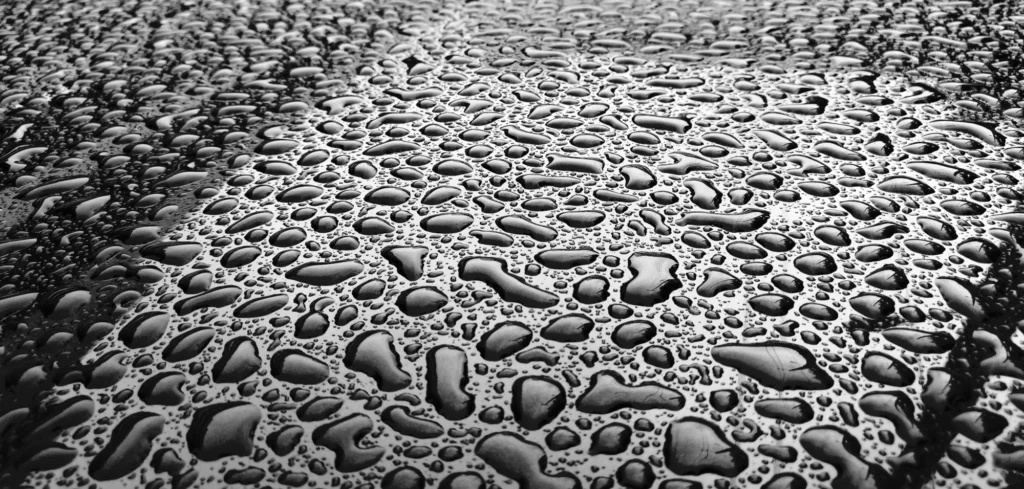
The most common cause of this problem is a combination of high humidity, a large temperature difference, and improperly installed roof layers. Excess moisture is generated during everyday activities such as cooking, bathing, doing laundry, or drying clothes. If water vapor is not effectively vented outside the building, it can migrate toward the roof structure and condense on cool surfaces.
The problem is exacerbated primarily by:
Condensation occurs particularly frequently in uninsulated metal garages, carports, and outbuildings. The metal cools down quickly, and moisture in the air condenses on its underside. This can result in water droplets falling from the roof, water dripping from the ceiling, damp objects, corrosion spots, and an unpleasant odor inside the structure. Ventilation grilles can also be helpful in such places, provided they ensure effective air exchange.
Proper roof ventilation is responsible for removing water vapor, allowing moisture to evaporate, and keeping the space under the roofing dry. Efficient airflow in the ventilation cavity between the pre-covering and the underside of the roofing material reduces condensation and protects the roof layers from moisture. Natural airflow should move from the eaves to the Ridge so that excess moisture is removed before water vapor begins to condense on the underside of the metal roofing.
Effective roof ventilation requires:
Properly installed roof ventilation reduces water vapor condensation under trapezoidal sheets, metal roof tiles, and interlocking roof panels, and also improves the durability of the roof structure. A continuous flow of air from the eaves to the Ridge is crucial: through an inlet in the eave area, an unobstructed ventilation pocket between the pre-covering and the underside of the roofing material, and an effective air outlet at the Ridge.
Ventilation effectiveness is influenced not only by ventilation gaps but also by properly selected roof accessories. In the eave area, the ventilation eaves batten plays an important role, ensuring a free flow of air under the roofing. In the upper part of the roof slope, airflow is aided by the under-ridge strip and the VENTSOL 230 ridge tape, which allow moist air to be drawn out of the ventilation space while simultaneously protecting the ridge from rainwater, snow, insects, and debris.
The effectiveness of ventilation depends on the proper functioning of all components of the system. Even the best ridge tape will not ensure proper airflow if there is no adequate intake in the eave area.
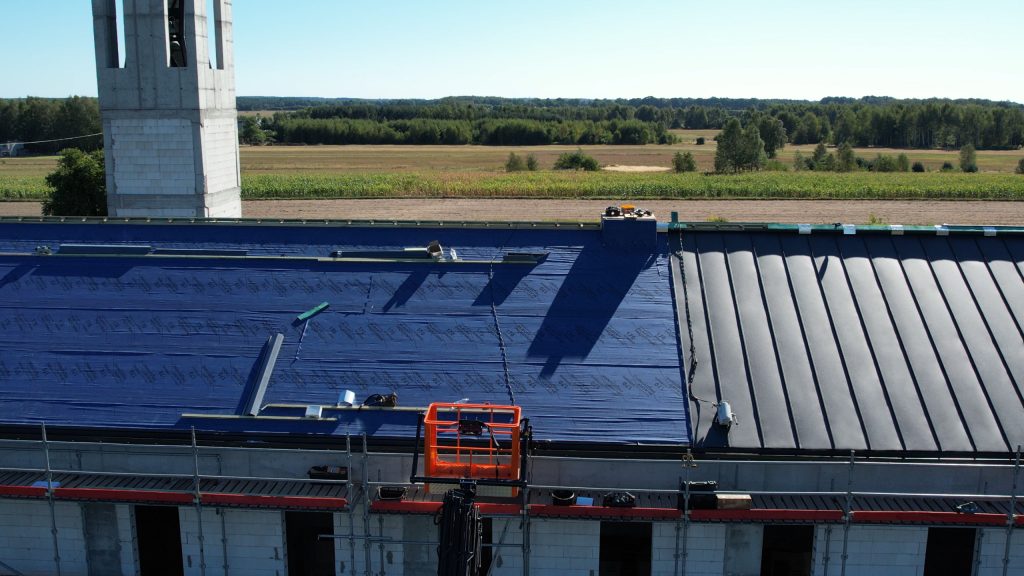
Roof membranes serve as a pre-covering layer and play an important role in protecting the roof structure from moisture. Its purpose is to protect the thermal insulation and the structure from water that may penetrate beneath the roof covering, while at the same time allowing water vapor to escape from the roof layers. This applies to both the membrane itself and properly installed roof membranes that work in conjunction with the other layers.
However, the membrane alone does not solve the problem of condensation if there is no properly functioning ventilation above it. It is crucial to have an unobstructed ventilation space between the membrane and the underside of the roofing material, as well as a watertight layered system with an air inlet at the eaves and an outlet at the Ridge. A properly selected and installed roof membrane protects the insulation from water, helps remove water vapor from the roof cavity, and improves the roof’s durability—but only when it works in conjunction with properly installed roof ventilation.
In uninsulated buildings, such as metal garages, warehouses, carports, or outbuildings, sheet metal with nonwoven fabric or anti-condensation felt is also used. However, this is not a universal substitute for a roof membrane. Anti-condensation felt reduces condensation dripping from the inside of the roof covering by temporarily trapping some of the moisture. For this solution to work properly, the building must have adequate ventilation, as the accumulated moisture must be able to evaporate.
Condensation is often the result of installation errors, improper selection of roof layers, or disrupted airflow beneath the roofing. Even properly selected sheet metal will not solve the problem if water vapor cannot escape through unobstructed roof ventilation.
The most common mistakes are:
The way a building is used also has a significant impact on condensation. Airtight windows, limited air exchange, drying laundry indoors, or an underheated attic can all lead to increased humidity. As a result, the roof structure is subjected to more challenging conditions than were anticipated during the design or assembly phase.
Effectively reducing condensation requires a combination of proper roof ventilation, adequate insulation, a tight vapor barrier, and appropriately selected materials. Particular attention should be paid to the continuity of the roof layers, the airtight assembly of the foil and membrane, and ensuring the free flow of air from the eaves to the Ridge.
Depending on the type of building and roof construction, the following should be provided for:
In the case of a metal garage, it is particularly important to minimize large temperature fluctuations and ensure proper ventilation. Uninsulated metal cools down very quickly, so when humidity levels inside the structure are high, condensation can occur regularly. In practice, there are various ways to mitigate this phenomenon, including insulation with insulation boards, polystyrene foam, or materials with aluminum foil; however, each solution should be tailored to the structure and intended use of the building. In such locations, it is worth considering, first and foremost, Ventilation, improving how the building is used, insulation, or the use of sheet metal with an anti-condensation coating.
The problem often develops gradually and may go unnoticed for a long time. At first, moisture appears only on the underside of the sheet metal; later, droplets may drip onto the insulation, structural elements, or walls. That is why it is important to take action at the first signs of moisture, especially when the problem recurs after cool nights or during periods of high humidity.
Over time, the following may occur:
In residential buildings, this problem is particularly significant because prolonged high humidity can reduce the comfort of the living spaces and promote mold growth. Therefore, at the first signs of moisture, it is worth checking not only the roof’s waterproofing but also its ventilation, vapor barrier, and the arrangement of the roof layers.
A well-designed metal roof is more than just the roofing material itself. Its durability also depends on the layers and details located beneath and around the metal sheeting: the roofing membrane, vapor barrier, thermal insulation, ventilation cavity, a properly constructed eave, an unobstructed ridge, and appropriately selected ventilation accessories. It is these elements that are responsible for moisture control, material durability, and reducing the risk of condensation. Therefore, protecting the roof against water vapor condensation should be treated as one of the fundamental elements of proper design and assembly, rather than as an afterthought.
Not always. Water droplets on the underside of the roofing metal sheet may look like a leak, but they are often the result of water vapor condensation. Condensation occurs when warm, humid air comes into contact with a cooled roof covering. Therefore, when diagnosing the problem, it’s important to check not only the roof’s watertightness but also the roof deck’s ventilation, the vapor barrier, the roof membrane, and the layering beneath the roofing material.
In a metal garage, water most often drips from the roof due to the large temperature difference between the interior of the structure and the outside environment. Uninsulated metal cools down quickly, and the water vapor in the air condenses on its underside. The problem is exacerbated by a lack of ventilation, the storage of damp items, a wet car, or tools, and the absence of an anti-condensation solution, such as sheet metal lined with anti-condensation felt.
The most important thing is to ensure the free flow of air from the eaves to the Ridge. The roof should have an unobstructed ventilation space between the pre-covering and the underside of the roofing material, a proper air inlet at the eaves, and an effective outlet at the Ridge or at the corners of the roof. A tight vapor barrier, properly selected thermal insulation, and a correctly installed roof membrane are also important.
Anti-condensation felt helps reduce condensation dripping, but it does not solve the problem on its own. Its purpose is to temporarily trap some of the moisture on the underside of the sheet metal and release it into the environment when conditions permit. For it to work properly, the building must have adequate air exchange. Without ventilation, the accumulated moisture will not evaporate effectively.
Both elements are important, but they serve different functions. The roof membrane protects the insulation and structure from water that might seep under the roofing, and helps remove water vapor from the cavity. Ventilation, on the other hand, is responsible for removing moisture from the space under the roofing. The membrane alone is not enough if there is no unobstructed ventilation space above it and no effective airflow from the eaves to the Ridge.
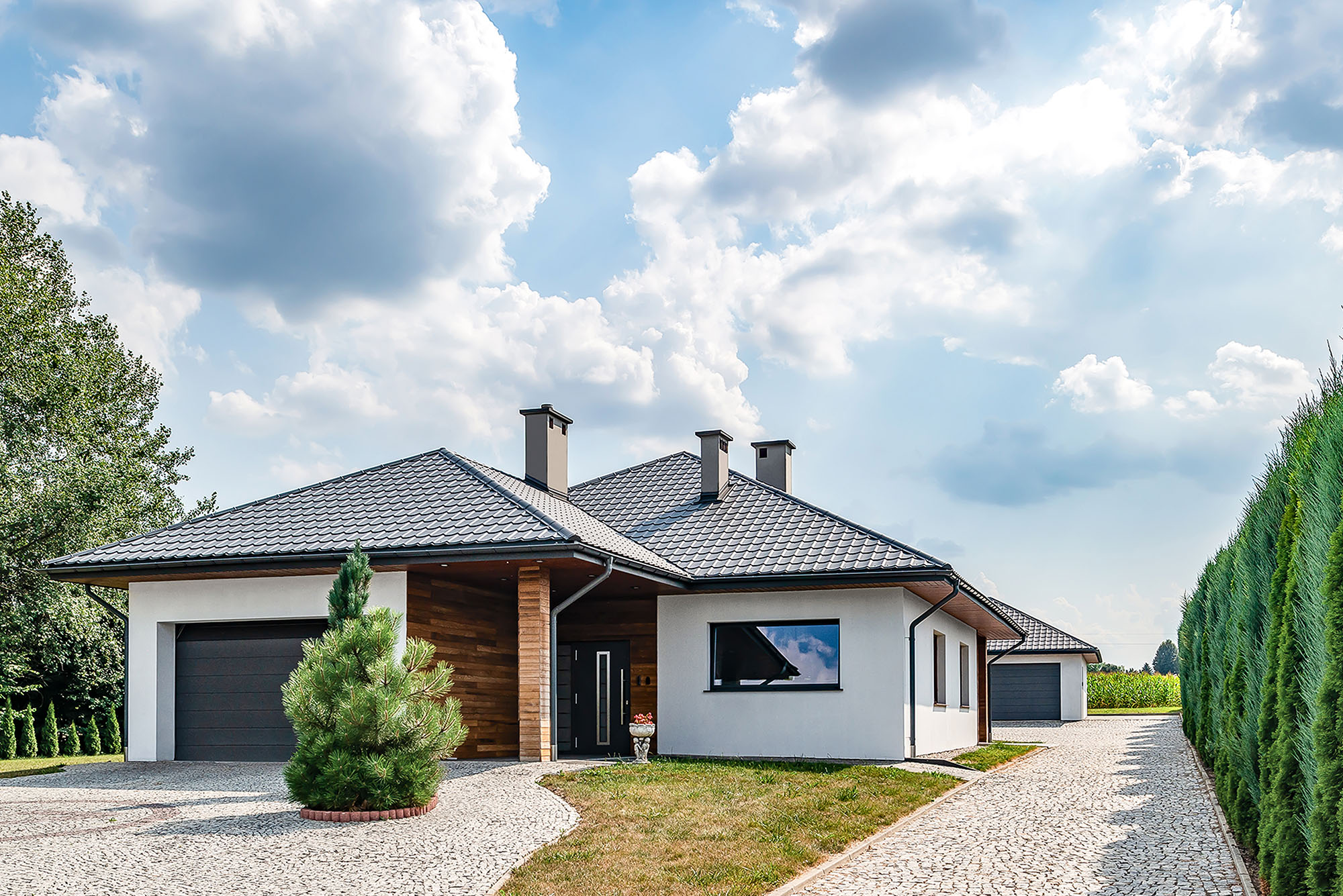
Metal roof tiles are a lightweight and durable roofing material, but their longevity depends largely on […]
Read moreMartens are clever animals that are increasingly taking up residence in the roofs of single-family homes. […]
Read moreProper roof ventilation and careful attention to details—such as the air inlet at the eaves, the […]
Read moreAlthough the pre-covering is not visible, it plays a crucial role in roof construction. Typically, highly […]
Read moreRoof safety is one of the key requirements of any construction project. Compliance with health and […]
Read more