Roof safety is one of the key requirements of any construction project. Compliance with health and safety regulations, employee training, the use of safety equipment, and properly selected roof accessories—chimney work platforms, safety hooks, guardrails, and steps—effectively protect against falls from heights both during construction and subsequent maintenance work.

In this post, you’ll learn about the most common problems:
The “Knowledge Around the Roof” series is a practical guide to roof maintenance and renovation. The articles go beyond simply discussing material selection, offering solutions to real-world problems faced by homeowners. The series covers legal formalities, budget planning, and modern technologies such as Photovoltaics and energy efficiency. Safety is a key focus—from protection against storms and martens to roof access systems. The series is rounded out with advice on aesthetics and durability, ensuring thermal comfort for decades to come.
This article provides a comprehensive overview of safety rules for working on roofs —covering both the legal obligations of building owners and the practical health and safety requirements for roofing crews. It presents key roof access accessories—chimney ladders, steps, safety hooks, and guardrails—explaining their functions, installation requirements, and the need for regular inspections. It also discusses the selection of safety systems for specific types of steel roofing, guidelines for protecting the sheet metal coating during assembly, and the relationship between the technical condition of the accessories and the manufacturer’s Warranty and the owner’s insurance liability.
For all construction workers, awareness of health and safety rules should be paramount, and safety on the roof in particular, given the conditions. Working at heights involves a much greater risk of injury or even death than working on the ground. On a roof, any slip can result in a fall from a great height, and strong winds often pose an additional challenge.
Safety concerns extend beyond peace of mind and comfort to include personal protection, as well as the protection of people located beneath the building. On the one hand, it is necessary to ensure the availability of personal protective equipment; on the other hand, appropriate measures must be taken to protect the workplace and its surroundings.
The basic principles of accident prevention that help avoid the risks associated with falls from heights include: guardrails, non-slip work boots, safety harnesses, and maintaining a safe distance from the edge of the roof. It’s also a good idea to set up safety nets during work to protect against falling objects. Being aware of the greatest hazards can save someone’s life.
Roof safety involves more than just health and safety procedures and ensuring that workers have the proper equipment. It is also important to keep in mind a number of legal regulations that the roof owner must comply with. These include, among other things, the assembly of roof accessories that ensure the proper safety of people working at heights.
Walkways allow for safe movement across the roof surface, for example, from a roof hatch or roof window to a chimney during inspections or maintenance work. Each walkway has two supports, which should be securely fastened to the roof coverings. The walkways rest on these supports. They must be sufficiently wide, slip-resistant, and perforated to prevent water, snow, or ice from accumulating on them.
Manufacturers of metal roof tiles, ceramic roof tiles, and other types of roofing materials offer chimney bases as part of their product lines, so it’s easy to find the right one for a specific roof. Roof owners should regularly inspect the condition of their chimney ledges and repair any defects they find.
On buildings taller than 12 meters with flat or gently sloped roofs, safety railings 1.1 meters high should be installed to prevent falls from the edge. The roof owner is responsible for ensuring that the guardrails are properly assembled in a stable manner that guarantees safe protection without compromising the roof’s waterproofing. The owner is also responsible for maintaining the guardrails to ensure they are always in good working order.
Like benches, chimney steps allow you to move safely across the roof to inspect or maintain the chimney, solar panels, or other components that require periodic inspection. They are smaller than roof benches and mounted on a single support, but their surface must also be slip-resistant. The roof owner should regularly check the condition of the steps and their mountings.
They are indispensable on large roofs, where equipment such as antennas, solar panels, and utility systems are located in various places. Thanks to a line stretched between hooks, to which the worker is suspended using equipment with an adjustable-length lanyard, it is easy to ensure safe access to the relevant points during roofing, installation, and maintenance work.
Due to their point-contact mounting and the nature of the load, hooks are prone to loosening; therefore, their stability and any signs of corrosion or mechanical damage should be checked regularly.
Working at heights isn’t limited to roofing work. The roof owner is also responsible for ensuring that the gutters and eave vents remain clear. Scaffolding is best suited for this type of work, as it allows workers to move along the edge of the roof. The owner must ensure that the scaffolding is securely anchored and stabilized.
Safety systems are crucial when working at heights. Working safely is not only a health and safety requirement, but also the foundation for the proper assembly and repair of roofs and the components on them.
A number of factors affect safety when working at heights. If you truly want to protect your health and life, you must not overlook any of them.
Before accessing a roof—especially one undergoing renovation—you should check its technical condition, assess any damage, and decide whether to implement specific repair measures or safety precautions. It’s also a good idea to examine the layout of access routes and, if necessary, equip the crew with personal protective equipment. Always make sure that work gear and footwear are appropriate for the weather conditions.
When working at heights, it is essential to have measures in place to reduce the risk of tripping, as well as the consequences of a potential impact or fall from the roof. Equipment such as safety helmets, gloves, and appropriate footwear—and on sloped roofs, safety harnesses—are essential today.
Guardrails and safety systems tailored to the height and structure of the roof play a key role in ensuring safety. Care should also be taken to properly secure the area beneath the building by installing safety nets.
At heights, do not allow objects to be left lying around that could pose a tripping or slipping hazard. The work area must be kept clean.
Medical examinations and employee training are required for work at heights. Dizziness and a fear of heights disqualify a person from employment. Another obstacle is a lack of awareness of what to do in an emergency—every employee should know how to help a coworker if necessary. Working safely is not just about ensuring your own safety.
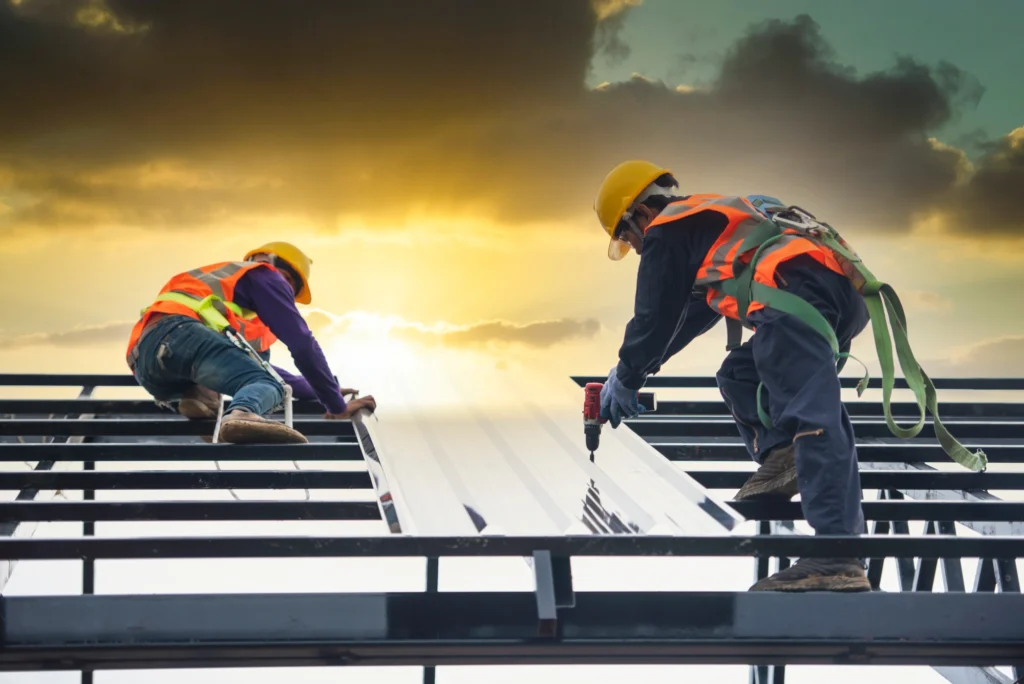
When working on a roof, the most common cause of a fall is a loss of balance—from slipping on a slippery surface, especially near the edge of the roof or on a steep slope, where a person who is sliding down has nothing to hold onto. The risk increases significantly in adverse weather conditions: wet metal roofing, frost, slush, or strong winds mean that even a momentary lapse in attention can have tragic consequences.
The second major group of causes involves deficiencies in equipment and work organization. These include a lack of safety harnesses or harnesses, failure to use a safety line, improperly selected work shoes, or safety systems that are not adapted to the roof’s pitch and weather conditions —each of these factors on its own increases the risk of an accident, and when combined, they can be life-threatening.
Falls also occur due to clutter on the roof—tools, cables, or scraps of material that people can trip over. The human factor also plays a significant role: fatigue, fear of heights, lack of training, or overconfidence among experienced roofers who, over time, tend to downplay safety procedures. Statistics from the Central Statistical Office (GUS) and the National Labor Inspectorate (PIP) indicate that the construction industry—including roofing work—has remained one of the most accident-prone sectors in Poland for years, underscoring the importance of strictly adhering to health and safety rules every time someone climbs onto a roof.
Using safety measures in the form of access systems makes sense if they are well-suited to the roof’s structure and the type of roof covering. Safe conditions on a flat roof are different from those on a steep roof, and the risks also vary depending on whether the roof is covered with metal roofing tiles, clay tiles, or shingles.
It is important to remember that communication systems must be securely fastened. This means that their design—or the shape of their brackets, hooks, or posts—should be compatible with the specific roof covering. It’s best to order fastening systems from the same manufacturer from whom you purchase your roof coverings. That way, you can be sure that everything will fit together properly.
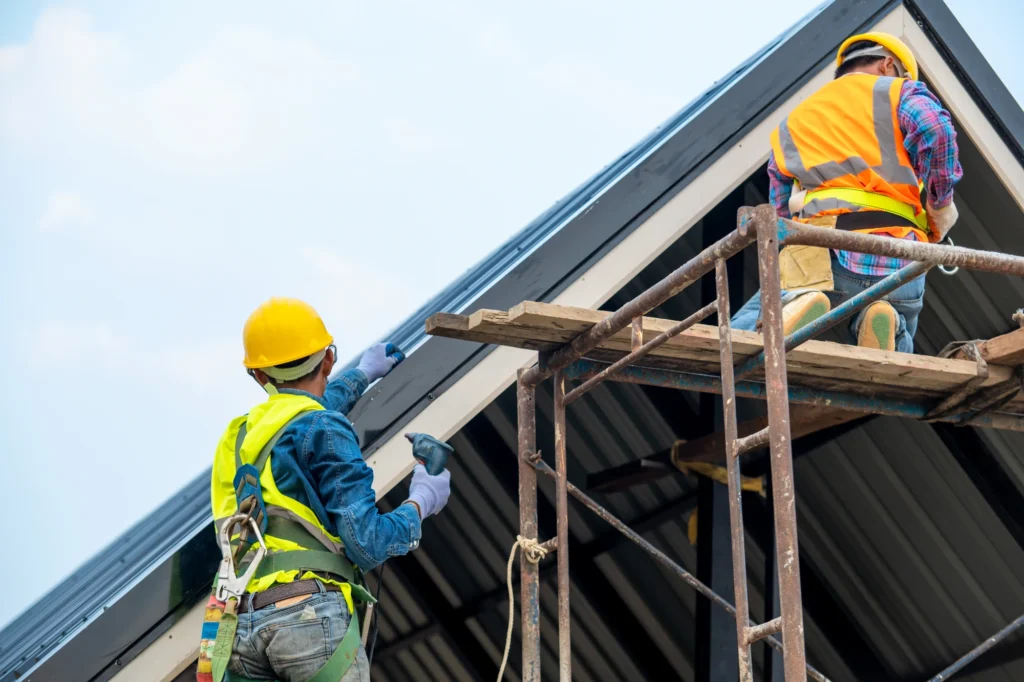
The protective coating shields the steel core from corrosion and also determines the aesthetic qualities of roof coverings. When installing safety systems on a steel roof, it is important to handle the accessories carefully and with care so as not to scratch the sheet metal. What should you pay attention to?
Every material has its own specific characteristics, and improper handling can cause problems. That is why it is best to hire a team with experience working with steel cladding for assembly of the accessories.
Compliance with roof safety requirements is essential for receiving compensation in the event of an accident; therefore, the owner must ensure this at all times, both during construction and subsequent use.
Annual inspections include, among other things, checks of chimney and photovoltaic systems; therefore, it is essential to ensure safe access to them. It is also required to clear snow from the roof and remove icicles from the gutters, because the building owner or manager is liable for any consequences resulting from their falling—should they cause injury or property damage.
It is essential to regularly inspect the condition of the roofing, and this requires systems that allow people to move around on the roof.
Keep in mind that the manufacturer’s warranty on the roofing material becomes void as soon as any workmanship defects are found. Working safely makes it easier to avoid them.
Choosing a roof covering is one of the most important decisions when building a house or […]
Read moreThe roof is one of the most important elements of any home. Proper maintenance of a […]
Read moreChoosing the right roofing metal sheets is crucial for the durability and aesthetic appeal that the […]
Read moreIn older, uninsulated buildings, as much as 30–40% of heat can escape through the roof. In […]
Read moreOne of the most common mistakes made during roof coverings installation is a lack of knowledge […]
Read moreThe roof influences the proportions of the building and how it is perceived within its surroundings. […]
Read moreWhen choosing modular roof tiles, we don’t have to worry about their quality—they’re one of the […]
Read moreWysokie temperatury oraz intensywne promieniowanie słoneczne wpływają na każdy dach, w tym także pokryty blachodachówką. I […]
Read more