Choosing a roof covering is one of the most important decisions when building a house or renovating a roof. Roofers, drawing on their experience and the product offerings of manufacturers such as Blachy Pruszyński Company, select solutions that are durable, aesthetically pleasing, and suited to Polish climatic conditions. In this article, we present the most popular roofing materials and the trends dominating the market in 2026.
In this post, you’ll learn about the most common problems:
The “Knowledge Around the Roof” series is a practical guide to roof maintenance and renovation. The articles go beyond simply discussing material selection, offering solutions to real-world problems faced by homeowners. The series covers legal formalities, budget planning, and modern technologies such as Photovoltaics and energy efficiency. Safety is a key focus—from protection against storms and martens to roof access systems. The series is rounded out with advice on aesthetics and durability, ensuring thermal comfort for decades to come.
The article discusses in detail the most popular types of roofing metal sheets chosen by roofers in Poland, highlighting the practical differences between modular roof tiles, tailored roof tiles, and trapezoidal sheets. It presents the realities of assembly—from variable weather conditions and roof framing imperfections to the crucial role of flashings and roof ventilation in ensuring the roof’s watertightness and durability. It also discusses criteria for evaluating manufacturers and the trends dominating in 2026, including the growing popularity of anthracite-colored modular roof tiles and roofing systems designed for Photovoltaics.
Metal roof tiles are currently the most popular roof covering in Poland. They combine the classic look of roof tiles with light weight and quick assembly.
Why roofers choose it:
Panel roof tiles ( modular) are becoming extremely popular, especially for complex roof surfaces.
Why are they chosen:
Panel roof tiles are particularly valued by roofers working on modern projects.
Trapezoidal sheets are the ideal solution when functionality and price are key.
Applications:
Why roofers recommend it:
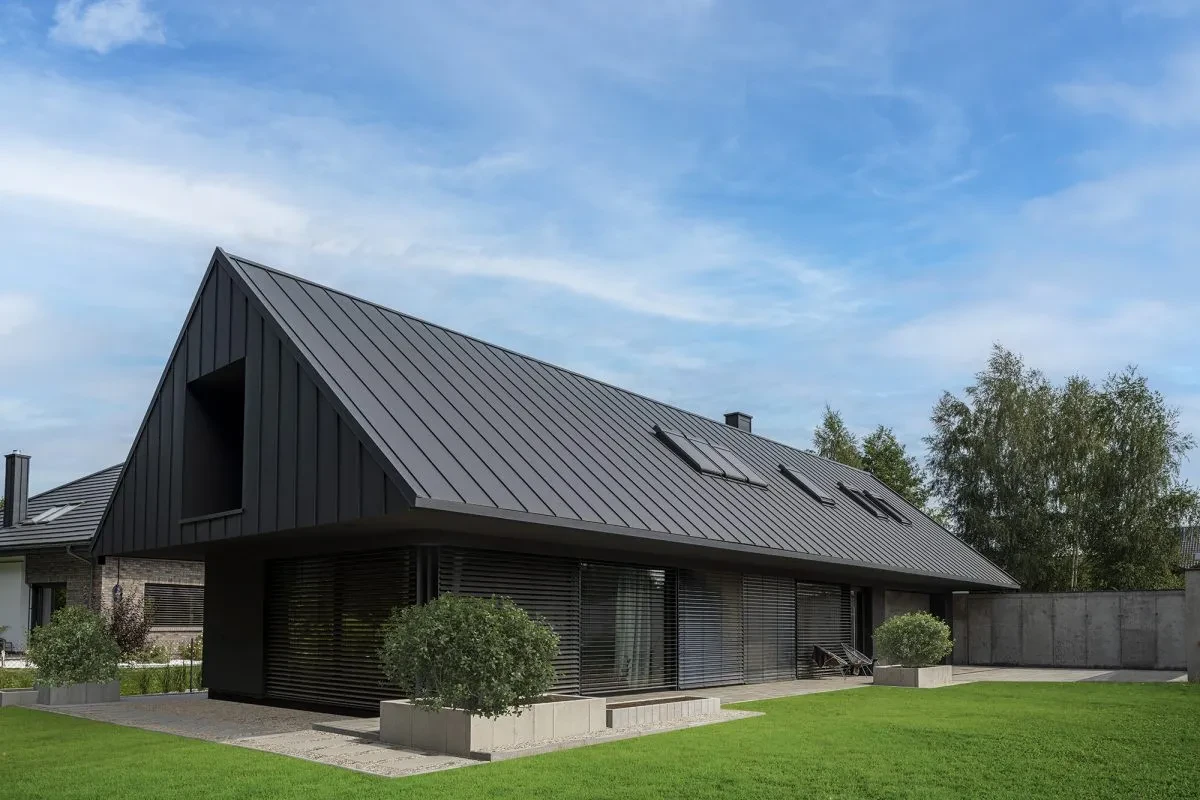
Standing-seam panels are a solution for modern homes and minimalist architecture.
Why they are chosen:
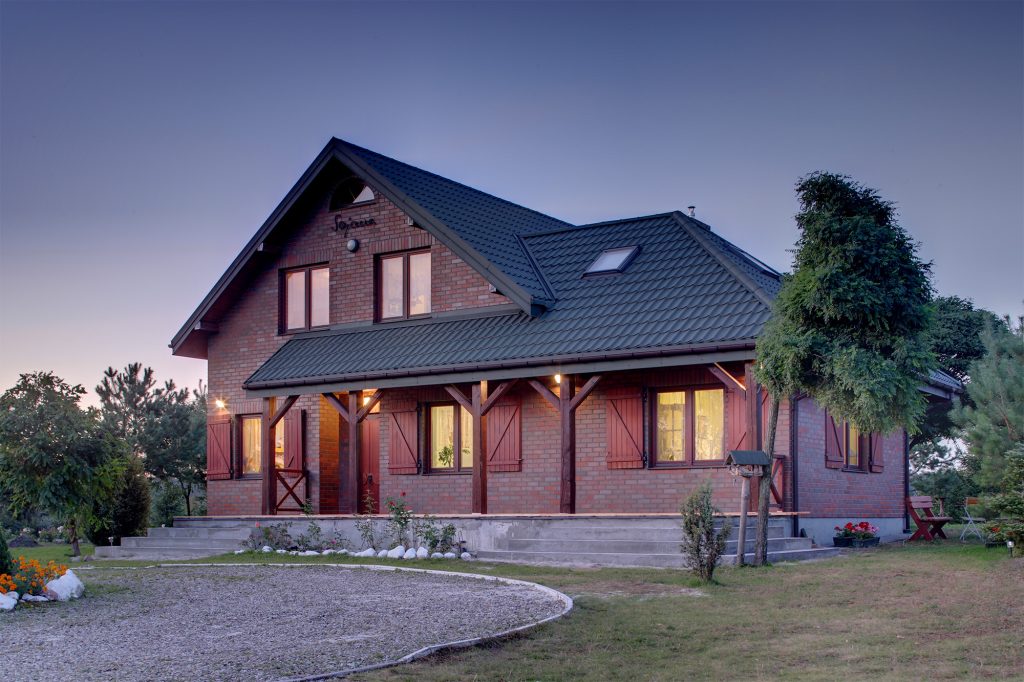
In theory, roof coverings should be installed in accordance with the manufacturer’s guidelines, the specifications in the product data sheet, and the roof design. This assumes a perfectly level surface, favorable weather conditions, and a precise fit of the system components. In practice, however, roofers work under the realities of a construction site, where changing weather, imperfections in the roof framing, and time pressure affect the progress of the work and its durability.
What challenges do roofers actually face when assembling roof coverings made of roofing metal sheets?
1. Changing Weather Conditions and Sheet Metal Assembly
Roof coverings are assembled in an environment exposed to rain, wind, frost, and high temperatures. Fluctuating temperatures affect the material’s expansion, the adhesion of sealants, and workplace safety.
2. Roof Construction Imperfections in Practice
The design assumes a perfect roof framing, but in reality, dimensional deviations, curvature of the roof boards, or unevenness of the rafters occur. Metal roof tiles and trapezoidal sheets are more tolerant of such errors than flat sheet metal. The profiling of the sheets helps to conceal minor irregularities.
3. Transportation, Storage, and the Risk of Mechanical Damage
Transportation and improper storage can cause damage and scratches to protective coatings. Even minor damage can reduce the coating’s durability and accelerate corrosion. That is why reputable manufacturers, such as Blachy Pruszyński Company, recommend properly securing the sheets and performing assembly in accordance with the guidelines.
4. Details Determine Watertightness – Flashings and Seals
It is not the laying of the sheet metal itself that deserves special attention, but rather the critical areas: chimneys, roof valleys, roof windows, and ridges. Flashings, ridge tapes, and roofing sealants are crucial for ensuring a watertight roof. It is precisely in these areas that problems most often arise if the assembly is not performed according to best roofing practices.
5. Proper roof deck ventilation
Proper ventilation is crucial for the longevity of modern roof coverings. In practice, installation errors made by other crews can lead to a lack of air circulation. The roofer must ensure proper air inlets and outlets to prevent water vapor condensation and the degradation of insulation materials (e.g., mineral wool).
6. Safety and Roof Access Components
Assembly of components such as chimney steps is particularly important for the safe future use of the roof. The main task of roofers is not only to ensure the aesthetic appeal of your roof, but also its functionality and the safety of its users.
Summary – Theory vs. Practice
Although theory precisely describes what a metal roof should look like, practice shows that every roof is different. Modern metal roof tiles, modular roof tiles, and trapezoidal sheets allow for better adaptation to structural imperfections and challenging working conditions. Ultimately, it is the roofer’s experience, the quality of the materials, their transportation, and regular maintenance that determine the reliability of the entire roof.
In construction practice, it is rare to find a perfectly level roof. Roofers point out that the following materials are most tolerant of minor deviations:
Their shape helps conceal unevenness and reduces the need for costly corrections during the construction phase.

Reputable manufacturers, such as Blachy Pruszyński Company, are evaluated by roofers based on several key criteria:
Roofers evaluate the durability of coatings that protect roof coverings from corrosion, solar radiation, and harsh weather conditions, thereby extending the roof’s service life.
The Warranty and performance declaration confirm the quality of the sheet metal.
A wide range of models and profiles makes it possible to adapt the roofing to various roof shapes and architectural styles.
Compatible flashings and system accessories improve the roof’s watertightness, speed up assembly, and enhance the aesthetic quality of the finish.
In 2026, investors are choosing roof coverings that combine innovative technologies, aesthetics, and functionality.
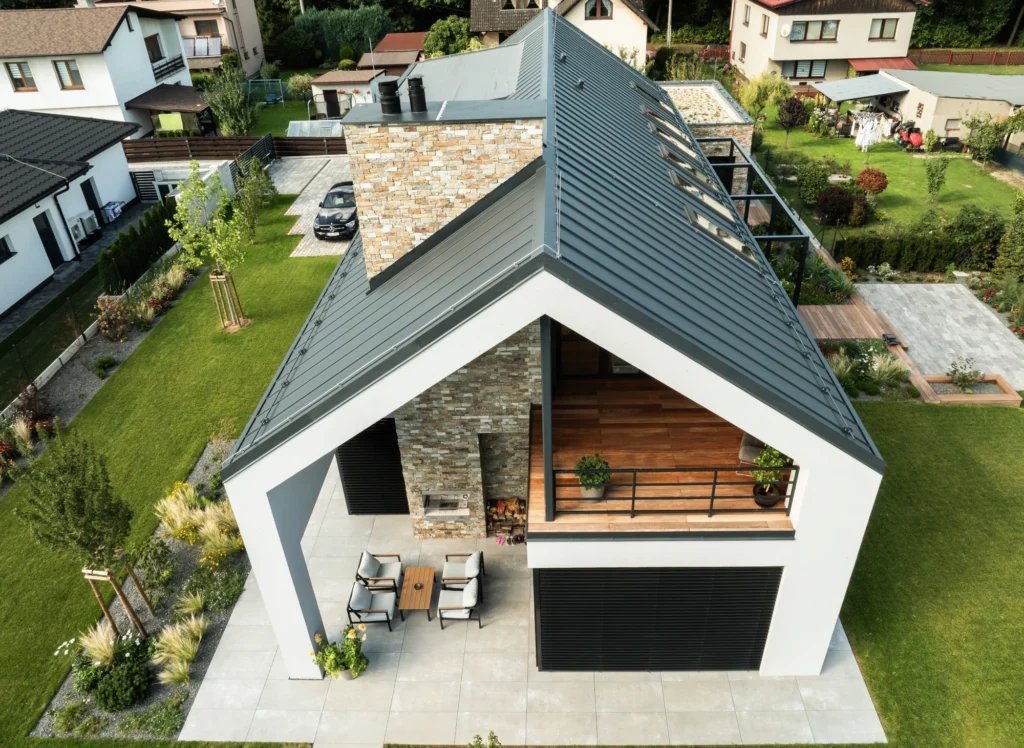
The choice of roof coverings depends on the roof’s geometry, budget, and expected lifespan. In 2026, roofers most often opt for modular roof tiles—quick assembly, minimal waste, and versatility make them a good choice even for complex roof surfaces. Anthracite is the dominant color—the flat profile of modular roof tiles in this shade emphasizes the minimalist form of the house and blends well with facades in white, wood, and concrete. More and more builders are already choosing them with Photovoltaics in mind, using PV mounting systems compatible with the roofing.
Tailored roof tiles and trapezoidal sheets remain popular—the former for roofs with simpler geometries, the latter for outbuildings and large areas.
Regardless of the material, the durability of a roof depends on the details—flashings, careful finishing around chimneys and roof windows, and proper roof ventilation, which prevents water vapor condensation and insulation degradation.
For roofs with complex architectural designs (multi-sloped roofs, roofs with dormers), Modular roof tiles are by far the better choice. They allow for a significant reduction in material waste (generating only up to about 5% of material waste), which translates into cost savings. Tailored roof tiles work best on simple gable roofs, where the sheets can be laid without unnecessary cutting.
Modern polyurethane coatings (e.g., PURLAK or PURMAT) provide the highest level of protection. They feature a thick coating layer (approx. 50 $\mu m$), which guarantees the highest resistance to UV radiation, scratches, and chemical corrosion. Choosing a premium coating allows you to obtain a technical warranty of up to 50 years.
It is recommended to perform a technical inspection of the roof once a year, preferably in the spring. This involves removing debris (leaves, branches) from the gutters and downspouts and checking the condition of the paint coating. It’s worth paying special attention to the cut areas and the area around the chimney. Regular maintenance not only extends the life of metal roof tiles but is also often a prerequisite for maintaining the manufacturer’s long-term Warranty.
Although dark colors (e.g., anthracite, black) absorb more solar radiation than light colors, the difference in indoor temperature is imperceptible when thermal insulation is properly installed. A layer of mineral wool or PUR foam plays a key role here, as does an effective ventilation gap beneath the metal sheeting, which draws hot air away before it penetrates the building’s structure.
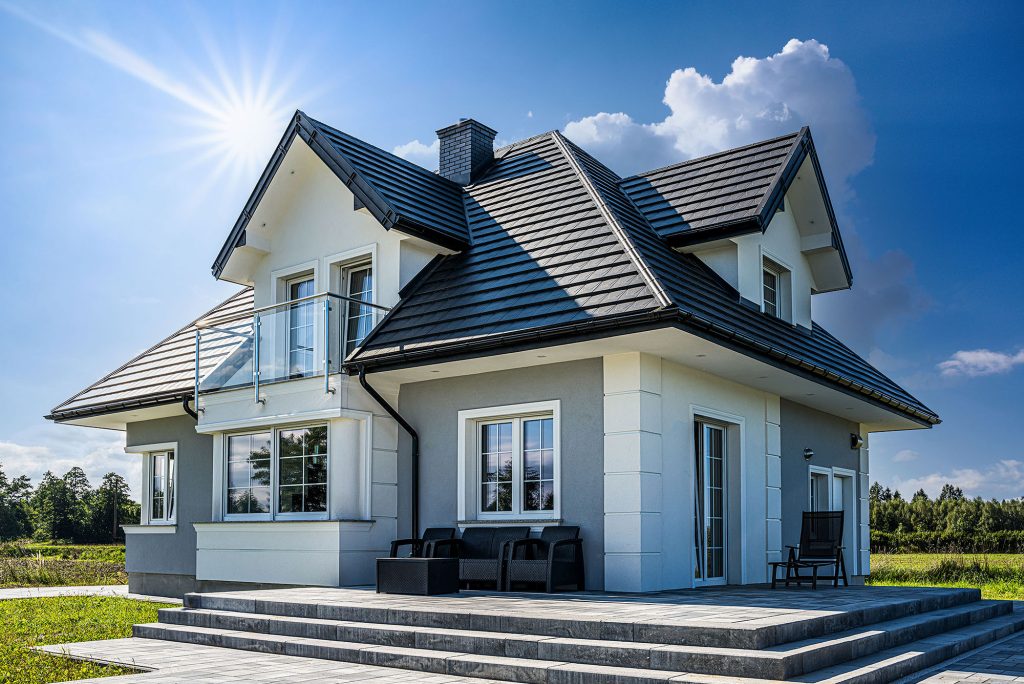
Trapezoidal sheets are one of the most popular choices in industrial, warehouse, and residential construction. They […]
Read moreThe roof determines not only the appearance of a building, but above all its safety, durability, […]
Read moreWhen choosing modular roof tiles, we don’t have to worry about their quality—they’re one of the […]
Read moreChoosing the right roof covering is one of the key decisions when building or renovating a […]
Read moreBlaszane pokrycia dachowe są uniwersalne, łatwe w montażu i pasują do nowoczesnej architektury. Blacha trapezowa, blachodachówka […]
Read moreDynamiczny rozwój rynku energii słonecznej sprawia, że dach przestaje być wyłącznie elementem budynku, a staje się […]
Read more