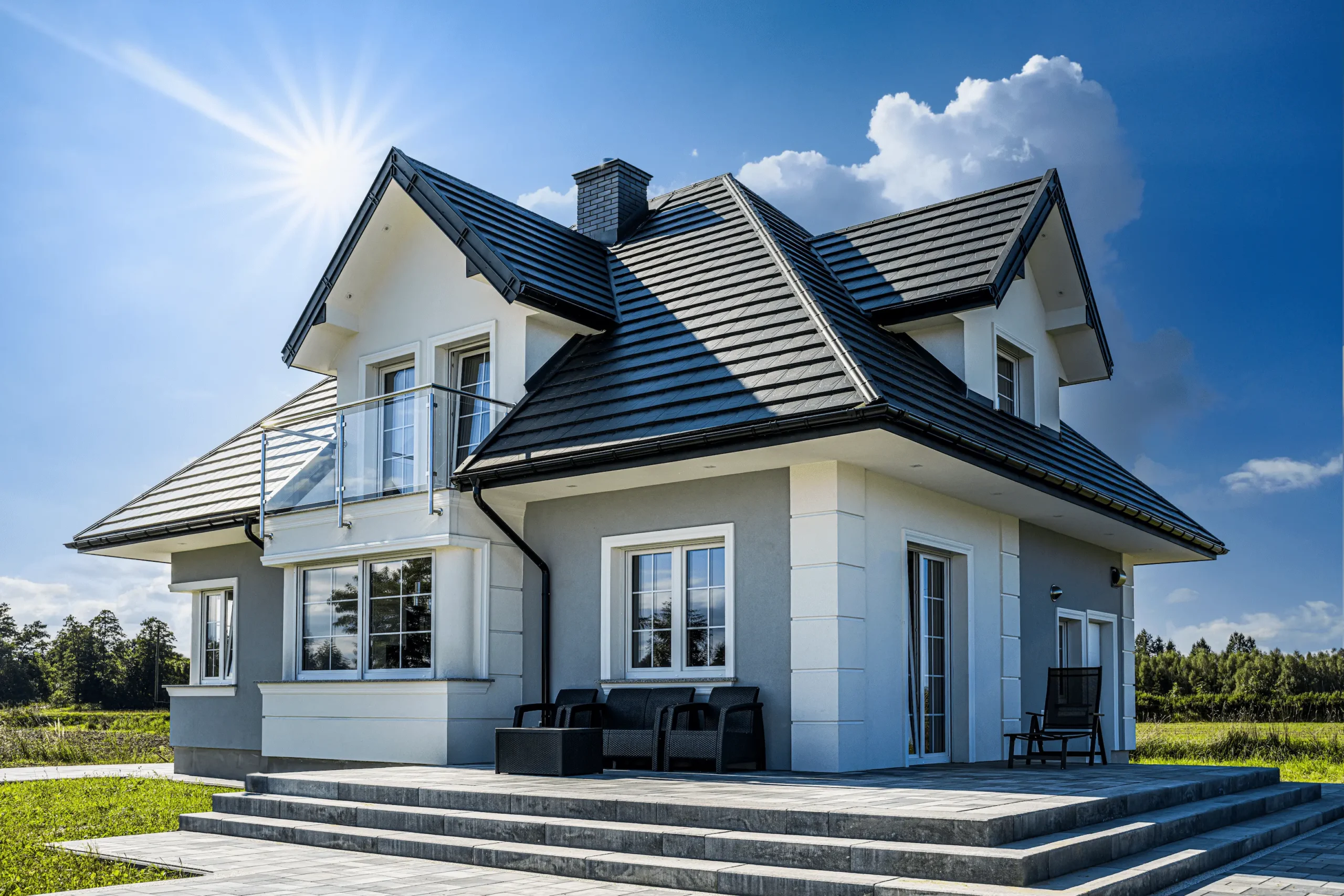
Choosing the right roof covering is one of the key decisions when building or renovating a roof. In recent years, roofing metal sheets have become one of the most popular choices. The variety of styles, modern technologies, and a wide range of options mean that metal roofing can be tailored to almost any home design—both in terms of aesthetics and budget.
In this post, you’ll learn about:
In a series of articles, we’d like to introduce you to the specifics of roof construction—its physics, essential elements, key components, and the most common types of roofs found in Poland. The series, titled“The Ins and Outs of Roofs,” will consist of separate, standalone posts, all aimed at familiarizing our customers with the topic of roofs. These posts are created in collaboration with our experts, professionals, and master roofers—who have been working in the field for many years—and are based on educational materials published by the Polish Roofers’ Association (PSD). If you are interested in learning more about this topic, we encourage you to contact the PSD and Roofing Training Centers directly, as well as to review the publications issued by the PSD.
Types of roofing metal sheets have undergone a significant transformation in recent years—from simple trapezoidal sheets to advanced standing-seam systems with coatings that guarantee a lifespan of up to 50 years. Trapezoidal sheets, metal roof tiles, and standing-seam panels differ in their applications, aesthetics, and price, but they all share a common purpose: to protect the building from the elements while maintaining a lightweight structure and simple assembly. Choosing the right type of sheet metal is crucial for the roof’s durability, compatibility with the building’s architecture, and the total cost of the project. In this article, we explain the differences between the most popular metal roofing options, the roof pitches required for each solution, and which technology will work best for your construction project.
The popularity of roofing metal sheets is no accident. First and foremost, they are lightweight materials (4–5 kg/m² compared to 40–60 kg/m² for ceramic roof tiles), which is of great importance for the roof framing and the entire roof structure. As a result, metal roofing works exceptionally well in both new construction projects and when retrofitting older buildings, often without the need to reinforce the structure.
Modern metal roof coverings are durable and resistant to corrosion, changing weather conditions, and UV radiation. Compared to solutions such as ceramic roof tiles, they offer ease of assembly, shorter assembly times, and lower costs. In addition, metal roofing sheets are available in a wide range of colors, thicknesses, and finishes, giving investors a broad selection.
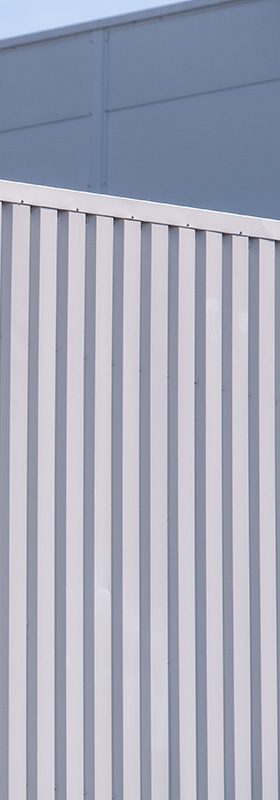
Trapezoidal sheets are one of the most versatile roofing materials available on the market, suitable for a wide variety of applications. They are characterized by high rigidity and the ability to cover large areas, which is why they are often used on the roofs of industrial buildings, warehouses, and garages, as well as on single-family homes. Their advantages include a low price, high durability, and the ability to perform assembly using large sheets of metal, which speeds up roofing work.
Applications: outbuildings, garages, industrial buildings, carports, and simple roofs on single-family homes.
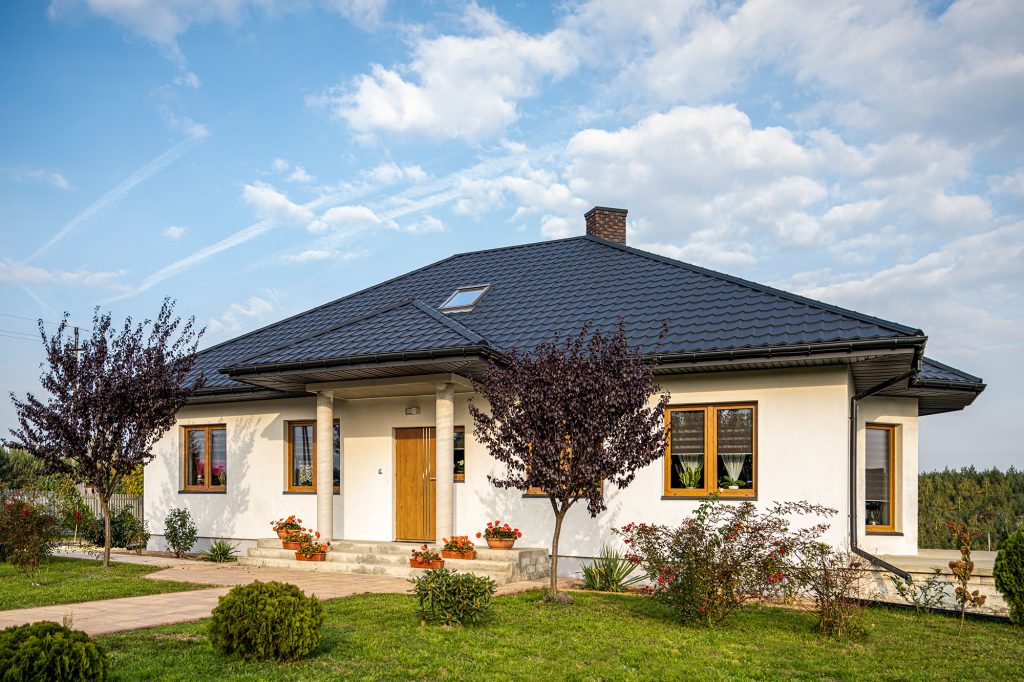
Metal roof tiles are a solution that perfectly mimics classic roof tiles while retaining all the advantages of modern metal roofing. Metal roof tiles are lightweight, aesthetically pleasing, and available in many embossed designs. Thanks to the use of modern coatings, they offer high resistance to outdoor conditions and mechanical damage. They are one of the most popular roof coverings in single-family home construction, especially for medium-sized roofs.
Applications: single-family homes, residential buildings, and public buildings with traditional architecture.
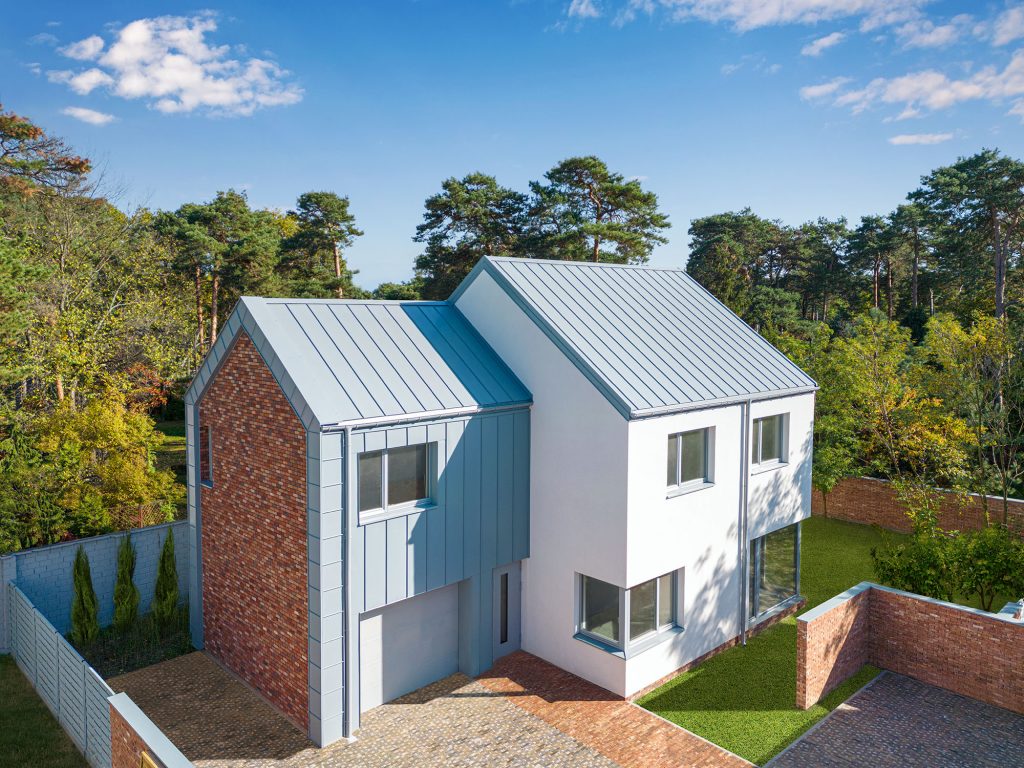
Flat sheet metal and standing seam sheet metal are solutions valued for their minimalist, modern character. Standing seam roofing provides excellent waterproofing and aesthetics, which is why it is a popular choice for modern homes. Standing-seam metal roofing works perfectly on roofs with a gentler slope, as well as on larger roofs where a uniform surface and durability are key. Materials such as aluminum are often used here, distinguished by their characteristic silver color and high resistance to external factors.
Applications: modern architecture, flat and low-slope roofs, commercial buildings, premium design.
When choosing roofing sheet metal, the most important factor to consider is the roof pitch. Metal roof tiles and trapezoidal sheets require a specific minimum slope, while standing-seam and flat sheets can also be used on roofs with a shallower pitch.
Minimum slopes for different types of sheet metal:
Architectural style plays a major role in the selection of roofing materials. Traditional designs pair well with metal roof tiles, while simple forms and modern facades benefit from the use of standing seam roofing. Choosing the right material contributes to the visual cohesion of the entire building.
Tip: Before making a final decision, it’s a good idea to consult with an architect or roofer, who can assess the specific characteristics of the structure and local conditions.
In terms of cost, trapezoidal sheets offer the best value; thanks to their simple design and the ability to cover large areas with large sheets of metal, they are relatively inexpensive to both purchase and perform assembly on. This solution is often chosen for larger roof areas and in situations where cost-effectiveness is a key consideration. Metal roof tiles fall into the mid-range price segment, while flat metal sheets and standing seam metal sheets are among the more expensive options due to their manufacturing technology and assembly method.
The durability of roofing metal sheets depends on the type of material, its thickness, and the coatings used. Trapezoidal sheets and metal roof tiles with modern protective coatings offer high resistance to weather conditions and a long roof lifespan. Standing-seam metal roofing and flat metal roofing are distinguished by their excellent watertightness and durability, making them a suitable choice for larger roofs and roofs with a gentler slope.
Average service life: High-quality roofing metal sheets with appropriate PREMIUM coatings can last more than 50 years with minimal maintenance.
In terms of aesthetics, metal roof tiles clearly stand out; they evoke the look of classic roof tiles and blend well with single-family homes. Flat metal sheets and standing seam systems offer a modern, minimalist style and an elegant appearance, highly valued in contemporary architectural designs. Trapezoidal sheets, though less decorative, are still used where the functionality and durability of the roof coverings are paramount.
Roofing metal sheets have long been a source of excitement and uncertainty among investors. Although they are one of the most popular roof coverings, many myths have arisen around them that can make it difficult to make an informed choice.
Fact: Noise does not depend on the metal sheeting itself, but on the proper installation of the roof layers. Proper acoustic insulation (e.g., mineral wool at least 20 cm thick) and correct assembly ensure that roofing metal sheets are no noisier than other roof coverings. The noise problem mainly affects poorly constructed, uninsulated structures.
Fact: Modern roofing metal sheets are protected by multi-layer coatings (zinc, passivation, primer, topcoat) that effectively shield the material from corrosion and the elements. As a result, the lifespan of modern roof coverings is measured in decades.
Fact: Today’s metal roof tiles, flat metal sheets, and standing-seam metal sheets offer a wide selection of colors (RAL palette) and finishes (matte, gloss, textured). Properly selected metal roofing blends perfectly with the architecture of single-family homes and modern designs. Many architects deliberately choose metal roofing for its aesthetic qualities.
Fact: Modern metal roofing sheets are highly resistant to weather conditions, UV radiation, and mechanical damage. When assembled properly and made from high-quality materials, the lifespan of a metal roof is comparable to—and often even longer than—that of traditional roofing solutions. Additionally, metal roofing is more resistant to cracking and damage.
The light weight of the roofing sheet reduces the load on the roof framing, which is particularly important during renovations and in older buildings. This often makes it possible to carry out renovations without reinforcing the roof framing.
Thanks to the ability to perform roofing assembly using large sheets of roofing metal and system-based solutions, the roofing assembly process is quick and efficient, which shortens the project completion time. A standard roof covering on a single-family home can be installed in 3–5 business days.
Many opinions about roofing metal sheets are based on outdated experiences. In reality, modern roofing metal sheets are durable, attractive, and functional, and they work well for both single-family homes and larger construction projects.
If you’re trying to choose roofing sheet metal and feel like every option “is good,” start with the basics. Consider the nature of your project, the roof’s construction, and your budget—these factors should guide you toward the right decision.
For simple, cost-effective projects, such as garages or outbuildings, trapezoidal sheets are the best choice—they’re durable and cost-effective for large roof areas. They’re also ideal for carports, gazebos, and industrial facilities.
If you’re building a single-family home and want a classic look, metal roof tiles are a safe choice—they combine aesthetics with functionality and offer a wide range of color options. This is the most popular choice in Polish residential construction.
For modern designs where simplicity and elegance are key, it’s worth considering standing-seam metal roofing or flat metal roofing. These solutions are durable, watertight, and work well even on roofs with a gentler slope. They are ideal for minimalist and designer architecture.
If you want to be sure you’re choosing a material that will last for years, choose Blachy Pruszyński Company roofing metal sheets. A wide selection, modern protective coatings, and various material thicknesses make it easy to tailor your roof coverings to your individual needs—without compromising on durability, appearance, or price.
Many opinions about roofing metal sheets are based on outdated experiences. In reality, modern roofing metal sheets are durable, attractive, and functional, and they work well for both single-family homes and larger construction projects. The key to success is an informed choice based on:
Remember that professional assembly is just as important as the choice of material itself —even the best sheet metal won’t perform as intended if it’s assembled incorrectly.

Dynamiczny rozwój rynku energii słonecznej sprawia, że dach przestaje być wyłącznie elementem budynku, a staje się […]
Read moreNieodłącznym elementem nowoczesnego domu jest taras. Bardzo często zadaszony, co umożliwia korzystanie z tej przydomowej przestrzeni […]
Read morePodstawą każdego dachu jest więźba dachowa. Standardowa konstrukcja wykonywana jest z drewna. Jednak drewniany szkielet dachu […]
Read moreDach mansardowy to jeden z najbardziej rozpoznawalnych typów dachów. Cieszy się dużą popularnością w europejskiej architekturze, […]
Read moreW architekturze domów jednorodzinnych często pojawią się dachy czterospadowe w różnych wariantach. Uważane są za reprezentacyjne […]
Read moreW nowoczesnym budownictwie dominuje minimalizm. I jak się okazuje, w tym nurcie doskonale odnajduje się tradycyjny […]
Read moreW budownictwie energooszczędnym dominują domy o mało skomplikowanej bryle na planie kwadratu czy prostokąta. W związku […]
Read more