MENU
Ventilation of metal roofs is a key factor in the proper functioning and, more importantly, the durability of the roof coverings. It is equally important for all types of roof coverings, but in this article we will focus primarily on metal roofs — what consequences result from a lack of proper ventilation, how to ensure proper ventilation, how the thermodynamic cycle of a roof surface works, and which roofing components are essential for this ventilation to function properly.
What you’ll learn from this article:
1) Why is roof ventilation important?
2) What are the basic components needed to ensure proper ventilation?
3) What can poor or lack of ventilation lead to—and what are the costs to the homeowner?
4) Ventilation—the key to a better indoor environment and savings!
Roof ventilation serves several important functions. First, it allows moisture and water vapor to escape from inside the building, preventing condensation and the buildup of moisture in the roof structure. Without proper ventilation, moisture could condense on the inner surface of the roof, which can lead to corrosion and damage to the materials. Ensuring good ventilation generally does not affect the cost of the roof if the assembly is carried out by a professional team; however, a lack of ventilation can result in significant costs if the roof is damaged by moisture or corrosion. It’s worth explaining here what causes moisture to form and why—especially in the case of metal roofs—it’s unavoidable.
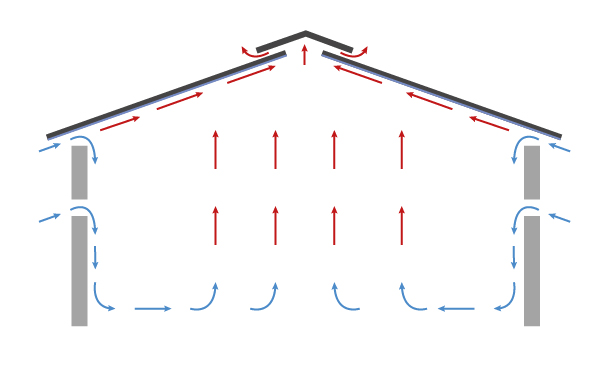
Sheet metal is a material that conducts heat well, yet has relatively low porosity compared to other materials—such as wood or cement. Typically, during the winter, the temperature inside a house is significantly lower than outside. What’s more, a lot of water vapor is generated in an occupied home—we all know this from personal experience: daily hygiene, cooking meals, and even boiling water for tea. All this vapor permeates and circulates within the building, partially penetrating the attic and the roof as well. Additionally, it’s worth noting that warmer air has a greater capacity to hold water vapor. Compounding all these factors is the temperature difference. The result is that very often, the temperature on the outer surface of a metal roof tile is much lower than on its inner surface. Furthermore, the air inside is more saturated with water vapor—that is, moisture. As a result of the temperature difference between the two sides, water vapor condenses on the inner surface of the metal roof tiles—a process very similar to the fogging of car windows or “breathing” on a mirror. In this case, however, the process occurs over a very large surface area, and although it is a natural phenomenon, if the roof is not properly prepared, the condensation of this water vapor can reach a scale that may cause serious damage to the roof. Importantly, this process occurs year-round with varying intensity, including in the summer, when the air is more humid, but there are also temperature differences—for example, between night and day.
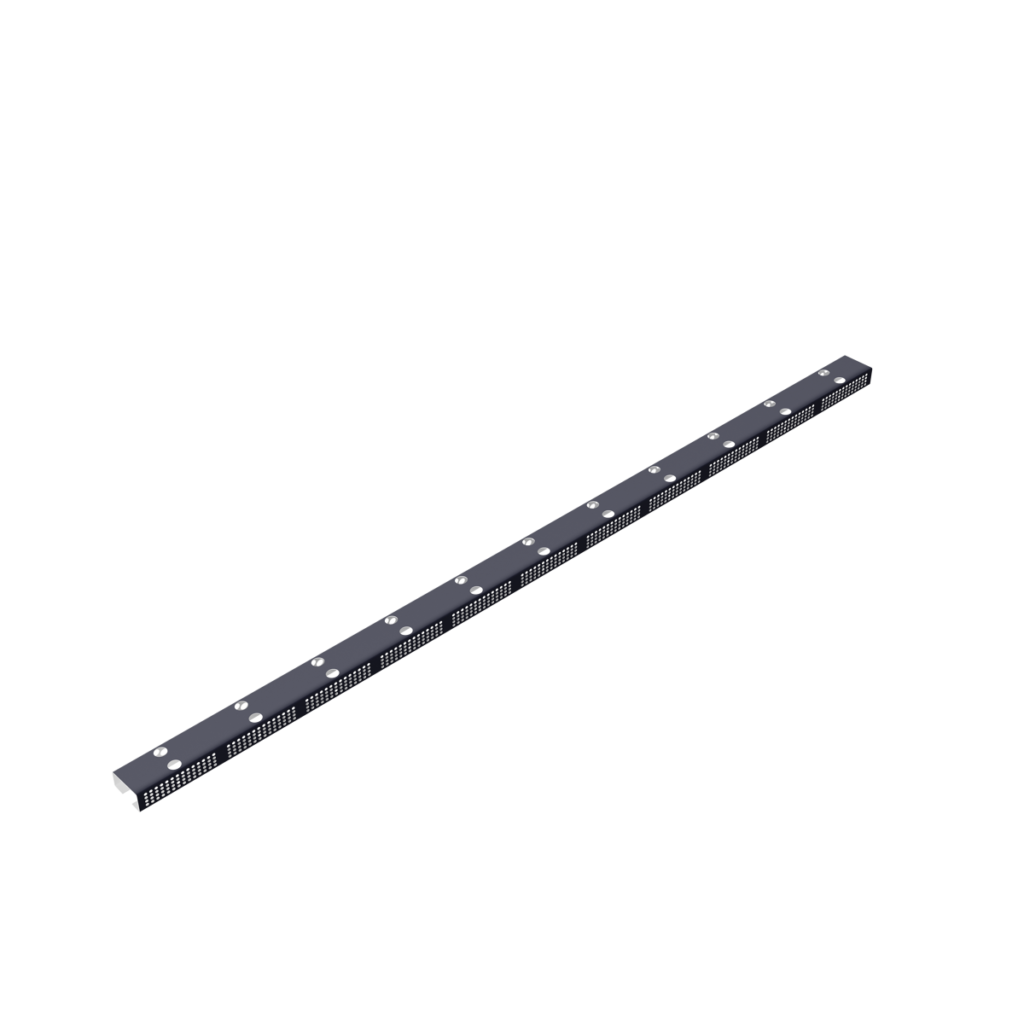
Ventilation of a metal roof is based on several key elements, all of which serve the same purpose—ensuring proper air circulation beneath the roof coverings, which, in a sense, “exhausts” water vapor and, on dry days, also allows the the roof framing to “breathe” and release any moisture it may have absorbed. The first essential element is ventilation battens, which allow air to flow beneath the roof covering. These battens are installed at the edge of the roof, right next to the eaves. That is why they are often called eaves battens. We orient them toward the Ridge, which ensures even ventilation distribution across the entire roof surface. A natural gravitational mechanism is at work here—warm air rises (toward the roof), while cold air is, in a sense, drawn in under the eaves. As a result, the air heated by the house creates a natural air tunnel, and the ventilation batten ensures unobstructed airflow.
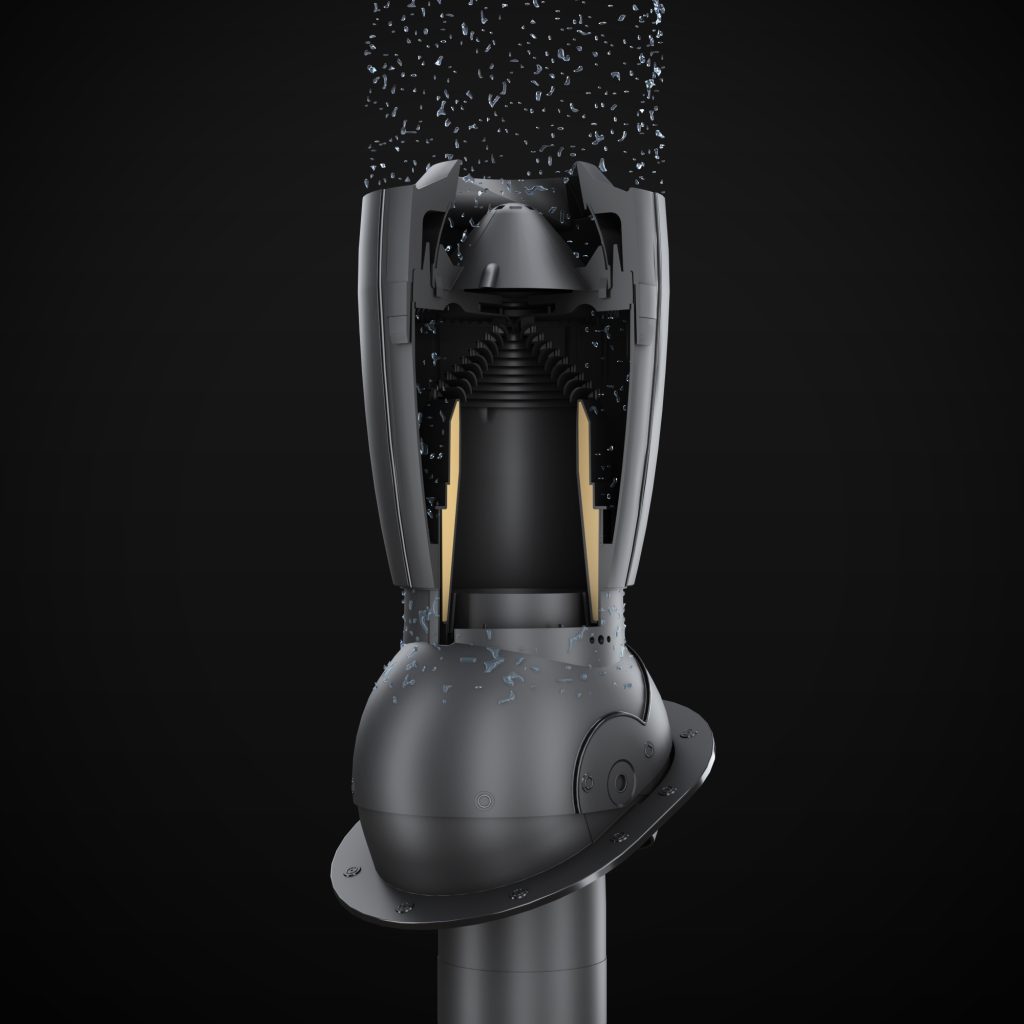
Another important element is ventilation chimneys, which are used to exhaust excess air from the space under the roof to the outside, thereby preventing moisture buildup and condensation. They operate on the same principle of thermal air circulation as an eaves batten, but thanks to their advanced design and materials, they are also capable of creating additional suction. It is worth noting that modern ventilation chimneys bear no resemblance to the ordinary “pipes” with a small roof that can still occasionally be found on the roofs of old houses built 40 or more years ago. They are made of composites with various thermal properties, designed with attention to the smallest details, and manufactured with exceptional precision.
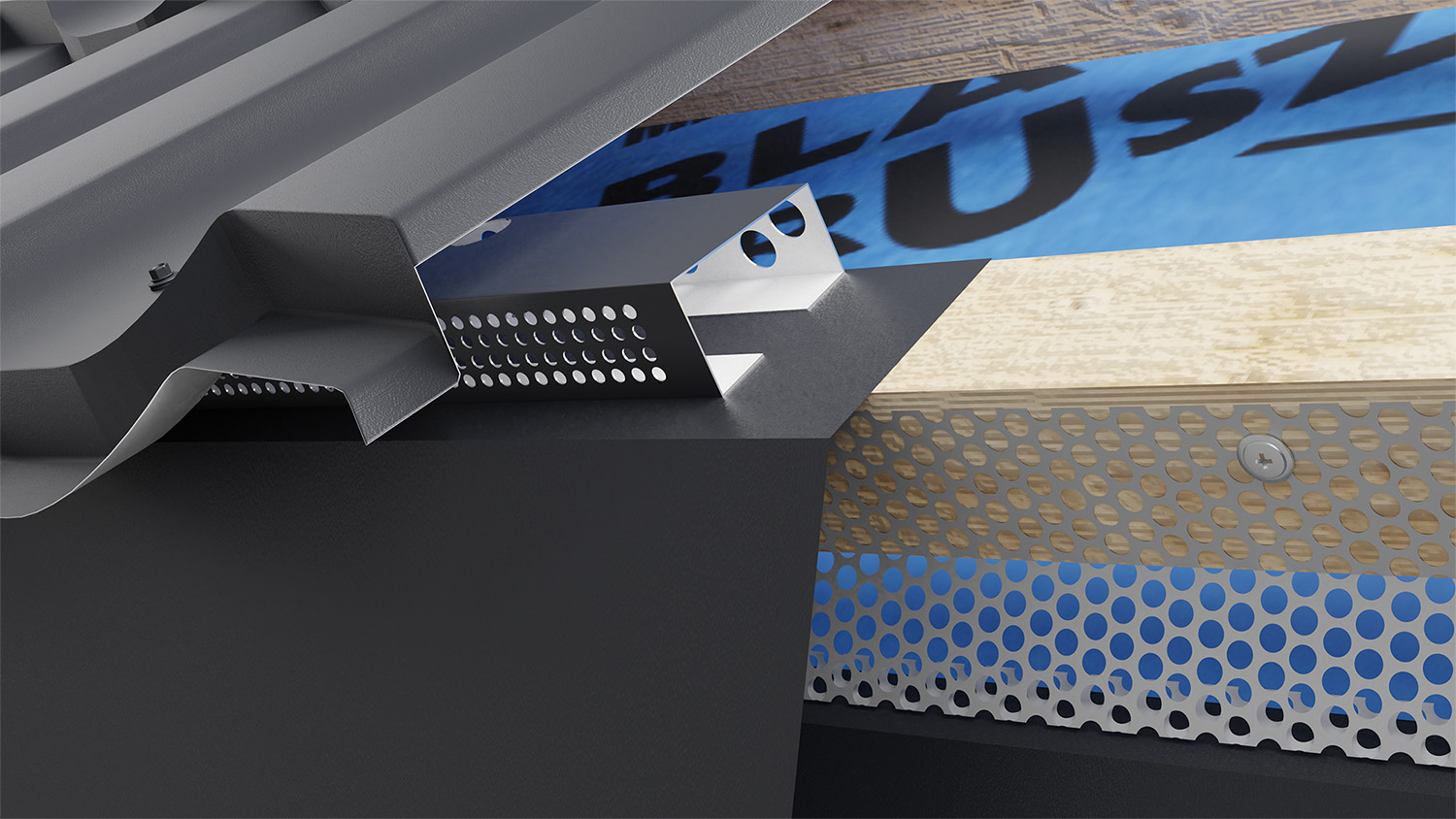
Finally, the last essential element is the use of ridge tape with mesh, which are installed in the Ridge area and help ensure Ventilation in this area, which is particularly prone to moisture buildup. You could say that ridge strips (with mesh only!) are the exit of a tunnel that begins at the eaves batten. As a result, while the ridge and the tape protect the roof from the elements, rainfall, and leaks, they simultaneously allow warmer air to escape freely, which in turn blows out and carries excess moisture away from under the roof.
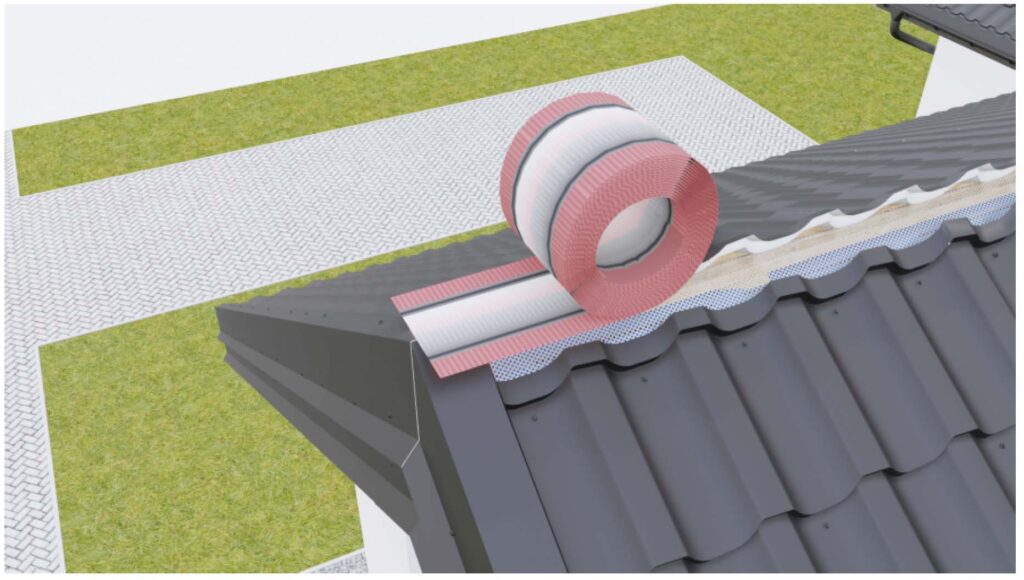
Regulating the temperature and humidity inside a building is also important for proper ventilation, as it enhances occupants’ comfort and reduces the risk of mold and mildew growth.
A lack of proper ventilation in a metal roof can have serious consequences. The buildup of moisture and condensation on the inner surface of the roof can lead to corrosion of the materials and structural damage. Such damage affects the entire roof structure. Typically, the roof framing is made of wooden components, which absorb moisture very easily. While constant air circulation ensures that this moisture is quickly released, a lack of ventilation can lead to progressive rotting and decay, and the repair costs for this are truly high. A second consequence is the impact on the roofing material itself—specifically, the metal roof tiles. These tiles are protected by advanced protective coatings, but usually only on the exterior side. The inner part of the metal roof tile is protected only by a base coat, whose resistance to constant contact with water, moisture, or mold is significantly lower than that of the protective coatings. This is not surprising, however—by design, the underside of the roof is supposed to remain dry, and this helps reduce the product’s cost.
A very important economic consideration is that, for all roof covering manufacturers, the Warranty covers only products that have been installed correctly. This means that manufacturers, including Blachy Pruszyński Company, are not liable for damage to the roof resulting from assembly that did not take ventilation into account or was performed incorrectly.
Finally, it is worth noting—even setting aside the cost aspect—that a lack of ventilation can negatively affect the comfort of building occupants and increase the risk of moisture-related problems, such as mold and mildew.
Ventilation of metal roofs is an essential element in ensuring the durability, functionality, and comfort of a building. Proper assembly and regular maintenance of ventilation components are crucial for ensuring the proper operation of the ventilation system and avoiding serious problems related to moisture and condensation.
Znalezienie rzetelnej ekipy budowlanej jest sporym wyzwaniem. Warto za poszukiwania zabrać się minimum 2-3 miesiące przed […]
Read moreJak czyścić blachodachówkę Blachodachówka na dachach polskich domów jest spotykana najczęściej. Inwestorzy doceniają jej wysoką jakość, […]
Read moreWymiana starego pokrycia dachowego – na co warto zwrócić uwagę? Wymiana starego pokrycia to nie tylko […]
Read more