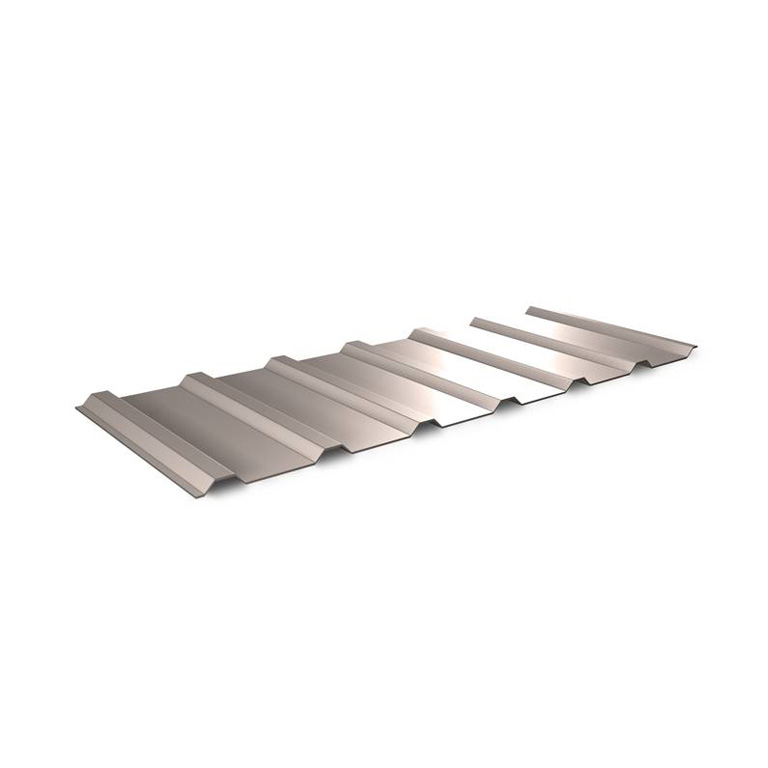
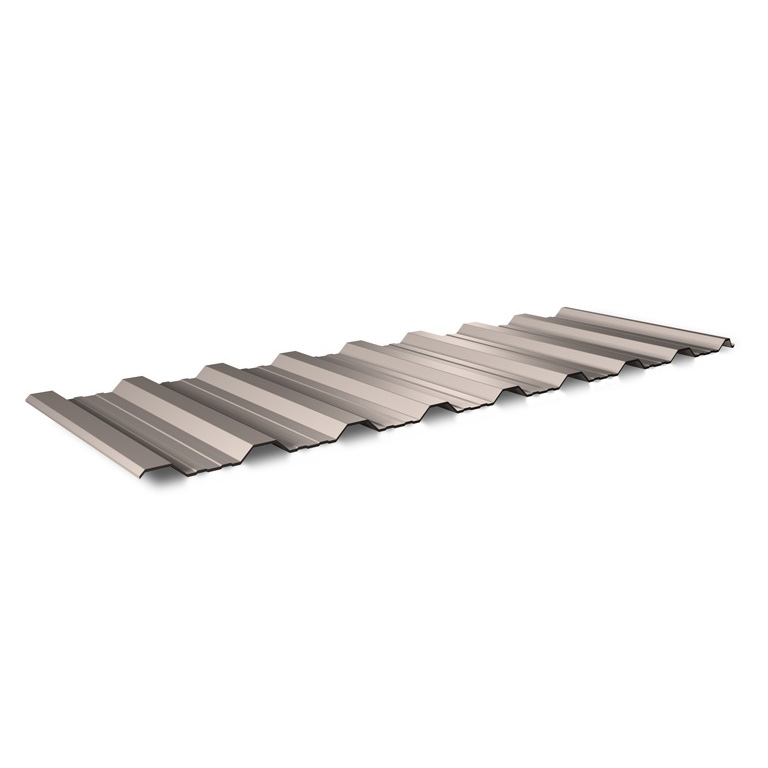
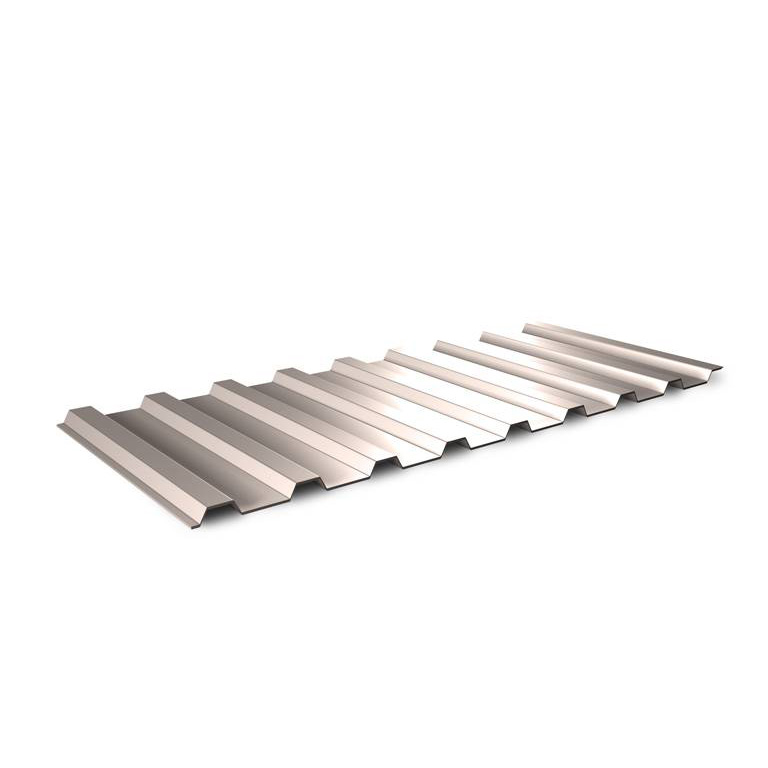
Do you have questions?
What colors are available for modular roof tiles?
The color range depends on the protective coating selected. Polyester coatings offer the widest color range for sheet metal products. For technical reasons, more advanced and durable protective coatings, such as PURLAK or PURMAT from our product line, have a more limited color palette but offer significantly greater durability and resistance to external factors. Blachy Pruszyński Company offers a wide range of colours and coatings for modular roof tiles, which you can explore by downloading our
PRODUCT PROFILE (PDF download)
Can solar panels be installed on a modular roof tile?
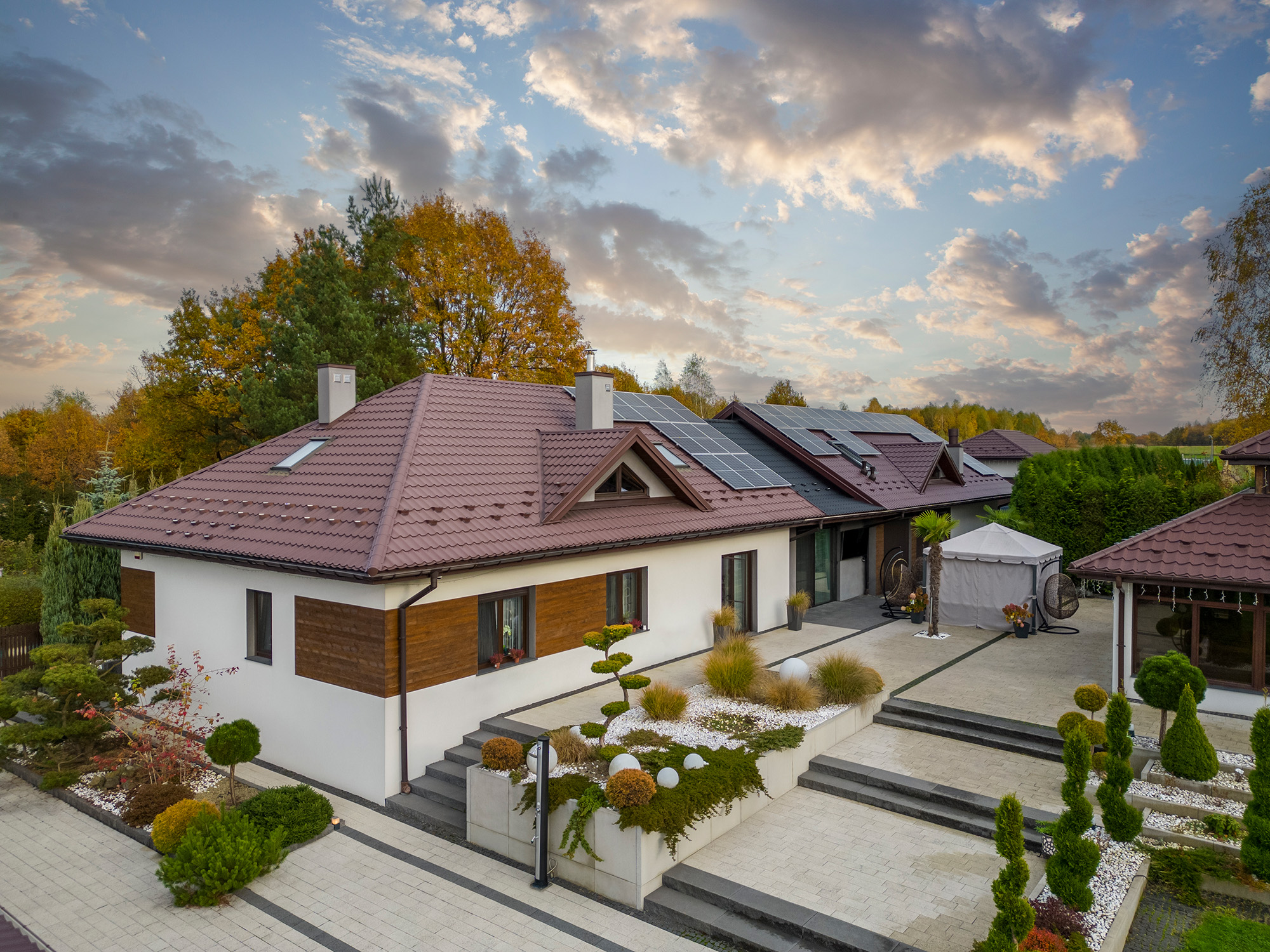
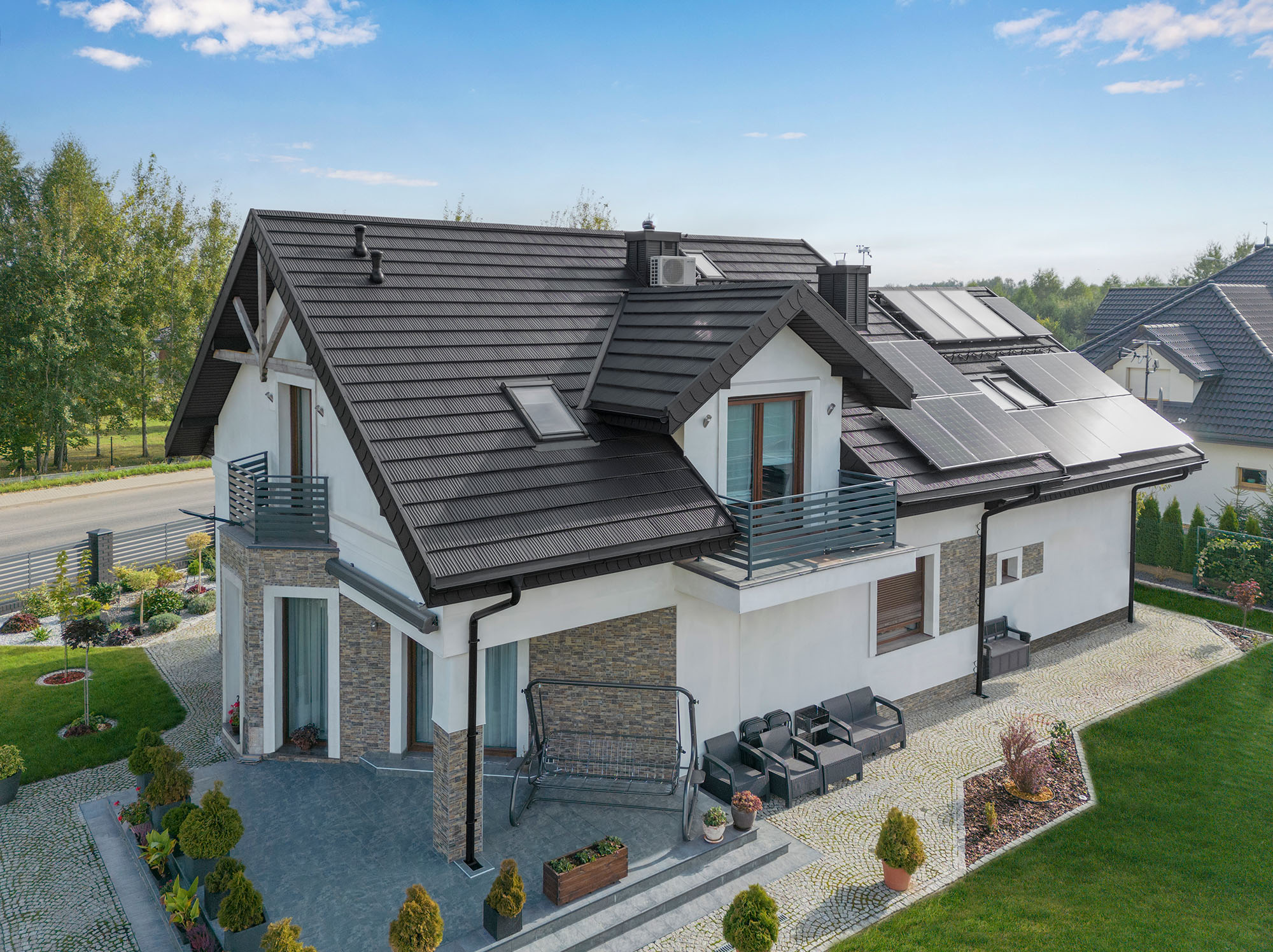
Installing photovoltaic panels on modular roof tiles is a viable and widely used option. The durability of the roofing material, a specific mounting system designed for panel roof tiles, and safety are the key factors that must be considered for this type of assembly. Many manufacturers also offer special mounting brackets for photovoltaic panels that are compatible with various models of metal roof tiles. These brackets ensure the safe and proper assembly of the panels. You can find the mounting brackets available in our product range at this link:
Photovoltaics Brackets
What are the recommendations for the maintenance and inspection of metal roof tiles?
Manufacturers’ recommendations include: an annual roof inspection, preferably in the spring, during which the roof can be cleaned using a soft brush and water at a maximum temperature of 60 degrees or pressurized water at a maximum pressure of 100 bar. Maintain a distance of at least 30 cm from the surface of the roofing sheet, and do not direct the water stream perpendicular to it. We also remind you to follow basic health and safety guidelines when performing maintenance.
What are the methods for maintaining and cleaning modular roof tiles?
The first step in maintaining metal roofs is an annual inspection, preferably in the spring, to detect any damage early on. In addition, roofing manufacturers recommend regular cleaning using a soft brush and water at a maximum temperature of 60 degrees or pressurized water at a maximum pressure of 100 bars. Maintain a distance of at least 30 cm from the surface of the sheet, and do not direct the water stream perpendicular to it. It is recommended to rinse the roof surface from top to bottom.
Modular roof tiles provide good thermal insulation?
Proper thermal insulation is provided by the insulation layer installed beneath the roof covering, which is designed to prevent heat loss from the building and ensure appropriate indoor temperatures.
Are metal roof tiles easy to assemble?
Yes, modular roof tiles are relatively easy to assemble. Thanks to their small size and light weight, modular roof tiles pose no assembly problems, even on complex roofs with steep slopes. During assembly, be sure to handle the metal roof tiles properly (e.g., avoid using tools that could damage the protective coating). Assembly can be made even easier by using standard flashings, such as ridge flashings, over- and under-gutter flashing, valley gutters, and barge flashings.
Are modular roof tiles weather-resistant?
Modular roof tiles are designed to ensure a watertight roof covering, which is why they are made of durable and resistant materials. Protective coatings (polyester or polyurethane) play a particularly important role here. These coatings make the metal roof tiles resistant to various weather conditions. However, it’s also worth noting that metal roof tiles will perform their function perfectly as long as they are installed correctly, in accordance with the assembly instructions.
What are the main advantages of modular roof tiles?
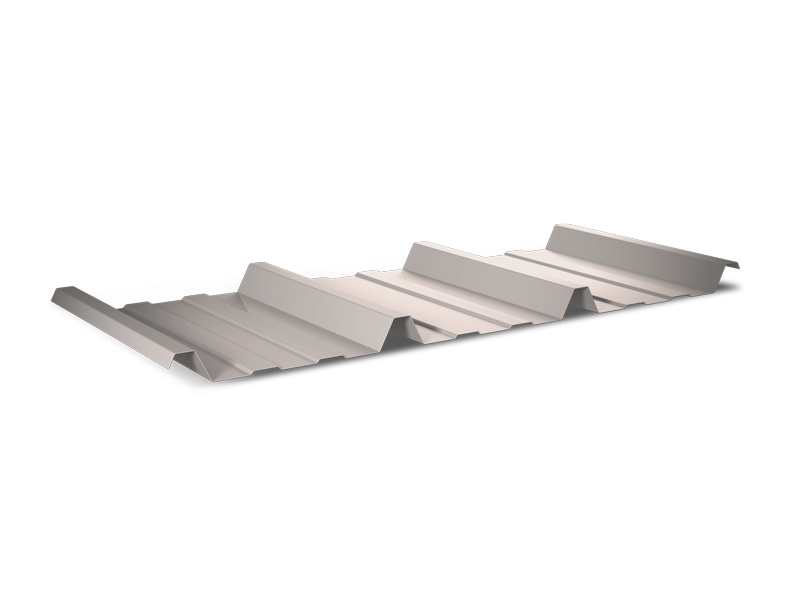
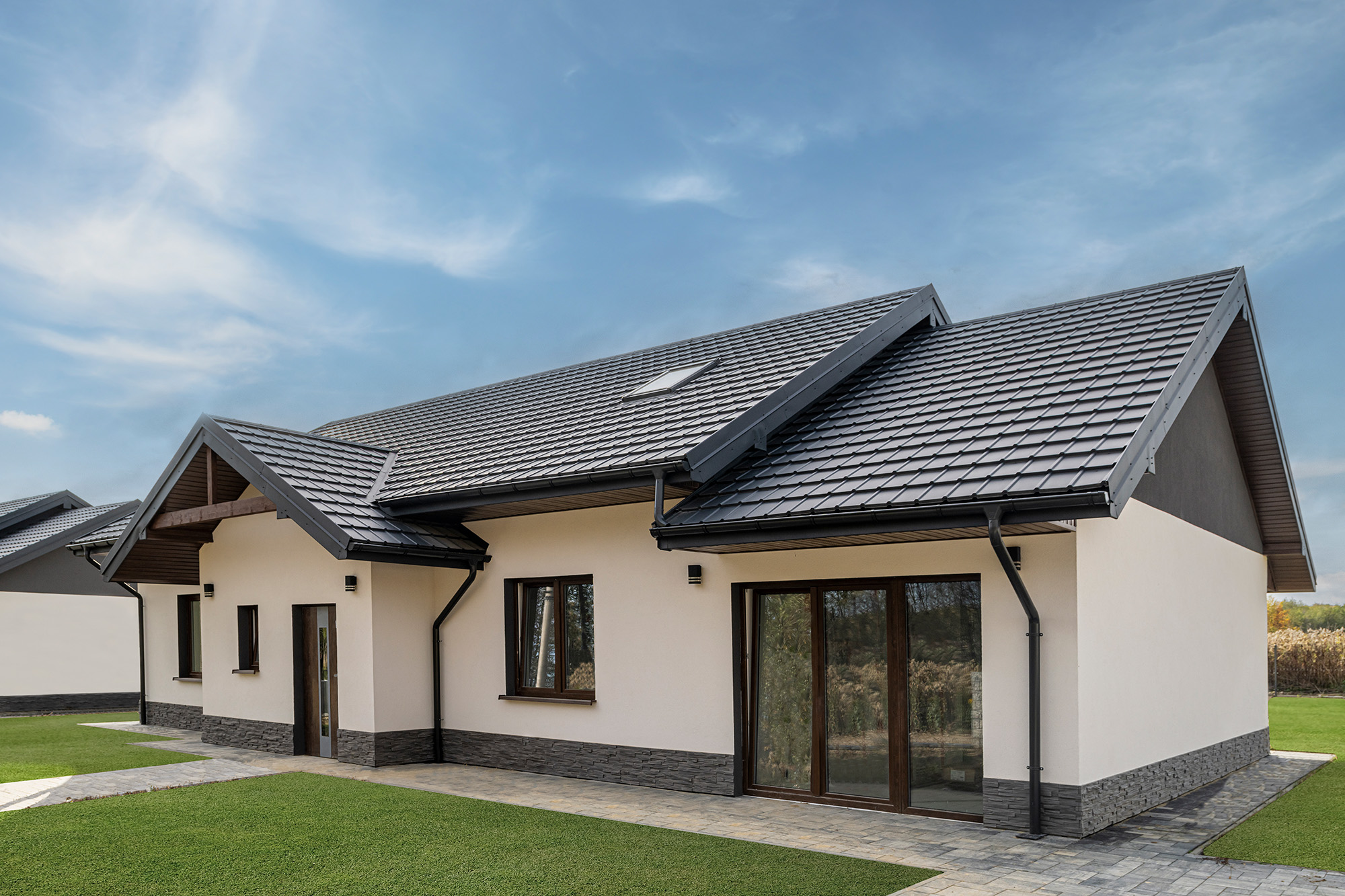
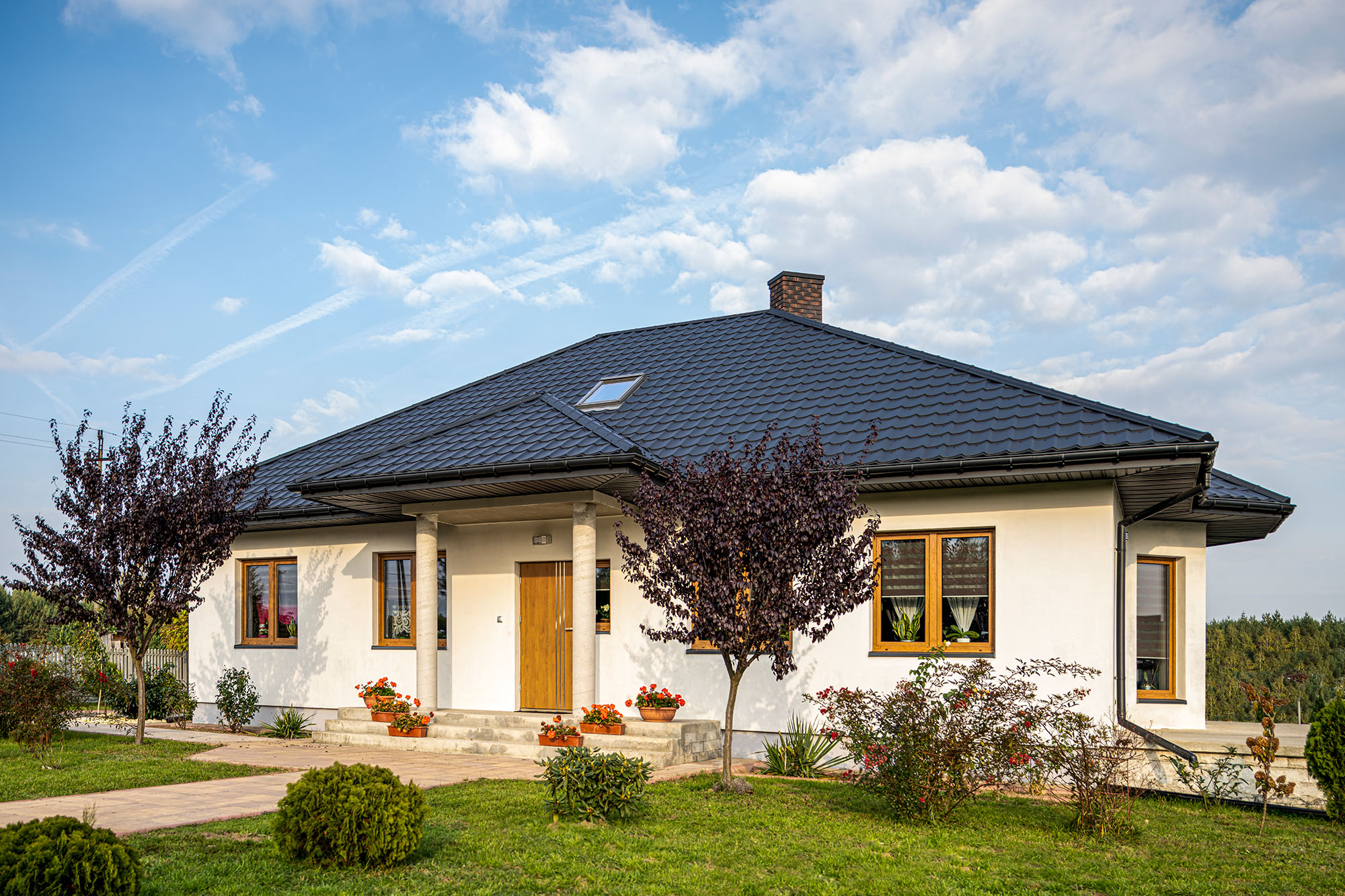
The main advantages of modular roof tiles—also known as panel roof tiles—are the light weight of individual sheets, ease of assembly, and hassle-free transportation. It’s also worth noting that, due to their modular nature, panel roof tiles allow for easy replenishment of orders or the replacement of sheets at a later date in the event of damage or roof expansion or modification. A good example of this is the hassle-free assembly of an additional roof window several years after the building has been in use. With other types of steel roofing, this would require purchasing custom-cut sheets; with modular roofing, however, a maximum of just two sheets (for a single window). This makes Modular roof tiles a popular choice among those deciding to build a house.
Are modular roof tiles suitable for any roof?
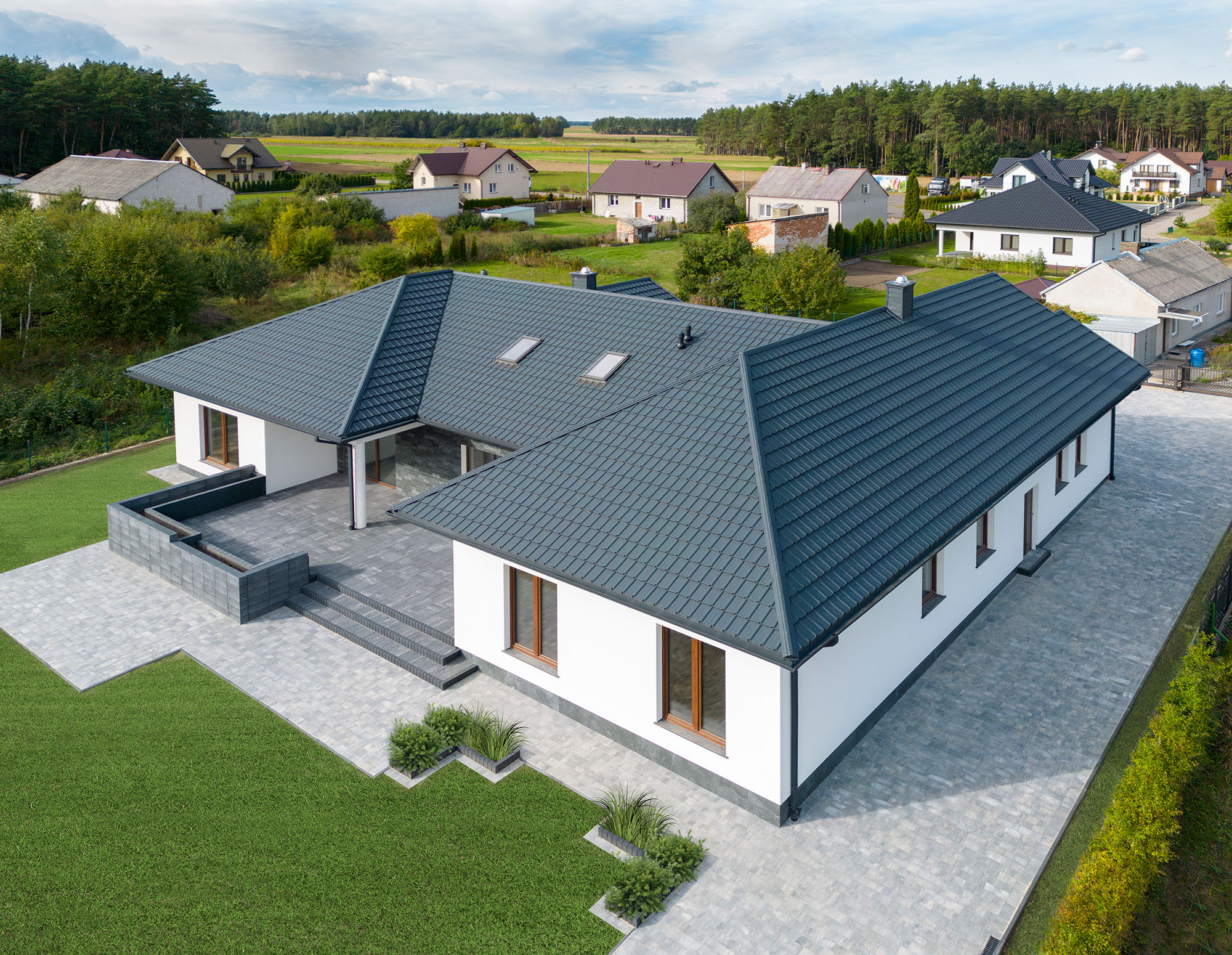
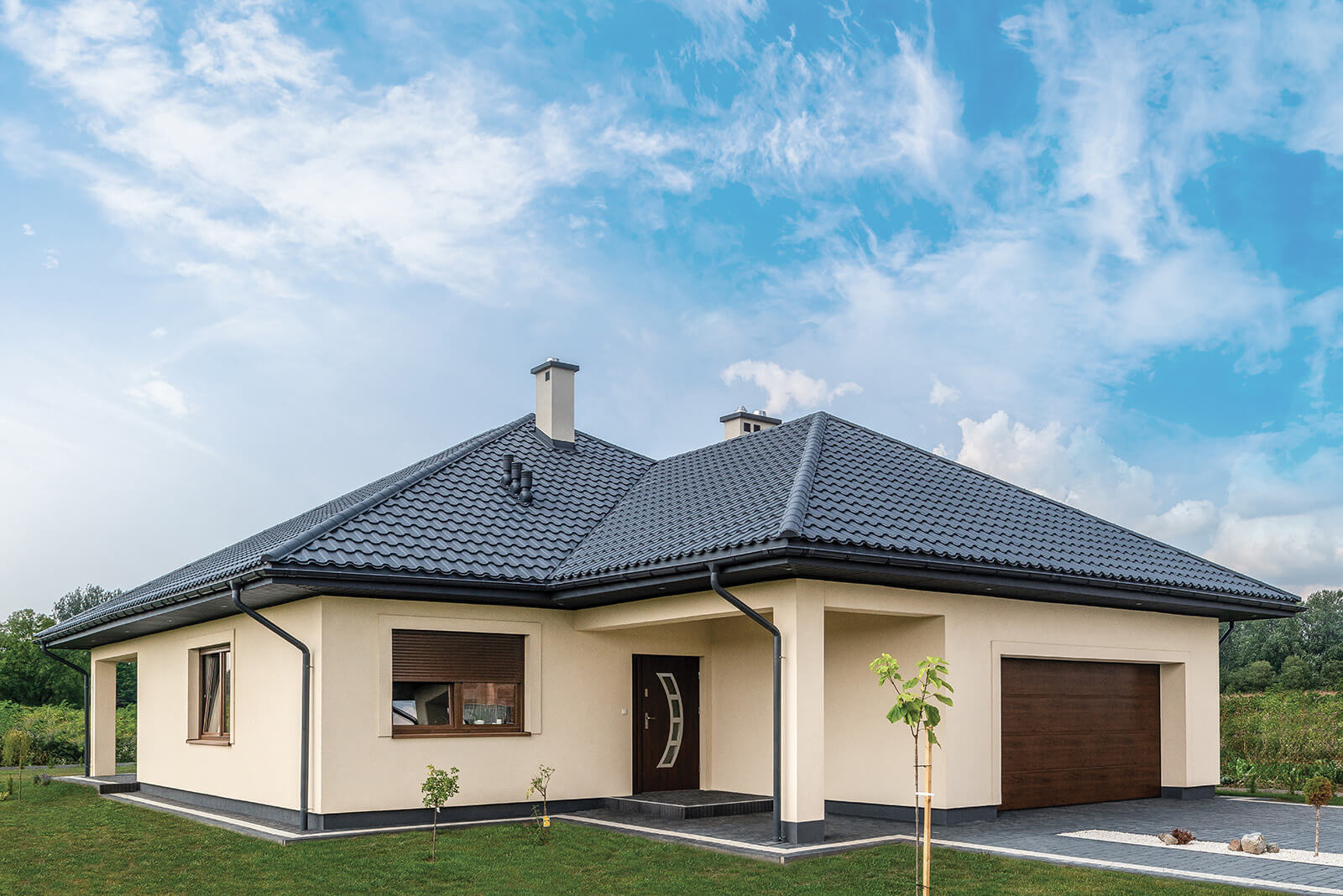
Yes, modular roof tiles are a versatile product that is ideal for multi-sloped roofs with many breaks (such as dormers), and proper installation on the roof surface and cutting the sheets on site will minimize waste. It is also a suitable choice for roofs with a relatively simple and regular shape.
What kind of gutters should I use with metal roof tiles?
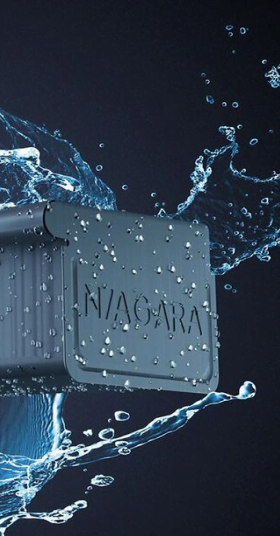
The choice of gutters for metal roof tiles depends mainly on the size (surface area) and pitch of the roof, as well as aesthetic preferences. The primary consideration is the material from which the gutters are made—PVC and metal gutters are available on the market. It’s worth noting that metal gutters, coated with protective finishes, are much more durable, resistant to changing weather conditions, and blend in more aesthetically with metal roofing. We encourage you to explore our selection of NIAGARA metal gutters:
NIAGARA METAL GUTTERS
What types of flashings are available for metal roof tiles?
The basic flashings for modular roof tiles include: modular barge flashing, Upper barge flashing and side barge flashings, Omega and barrel-shaped ridge caps, ventilation eaves battens, valley gutters, sidewall flashings, under-gutter strips, over-gutter flashing, and drainage gutters. You can find all the flashings available in our product range at this link:
TYPICAL METAL FLASHINGS
How often are battens placed under modular roof tiles?
It is assumed that for panel roof tiles, the ridge spacing should be 350 mm—exactly the length of a typical metal roof tile module. However, recommendations may vary in specific cases. All information regarding assembly recommendations and assembly instructions can be found on our website in the product sheet, under the “Assembly Notes” section.
Is it necessary to install roof sheathing for modular roof tiles?
No, there’s no need for that. The term “roof formwork” is primarily associated with the type of pre-covering used and typically implies the use of bituminous roofing felt, rarely a vapor-permeable membrane. The need for decking usually stems from the building’s design documentation; however, in the case of a building renovation, for example, it depends mainly on the condition of the roof framing and the slope of the roof. General roofing practice indicates that decking is necessary for roofs with a pitch of less than 20°. For typical structures, it is recommended to use high-quality vapor-permeable membranes and a substructure of wooden battens for installing metal roof tiles. The exact cross-sections of the battens and their spacing are specified in the product’s assembly instructions.
What should be placed under modular roof tiles?
It is recommended to use wooden battens 50 to 60 mm wide, depending on the roof pitch and the length of the roof slope, as well as counter-battens at least 40 mm high. Be sure to adjust the dimensions of the battens to the rafter spacing. It is very important to use the right type of wood. We recommend using dry structural lumber of class C24 or KVH. Roofs with a pitch of less than 20º require watertight pre-covering.
What should you look for when choosing metal roof tiles?
When choosing metal roof tiles, pay attention to the quality of the base material (coated sheet metal), the technical specifications (resistance to weather conditions such as rain, snow, wind, UV radiation, etc.), the shape of the roof, and, above all, the protective coatings used and the terms of the manufacturer’s Warranty. You can learn more about this topic in the article below:
WHAT TO LOOK FOR WHEN BUYING METAL ROOF TILES
What is the difference between modular roof tiles and standing seam metal roofing?
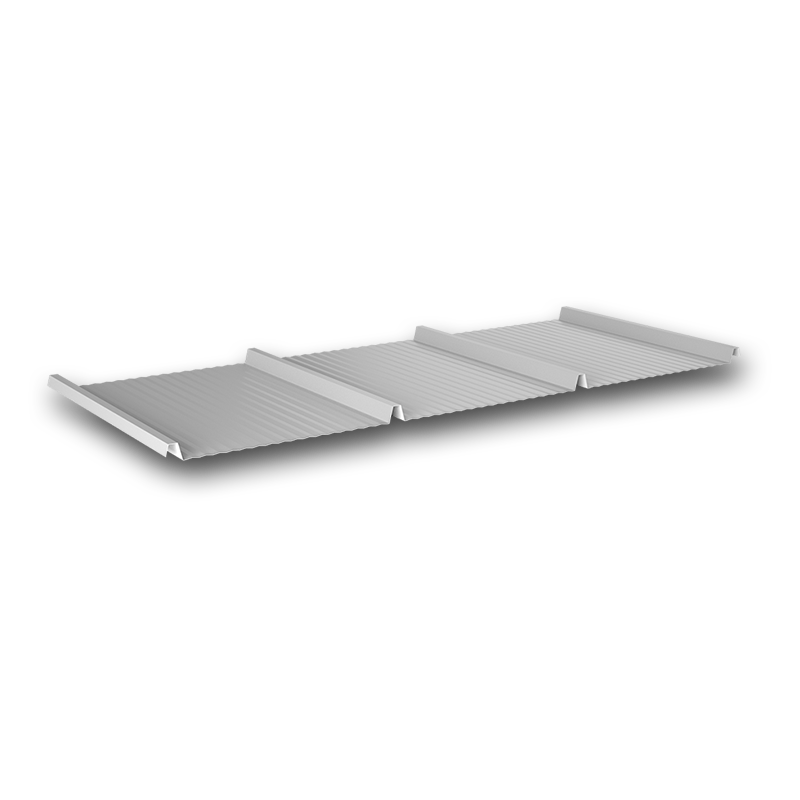
Modular roof tiles and standing seam metal roofing are two types of metal roofing that differ primarily in appearance and construction. Standing seam metal roofing consists of long sheets, custom-ordered to fit the roof’s dimensions, which feature a built-in click-type “lock” with an integrated, concealed mounting strip. Modular roof tiles, on the other hand, are sold in standard, small-sized sheets, which provide greater flexibility during assembly. Additionally, standing seam panels can be made from sheet metal up to 0.70 mm thick, while panel-type roofing sheets are available only in a thickness of 0.50 mm.
How much does it cost to cover a house with modular roof tiles?
Installing a modular roof tile is a case-by-case matter, as the cost depends on the roofing crew’s individual rates, the model of roof tile, the size and shape of the roof, the installation cost, and any additional accessories. We encourage you to contact our branches, which will be able to prepare a personalized, detailed quote based on your requirements:
OUR BRANCHES
How does a modular roof tile differ from a regular one?
Metal roof tiles sold in sheets are cut to specific dimensions—which are determined by the shape and dimensions of the particular roof. Modular roof tiles, on the other hand, are available in standard single- or double-module sheets. This makes them easier to transport and store (e.g., on a pallet); additionally, their small size and light weight make assembly simpler—even on roofs with complex structures.
How long will a roof made of modular roof tiles last?
The durability of a roof depends on many factors, such as: the quality of the materials used, including the wood used to construct the roof framing; the type of protective coating; climatic conditions; and proper roof installation. Regular inspections and maintenance of the roof are essential to maximize its lifespan. It is generally accepted that a roof made of modular roof tiles can last over 20 years before it needs to be replaced. It is also advisable to use products from reputable manufacturers who offer performance warranties on their products, such as Blachy Pruszyński Company, which offers warranties ranging from 15 to even 50 years on modular roof tiles, depending on the protective coating selected.
How much does a modular roof tile cost?
The price of modular roof tiles may vary depending on the tile model, sheet thickness, colour, and, above all, the protective coating selected; therefore, it depends on the specific variant. You can find more information on this topic at the following link:
HOW MUCH DOES A MODULAR ROOF TILE COST?
What are the estimated costs of purchasing and installing facade sheets?
The price of elevation panels, depending on the type of protective coating, is available on our website in the "Price Lists" section, on the "Downloads" subpage. Regarding assembly costs, we recommend contacting a contractor. As a manufacturing company, we do not directly carry out projects using our products. However, for any project involving assembly and construction, we recommend using the services of experienced and professional contractors. The total price is certainly significantly influenced by factors such as the complexity of the project, the scope of work, and the number of custom elements and additional components required by the project, all of which can increase the final cost.
What are the methods for installing elevation panels made of sheet metal?
Many contractors are highly skilled at assembling PS panels. The Pruszyński Company conducts annual training sessions where participants can also deepen and refine their assembly techniques. On our website, www.pruszynski.com.pl, you’ll find assembly instructions that will help you install the facade professionally. An increasing number of different types of assembly components are appearing on the market, making it easier to properly install PS elevation panels.
What are the differences between painted sheet metal elevation panels and color-coated ones?
The coating process takes place at the steel mill itself, under very strictly controlled conditions and following a specific procedure that is essentially impossible to replicate even in a professional paint shop. As a result, sheets coated in a given color are exceptionally durable in terms of both UV resistance and weather resistance. An equally important advantage of using mill-coated sheet metal is a significant reduction in the production process, which means that the customer can receive their order much faster. However, this also means there are certain limitations regarding the availability of non-standard colors—which are restricted by current inventory levels. For large orders, it is possible to order sheet metal in any color and coating, but this significantly extends the lead time. In such cases, we very often use powder coating services. When it comes to powder coating, it is very important to provide recommendations in advance regarding the conditions of the structure on which the panels will be installed. In this way, even with powder coating, we can meet requirements for both corrosion resistance and UV resistance.
Can exterior metal panels be used on a single-family home?
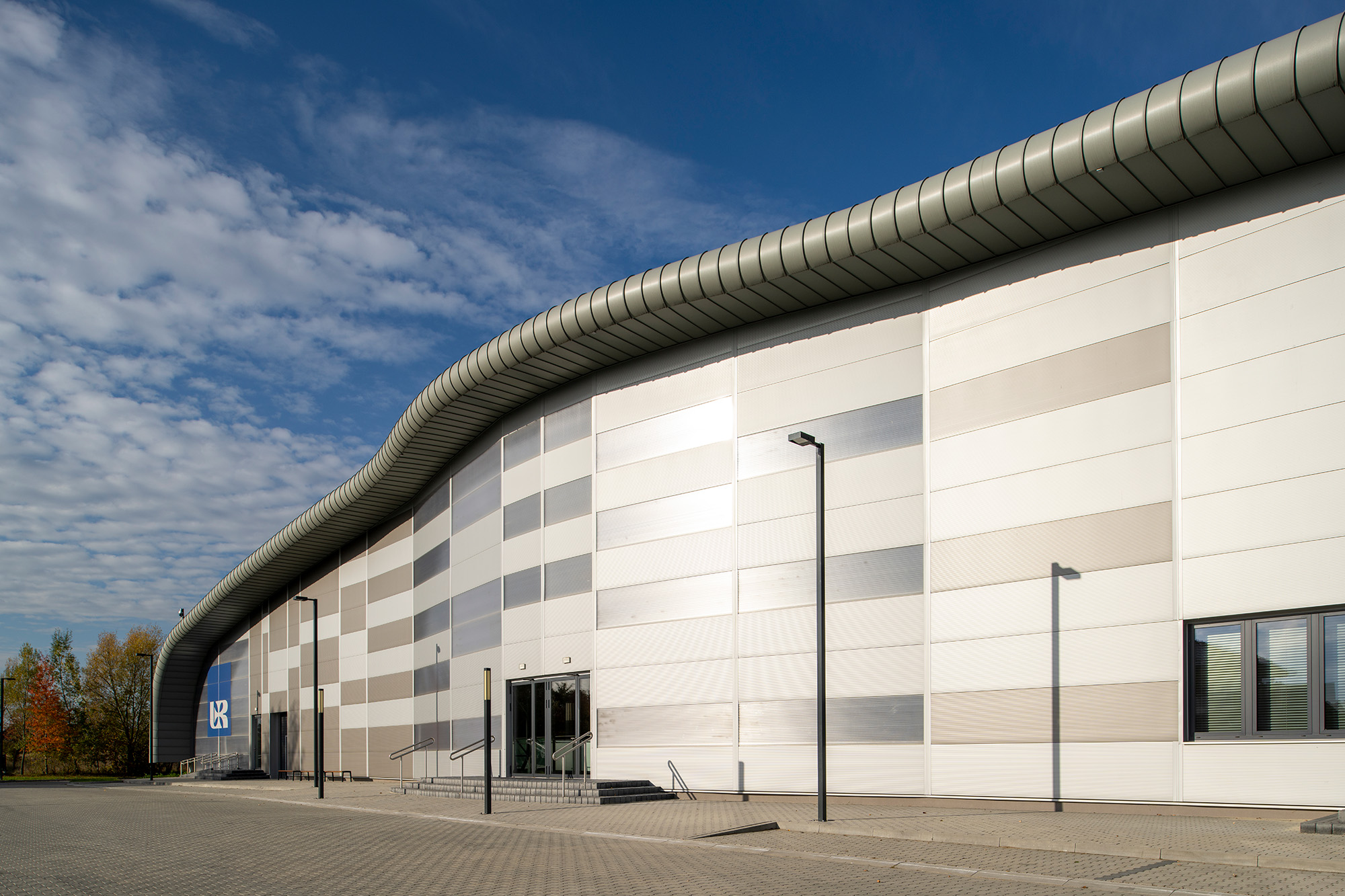
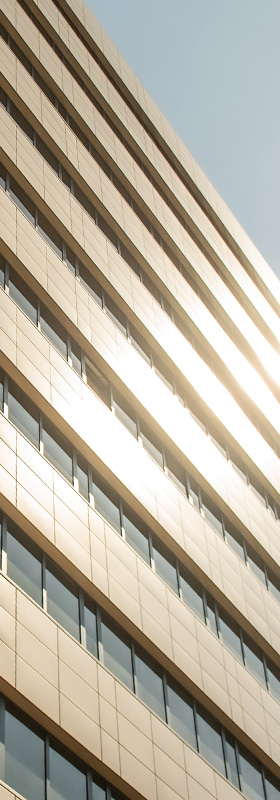
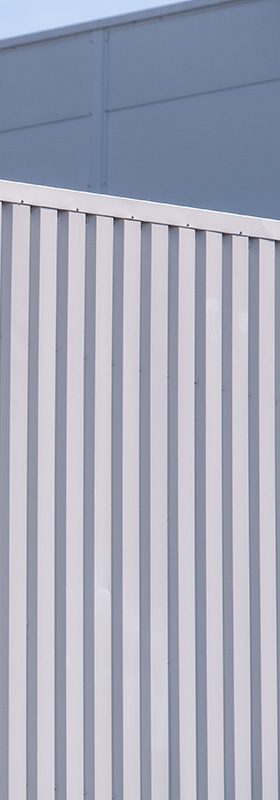
Elevation panels can be used in most building structures as facades. The elevation panels are also used as a finishing element for the facade—or even as a section of it—to highlight certain architectural features or as part of an architect’s design. They are ideal both as the main elements of a facade and as a complement to other facade materials. Therefore, there is no reason why they cannot be used on single-family homes, provided their assembly is carried out in accordance with best roofing practices.
What designs and finishes are available for sheet metal elevation panels?
The Blachy Pruszyński Company offers one model of elevation panel— the PS Panel—which is available in two widths: 315 mm and 215 mm. The length of the panel is tailored to the facade’s geometry and manufactured according to the customer’s order. By pre-bending the panel during assembly, we not only achieve a visual effect but also prevent the panels from “waving” due to factors such as heat.
Additionally, depending on the selected coating, our panels offer a very wide range of colors, and for custom orders, we are able to supply panels in any color. An interesting solution is the use of sheet metal with a wood-grain coating to achieve the look of a wooden facade without the need for maintenance, as is the case with natural materials. However, this requires consultation with the technical and sales departments to confirm the conditions, production capabilities, and material availability.
How should the metal roof tile be stored until assembly?
If assembly is to take place within approximately 3–4 weeks of production, simply cut open the packaging and place the package at a slight angle so that any rainwater can drain off.
If this period is to be longer, it is absolutely necessary to cut open the packaging and insert spacer strips between the sheets to allow for free airflow. The package must not rest directly on the ground. The sheets should be stored in a dry and well-ventilated place.
Detailed storage instructions are always provided on the product label attached to the package.
A moss appeared on the roof tile from the north side or is there a way to remove it?
Mosses and lichens most often attack roof tiles on shaded sections of the roof, especially when the house is located near a forest or in an area sheltered by trees. They are particularly fond of natural ceramic and cement roof tiles, as well as metal roofing. But they can also appear on glazed ceramic roof tiles with a very smooth surface. It’s only a matter of time.
In such situations, we recommend using a specialized product designed to remove algae, moss, and lichen—for example, products from ALTAX. Most products of this type are relatively easy to use — simply spray the moss and lichen generously, and after a few days, rinse the dead vegetation with water—most of it should wash away on its own, and the rest should be removed with a brush and clean water (without detergents). It’s also worth remembering that once the roof has dried, you should spray its surface again with a suitable protective treatment and let it dry. This will protect the surface from regrowth, as the protective treatments will significantly delay the process.
Keep in mind that fungicides and algicides are strong chemicals, so you must exercise extreme caution when applying them. Gloves and safety goggles are required. Another very important aspect is to protect the area around the building so that water containing chemicals does not run directly into the soil or flower beds. The best solution is to block the outlets of downspouts, for example by placing plastic barrels or containers underneath to catch the water containing the chemicals.
ALTAX - Manufacturer's Website
Is it possible to install copper flashings on a steel roof?
Caution must be exercised when using copper, as copper oxides are highly corrosive and cause corrosion of other metals. For this reason, it must not be combined with other types of metals on buildings (copper reacts upon contact and causes electrolytic corrosion of other metals).
Why are metal roof tiles recommended for renovating old roofs?
This is directly related to its light weight. In the case of old roofs, the roof trusses of renovated houses are often already somewhat worn down by time. Therefore, it is safer to use metal roof tiles, which weigh around 4.7 kg/m², rather than ceramic roof tiles, which are nearly ten times heavier. However, it’s always a good idea to have a specialist inspect the condition of the roof truss and confirm whether it requires renovation or replacement after all. In such cases, the safety of the building’s residents or employees, as well as the installation crew, is always the top priority. In most situations, however, the condition of the structure allows for the use of metal roof tiles without major issues, whereas the use of ceramic roof tiles would no longer be possible.
Does the roof need maintenance?
Yes, every roof requires periodic inspections to check for any damage. Most products offered by the Blachy Pruszyński Company are available with various types of specialized coatings (covered by Warranty) that increase the service life and durability of metal roofing. Maintenance mainly involves removing soot and chimney dust, which, if left for an extended period, can damage the metal sheeting. Particular attention should be paid to the areas around chimneys, which are critical due to more demanding operating conditions. If localized damage to the paint coating is noticed during an inspection of the roofing, touch-up painting should be performed. In such situations, the best solution is to use dedicated touch-up paints matched to the specific coating. The Blachy Pruszyński Company offers such paints as part of its regular product line, and it is strongly recommended to use the company’s products that are recommended for the specific coating.
Can I use an angle grinder to cut sheets?
Modern roof coverings preclude the use of angle grinders for cutting. Using this method to cut the material will void the Warranty.
An angle grinder generates a great deal of heat during operation and cutting, which in turn damages the edges of the sheet metal as well as its protective coating. Additionally, the metal shavings produced during operation become embedded in the sheet metal’s surface, creating potential corrosion sites.
The proper way to cut sheet metal is to use automatic nibblers or hand shears. These tools use mechanical force to cut the sheet metal without exposing it to extreme temperature fluctuations. Additionally, it’s worth remembering that after cutting, it’s a good idea to protect the cut edges with a dedicated protective varnish or special paint.
W jaki sposób zabezpieczyć drobne uszkodzenia powłoki blachodachówki, które powstały przy montażu?
Most of the roof coverings in the Blachy Pruszyński Company’s product line offer a selection of specialized coatings using protective finishes. These are technologically advanced and modern materials that are applied to our products under special conditions. They are available in several variants, ensuring not only exceptional durability (covered by a Warranty) but also unique and interesting aesthetic effects for roof coverings. They are subject to very strict requirements and are under constant supervision through laboratory testing.
However, minor damage to the coating may sometimes occur during installation work. If the damage is not significant or is not located in a critical area of the roof, touch-up paints can be used to repair it. They provide a relatively easy way to protect the damaged area from external factors. This solution is often very cost-effective, as it does not require replacing the entire element—which would involve removing the old section and performing assembly with a new one. If you have any doubts about whether this solution is suitable for a specific case, we encourage you to contact our specialists or one of our partners who offer our products.
The assembly instructions I found on your website today say that you're supposed to paint over it with touch-up paint. Where can I buy that kind of paint? Can I use a different kind?
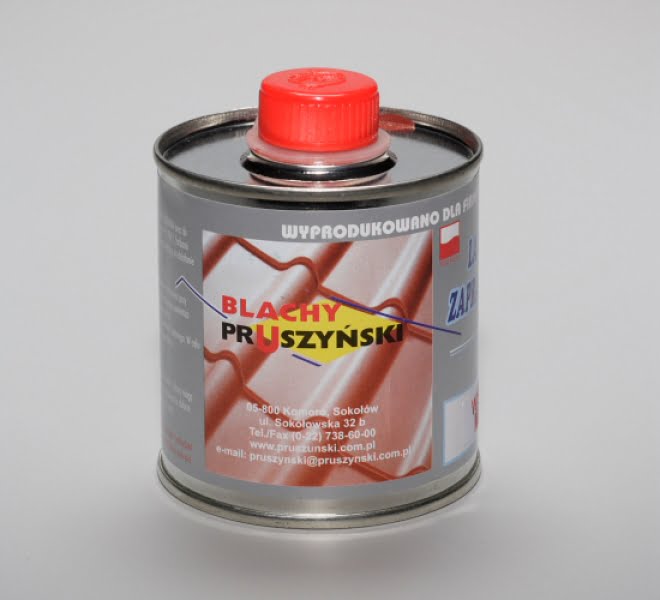
Minor damage to roof coverings can be repaired using touch-up paints. However, it is very important to use those recommended by the manufacturer. Blachy Pruszyński Company’s regular product line includes a full range of such products suitable for every type of roof covering. Other paints and varnishes, such as red lead, must not be used. Touch-up paints are formulated so that they do not differ significantly from the color of the specific roof’s roof coverings. By using the recommended and proprietary products from the Blachy Pruszyński Company, you can be sure that the repairs will not affect the appearance of the roofing or the durability of the coating in other areas.
Touch-up paints are also available at partner locations that sell our products.
How to register and how does the warranty work?
In order to register the warranty, download the warranty registration available in files for download / printing or directly:
Warranty registration and send it completed to the following address: guarantee@pruszynski.eu
The warranty begins to apply on the day of purchase of the goods. Registration of warranty is necessary to quickly identify the purchased batch of goods.
How can I advertise a product? Where can I find more information?
Complaints should be filed at the wholesale store where the purchase was made. If the wholesale store in question has closed (is no longer in business), the completed complaint form should be sent directly to Pruszyński Company at the following address: pruszynski@pruszynski.com.pl
A complaint form is available in the "Downloads / Forms" section or directly here: COMPLAINT FORM