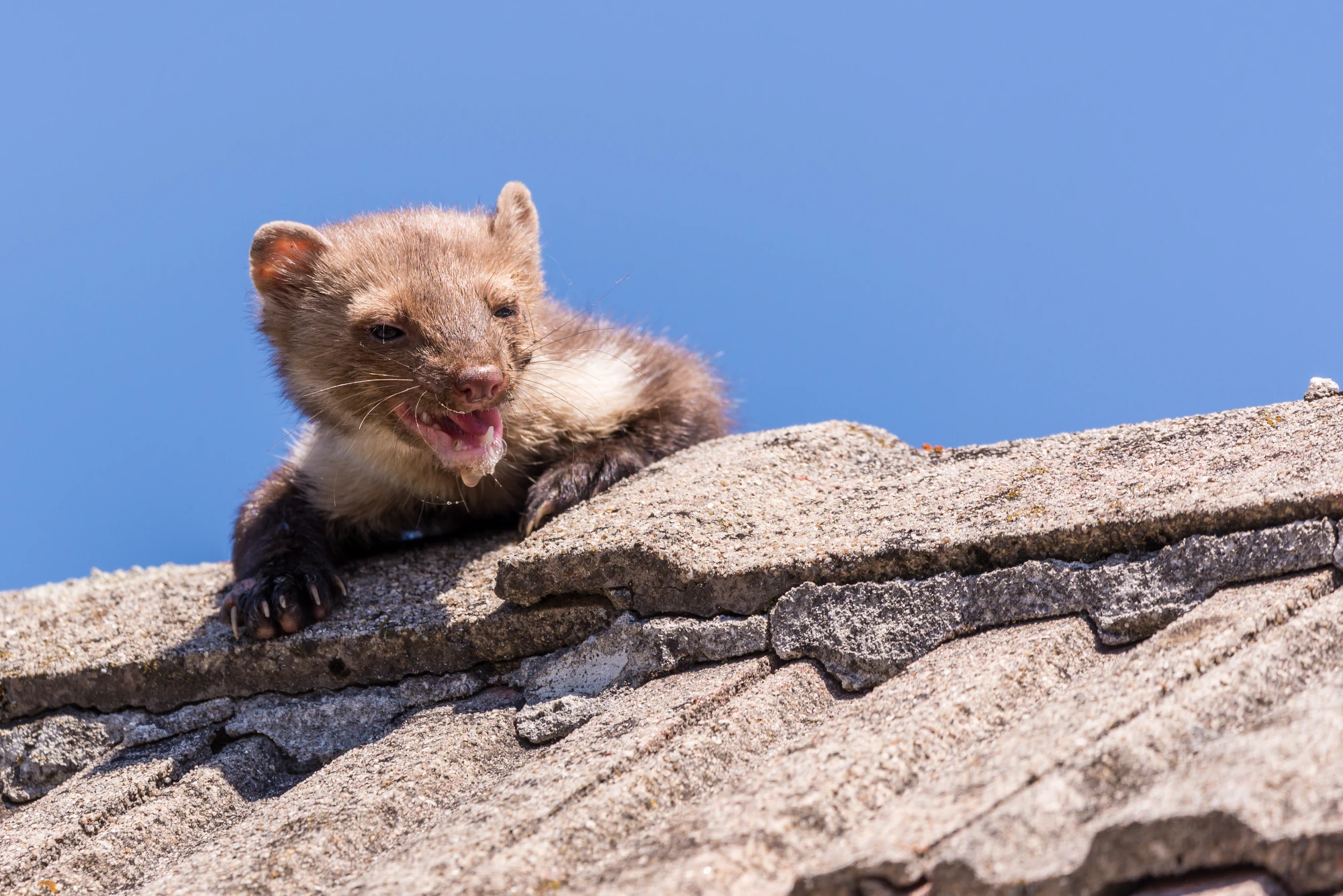
Martens are clever animals that are increasingly taking up residence in the roofs of single-family homes. Their presence can lead to serious damage to the insulation and structure of the building. In this guide, we show you how to effectively protect your roof from martens and other animals. We’ll also cover which materials to choose and how to avoid costly mistakes.
In this post, you’ll learn about the most common problems:
The “Knowledge Around the Roof” series is a practical guide to roof maintenance and renovation. The articles go beyond simply discussing material selection, offering solutions to real-world problems faced by homeowners. The series covers legal formalities, budget planning, and modern technologies such as Photovoltaics and energy efficiency. Safety is a key focus—from protection against storms and martens to roof access systems. The series is rounded out with advice on aesthetics and durability, ensuring thermal comfort for decades to come.
This article focuses on the problem of martens in the roof as a significant threat to the structural integrity and thermal insulation performance of a building. It explains how the activity of these animals leads to damage to insulation materials, structural elements, and systems, as well as how it affects the comfort of living in the home. It discusses the factors that make roofs and attics an attractive environment for martens and highlights the consequences of failing to implement adequate protection. The article also presents acceptable methods of action in accordance with regulations, as well as effective ways to deter pests and mechanically secure the roof. Overall, the article emphasizes that only a comprehensive approach—combining the selection of appropriate materials, the elimination of construction errors, and regular inspections—can effectively protect a building from serious and costly damage.
You can tell relatively quickly if there’s a marten in your roof if you pay attention to the telltale signs. They’re mainly active at night, so the first signs are often auditory.
The most common signs are:
It is worth noting that martens can cause significant damage very quickly, especially once they have settled in permanently.
The presence of a marten in the attic isn’t just a nuisance because of the noise it makes; above all, it poses a real threat to the roof structure and the building’s systems. Damage can occur after just a few days of its activity.
The most common types of damage are:
In practice, this means that failing to address a marten infestation can result in repair costs ranging from several hundred to even several thousand zlotys, depending on the extent of the damage.
A roof provides the perfect habitat for martens. The roof’s structure contains numerous spaces that provide warmth and protection from the elements. Attics are a safe place for these animals and are difficult for predators to access.
Martens also choose roofs because of:
In Poland, martens are partially protected, so their removal must be carried out in accordance with applicable regulations. Methods that could harm them may not be used.
Permitted activities include:
It’s worth remembering that martens carry various diseases, so protecting your home is not just a matter of comfort, but also of the safety of its residents.
An electric fence is one of the most commonly chosen methods. It is installed along the roofline, near the eaves, and in places where martens try to get inside the building. The electrical pulses it generates effectively deter these animals without causing permanent injury. Electric fencing works particularly well where other methods have failed.
Ultrasonic repellents emit ultrasonic sounds that are very distressing to martens. Their assembly in the attic of a house limits martens’ visits and reduces their activity. This method is non-invasive and easy to install.
Repellents work by creating an environment that is hostile to these animals. However, their effectiveness is limited and requires regular use.
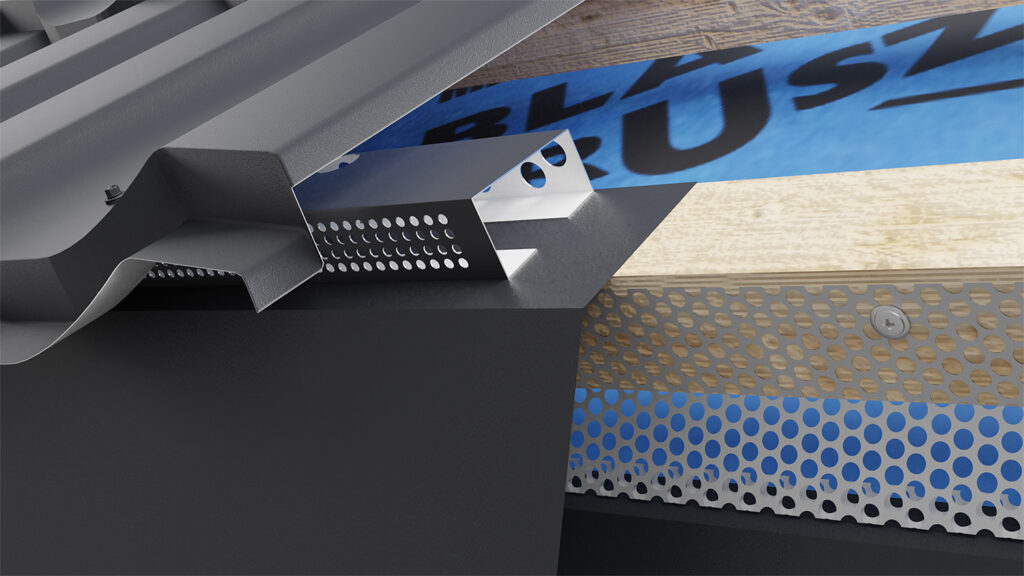
If you want to effectively get rid of the problem of martens, opt for mechanical solutions. This method works regardless of the conditions and does not lose its effectiveness over time. The key is to physically prevent martens from getting onto the roof and into the building.
The most important element is installing a steel mesh with a mesh size of 10–20 mm or perforated sheets as flashings. These components are used around the eaves, gutters, and in areas with access to the attic. A tightly stretched mesh eliminates gaps and effectively blocks access to the interior of the house. This material is weather-resistant and bite-resistant.
Any gap in the roof structure is a potential entry point that martens can exploit. That’s why you should thoroughly check for gaps and seal them permanently. The best results come from combining polyurethane foam and metal mesh. Polyurethane foam alone is not enough—martens quickly destroy it, causing damage to the insulation. This combination will also deter other animals, such as birds looking for a place to nest.
Spikes installed along the edges of the roof, at the eaves, and near the gutters make it difficult for martens to move around. The animals lack a stable foothold, so they avoid staying in these areas. This is a simple and effective method that also helps reduce the presence of birds.
Gutters and downspouts are the main “ladder” for uninvited guests. If this area is not secured, the entire roof protection system against martens may prove ineffective. Anti-climbing bands or additional netting are used here to prevent access to the roof.
Ventilation openings lead directly into the building, so they must be protected with metal grilles. This ensures protection not only against martens, but also against birds and rodents, which often use the same entry points.
The range hood is one of the most common places through which martens gain access to attics. Sealing it off (e.g., with a board fitted with mesh on the inside) completely blocks access to the space under the roof and deprives these animals of shelter. This is one of the most durable solutions for securing your home.
Mechanical protection of the roof against martens is the foundation of effective protection. A good solution is to combine the above methods with system-based solutions such as prefabricated flashings (ridge flashings, sidewall flashings, valley gutters, upper barge flashings, and ventilation elements) (start battens and ventilation strips). This provides a lasting solution and minimizes the risk of the problem recurring.
It’s worth remembering that martens are exceptionally clever animals, which is why only comprehensive protection of the entire roof and attic can guarantee your home’s complete safety.
House martens prefer soft, easily tearable insulation materials in which they can quickly build nests. Therefore, it is crucial to use solutions that are unattractive to them or difficult for them to damage.
This is one of the best options for reducing the risk of martens taking up residence in the attic. Once it hardens, it forms a dense, hard structure that animals cannot easily tear apart or move.
Why it works:
Rigid sheet materials are not very attractive to martens because they are unsuitable for nest-building and are tear-resistant.
Advantages:
Wool itself is one of the materials most often damaged—these small predators love to use it to build their nests. However, it can be used as long as it is properly protected.
How to do it:
Insulation systems with additional layers (e.g., insulation boards + membranes) make it difficult for martens to reach the actual insulation.
Result:
Often, the biggest problem isn’t a lack of security measures, but rather carelessness. Martens can exploit even the smallest opening.
Common mistakes:
Such negligence causes martens to return quickly, damage the insulation, and potentially cause significant damage throughout the building.
Effective protection of the roof against martens safeguards the thermal insulation, interior, gutters, and building structure; minimizes damage and thermal bridges; and ensures peace of mind for residents.

Converting an attic is a way to gain additional space in a single-family home, but it […]
Read moreA roof is not just the crown of a building, but above all its protective shield. […]
Read moreRoof safety is one of the key requirements of any construction project. Compliance with health and […]
Read moreThe roof is one of the most important elements of any home. Proper maintenance of a […]
Read moreChoosing the right roofing metal sheets is crucial for the durability and aesthetic appeal that the […]
Read moreOne of the most common mistakes made during roof coverings installation is a lack of knowledge […]
Read more