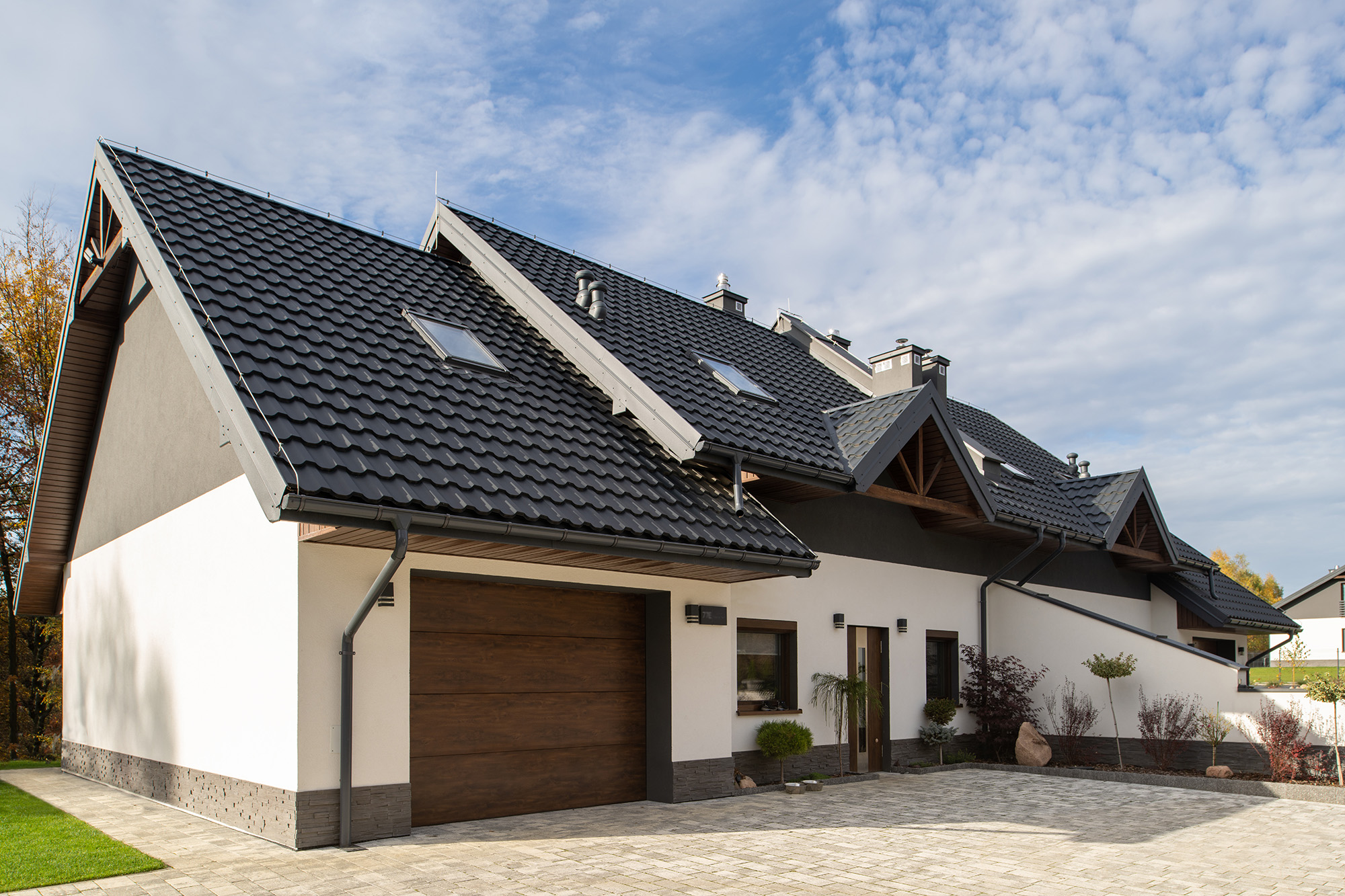
Choosing the right roofing metal sheets is crucial for the durability and aesthetic appeal that the roof will provide over many years of use. Changing weather conditions, humidity levels, UV radiation, and the degree of exposure to corrosion directly affect whether an investment in metal roof coverings will prove cost-effective. The right choice of roof coverings should take into account both the climate and the investor’s individual needs.
In this post, you’ll learn about the most common problems:
The “Knowledge Around the Roof” series is a practical guide to roof maintenance and renovation. The articles go beyond simply discussing material selection, offering solutions to real-world problems faced by homeowners. The series covers legal formalities, budget planning, and modern technologies such as Photovoltaics and energy efficiency. Safety is a key focus—from protection against storms and martens to roof access systems. The series is rounded out with advice on aesthetics and durability, ensuring thermal comfort for decades to come.
This article discusses how to select a coating for roofing metal sheets based on climatic conditions and the corrosive environment, explaining the significance of corrosion classes C1–C5 and the impact of humidity, UV radiation, precipitation, and sea salt on the roof covering’s durability. It compares available protective coatings—from PS and TOPMAT® polyester coatings, through the hybrid PURMAX®, to PURLAK® and PURMAT® polyurethane coatings—outlining their thickness, aesthetic and technical warranties, and recommended conditions of use. It points out that the selection of an appropriate coating should take into account the building’s location, the type of roof, and the degree of exposure to weather conditions, emphasizing that investing in a higher-grade coating directly translates to long-term protection, consistent aesthetics, and lower roof operating costs.
The coating on roofing metal sheets is a special layer that protects the steel sheet from external factors. Sheet metal coated with a protective layer is resistant to moisture, sunlight, temperature fluctuations, and mechanical damage. It is this protective coating that ensures high durability, aesthetic appeal, and corrosion resistance—corrosion being one of the main causes of roof deterioration.
Modern solutions use sheet metal coated with a protective layer of varying thickness and chemical composition, which allows the material to be tailored to specific weather conditions. The right material ensures that the roof retains its technical performance and elegant appearance even after several decades of use.
Corrosivity classes determine the degree of aggressiveness of the environment in which roof coverings are used:
When selecting roofing metal sheets, it is important to consider the environmental class in order to effectively reduce corrosion and extend the life of the roof coverings.
Constant moisture promotes oxidation, which is why roofs in such conditions require roofing metal sheets with high resistance to damage. Low-quality coatings can reduce the service life by as much as 30–40%.
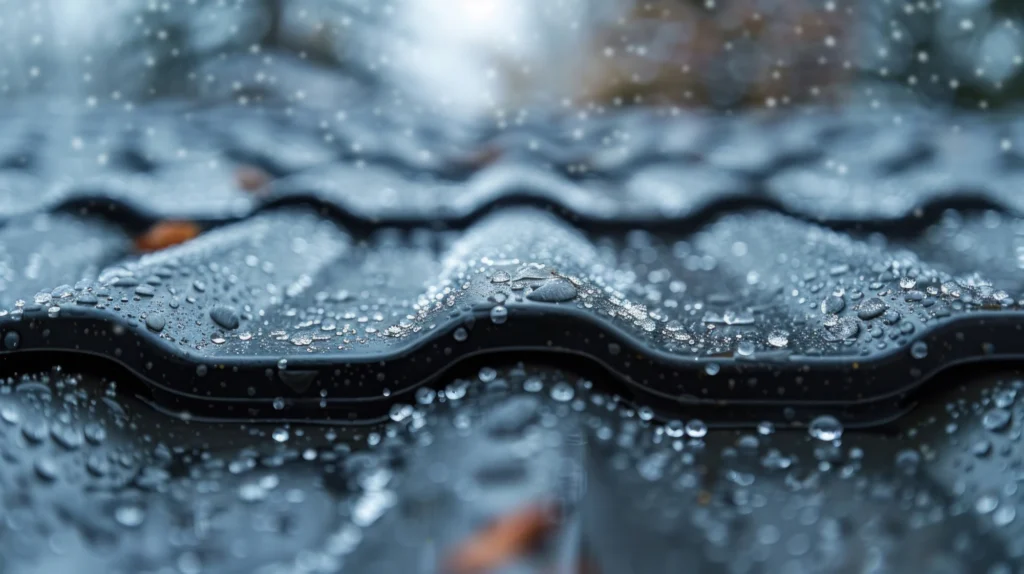
Heavy precipitation causes snow, ice, and water to accumulate on roof surfaces. Rain and snow pose a particular threat to trapezoidal sheets, roof panels, and large-format roofing materials that are of poor quality or have a damaged coating. The quality of the coating and the thickness of the metal sheet are of key importance here.
Prolonged exposure to UV radiation causes the color to fade and reduces the elasticity of the coatings. Dark-colored roofs can heat up to as high as 70°C, which puts a strain on the coating and the roof structure.
Changing weather conditions cause the sheet metal to expand due to thermal expansion. This can lead to microcracks, which in turn can cause corrosion and reduce the material’s durability.
Sea salt and industrial pollutants accelerate corrosion. In such locations, metal roof tiles and trapezoidal sheets with a premium, highly resistant coating are ideal.
When choosing a roof covering, you should consider the following:
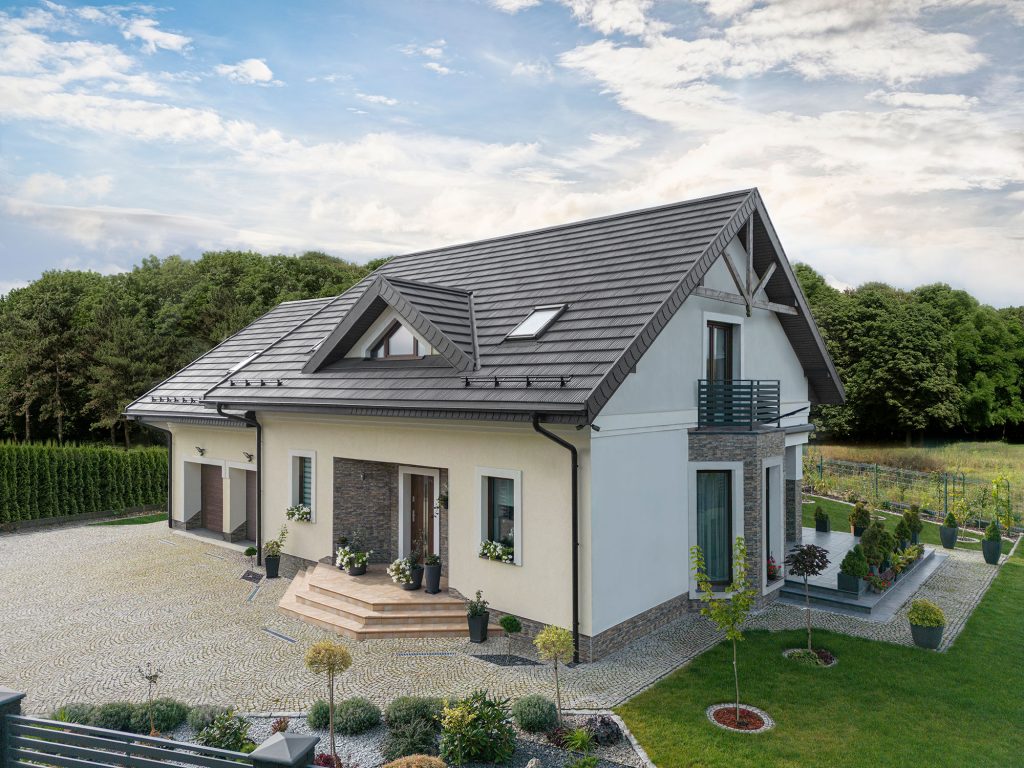
Metal roofing is the most commonly chosen material for the roofs of single-family homes, as it is significantly lighter than cement roof tiles and traditional ceramic roof tiles. Metal roof tiles fit perfectly into a modern architectural style, offering a minimalist design and a contemporary look.
Trapezoidal sheets, roofing metal sheets, and standing seam roofing are often used in industrial construction projects, as they are easy to assemble and highly durable.
Among the most popular types are:
Modern roof coverings are available in a standard color palette (over 20–30 shades), in glossy and matte finishes. They retain their color intensity even under harsh weather conditions. Thanks to matte coatings (e.g., TOPMAT, PURMAT), roofing metal sheets can have a deep, uniform color, making it possible to match the roof to modern, minimalist architectural designs.
The warranty typically covers resistance to corrosion perforation, color retention, and coating durability. The warranty is valid only if the product is assembled correctly, taking into account the roof’s construction and exposure to weather conditions.
A new roof made of roofing metal sheets—which are aesthetically pleasing, durable, and relatively inexpensive per square meter—is the ideal solution for both residential and industrial construction.
Thanks to their wide range of products, manufacturers allow customers to choose roof coverings tailored to climatic conditions, roof construction, and optimal application.
The manufacturer’s Warranty period may vary depending on the selected model of metal roof tiles, trapezoidal sheets, and the type of coating used. The Warranty is valid only if the product is assembled correctly (in accordance with the assembly instructions) and used properly.
If you’re looking for the right coating for your roof, the table below will help you compare the options available from the Blachy Pruszyński Company. It includes information on the Warranty period, intended use, and recommended conditions for each coating. It’s worth noting that PURLAK® and PURMAT® are two separate polyurethane coatings with identical thickness and Warranty terms, differing only in their finish—PURLAK® has a glossy finish, while PURMAT® has a matte finish with higher UV resistance. This makes it easier for you to choose a roofing coating that will ensure high durability, protection against damage, and an elegant appearance for your roof.
| Powłoka | Grubość powłoki | Aesthetic Warranty | Technical Warranty (Corrosion Protection) | Purpose | Recommended Conditions of Use |
|---|---|---|---|---|---|
| Glossy polyester (PS) | 25 µm | up to 10 years | up to 30 years | Single-family housing, standard structures | C2–C3 environment, moderate weather conditions |
| Coarse-grained matte polyester (PMG35) | 35 µm | up to 15 years | up to 35 years old | Single-family housing, projects with a matte finish | C2–C3, moderate weather conditions |
| TOPMAT® | 35 µm | up to 20 years | up to 35 years old | Single-family homes, aesthetically pleasing projects | C2–C3, variable weather conditions, moderate UV |
| PURMAX® (hybrid: polyurethane + polyester) | 40 µm | up to 20 years | up to 40 years old | Roofs with higher aesthetic and mechanical requirements | C3–C4, urban and industrial areas, higher levels of sunlight |
| PURLAK® (polyurethane, gloss) | 50 µm | up to 30 years | up to 50 years | Buildings in harsh environments, glossy finish | C4–C5, high humidity, industrial areas, coastal regions |
| PURMAT® (polyurethane, matte) | 50 µm | up to 30 years | up to 50 years | Modern architecture, premium roofs, matte finish | C4–C5, harsh environment, strong UV exposure, highest resistance to fading |
When selecting the appropriate coating for a given type of roofing, one should consider not only the length of the Warranty but also the operating conditions and the degree to which the roof is exposed to external factors. The harsher the operating environment, the more advanced the protective coating should be, ensuring long-lasting protection and maintaining the roof’s aesthetic appeal.
For a single-family home, PURLAK® or PURMAT® polyurethane coatings are the best choice, as they offer the highest durability, corrosion and UV resistance, and a technical warranty of up to 50 years. If your budget is limited, PURMAX® or TOPMAT® are good options—they provide reliable protection at a lower price.
Both coatings are polyurethane, are 50 µm thick, and have identical warranty periods (up to 30 years for aesthetic warranty, up to 50 years for technical warranty). The only difference is in the finish—PURLAK® has a glossy finish, while PURMAT® has a matte finish with higher UV resistance.
In environments with corrosion classes C4–C5, PURLAK® or PURMAT® polyurethane coatings are recommended. They provide the highest resistance to moisture, seawater, and aggressive air pollutants.
Corrosivity classes define the aggressiveness of the environment in which the roof coverings are used—ranging from C1 (dry, low-aggressiveness environment) to C5 (industrial and coastal environments with very high aggressiveness). The higher the class, the more advanced the protective coating required.
Yes—the thicker the coating, the higher the resistance to corrosion, UV radiation, and mechanical damage. Polyester coatings are 25–35 µm thick, the hybrid PURMAX® coating is 40 µm thick, and the polyurethane PURLAK® and PURMAT® coatings are as thick as 50 µm, which translates to a technical warranty of up to 50 years.
One of the most common mistakes made during roof coverings installation is a lack of knowledge […]
Read moreThe roof determines not only the appearance of a building, but above all its safety, durability, […]
Read moreChoosing the right roof covering is one of the key decisions when building or renovating a […]
Read moreInnowacyjne rozwiązania sprawiły, że nowoczesne powłoki ochronne blachy dachowe nie pełnią już wyłącznie funkcji zabezpieczającej, ale […]
Read moreWysokie temperatury oraz intensywne promieniowanie słoneczne wpływają na każdy dach, w tym także pokryty blachodachówką. I […]
Read more