Modular roof tiles are a type of metal roof covering that appeared on our market a few years ago, quickly gained popularity, and is now being used on an increasing number of roofs. This is primarily because metal roofing sheets always look impressive, are durable and weather-resistant, and—thanks to solutions patented by manufacturers—their assembly is hassle-free, efficient, and can be carried out under any conditions. But what about in winter?
In this post, you’ll learn about:
It is generally accepted that the construction season runs from the first days of spring until the end of fall, but it is not always possible to install the roofing and bring the building to a closed-shell stage before winter. What can be done in such a situation? Should you leave the building unfinished or continue working during cold and wet weather? How should you prepare for winter? It’s difficult to give a definitive answer to these questions. However, if you decide to build a roof structure, the best choice is metal roof tiles—including, of course, Modular roof tiles. Why? Because proper preparation and protection of the metal sheets at the manufacturing plant guarantee trouble-free assembly even in winter conditions, as well as comfortable use for many years to come.
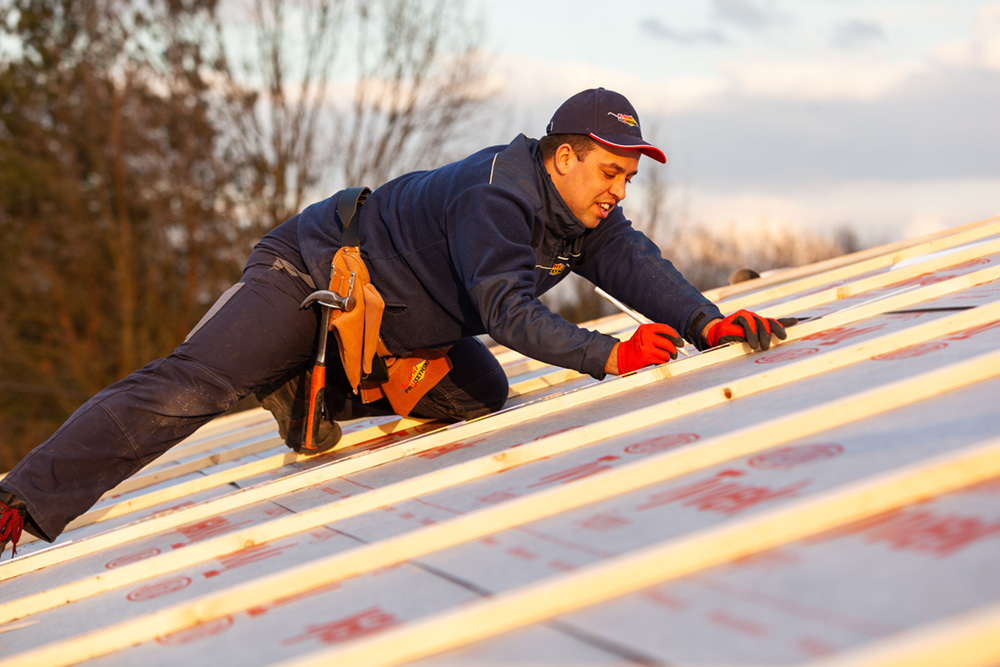
In fact, when installing roofing in the winter, the most important thing is to ensure the safety of the roofers. It is especially important to prepare the work site—the roof must be cleared of accumulated snow and ice. Any slip, fall, or misstep can lead to injuries or even serious accidents. Therefore, it is recommended that installation work be carried out by specialized construction crews with experience working in difficult conditions.
It is important to ensure comfortable working conditions and employee safety, as their readiness for work is of the utmost importance. Key safety precautions include:
Important! Metal roof tiles should be stored in a dry place to prevent them from freezing or moisture from condensing on them.
Whether you’re installing modular roof tiles in the winter or at any other time of year, you should always follow best roofing practices and strictly adhere to the manufacturer’s recommendations. The only risk is performing flashings at temperatures that are too low—the minimum is 12°C. If the sheet metal is bent at a lower temperature, microcracks may form in the paint coating, which can lead to corrosion in those areas. The solution is to perform the flashings work in a heated room, such as a workshop. Although it is more convenient and safer to purchase ready-made flashings in the same color as the metal roof tiles (Blachy Pruszyński Company offers the necessary flashings), you can be sure they have been professionally manufactured. And how should metal roofing be assembled? Below are the most important guidelines.
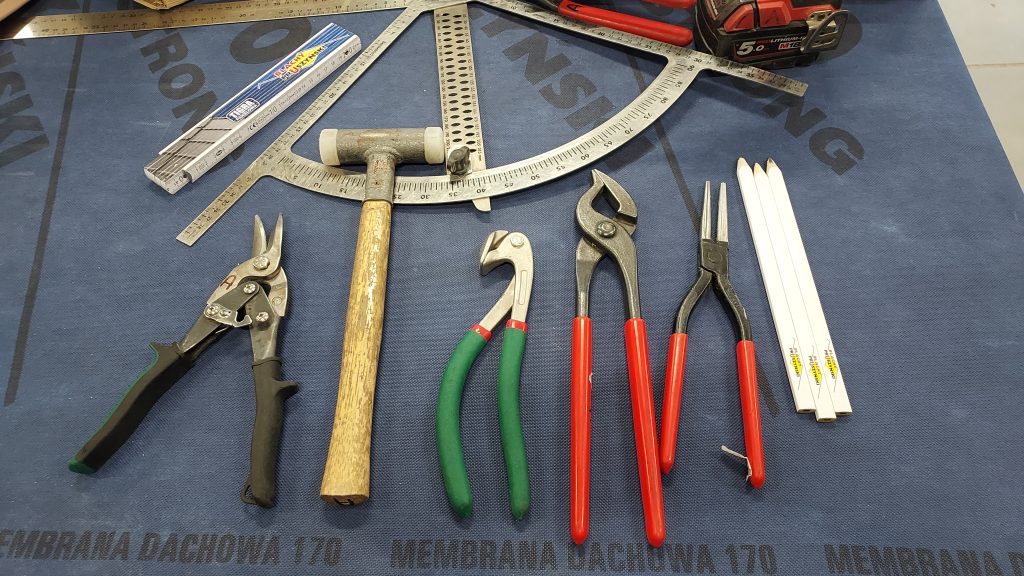
Standardized small sheets of metal can be installed quickly regardless of weather conditions (and regardless of the roof structure) and usually do not need to be cut; simply place one sheet on top of another. However, when necessary, use hand-held sheet metal shears or a nibbler—never an angle grinder!
Although assembly of sheet metal roofing in the winter is a challenge—primarily due to the uncomfortable working conditions—it does have its advantages:
Please note that it takes an average of 4–5 days to install modular roof tiles.
Assembly of modular roof tiles during the winter season comes with certain limitations:
However, leaving the building without adequate protection poses a greater threat to it.
The law does not prohibit installing metal roof tiles in the winter, and let’s emphasize once again that there are no technical contraindications either. However, this work is performed at heights and is classified as particularly hazardous. Therefore, all workers should be familiar with occupational safety and health regulations and be equipped with appropriate personal protective equipment. In addition, they should have a current medical certificate confirming that there are no contraindications to working at heights. It is also essential to use collective protective measures, such as safety scaffolding.
Assembly of modular roof tiles in winter does not require any special tools, as the basic roofing tools—a screwdriver, a level, a tape measure, and a hammer—are not affected by low temperatures. However, before applying sealants, it’s a good idea to make sure they’re suitable for use in cold weather.
Many investors are concerned that the assembly of metal roofing may affect its durability. In reality, weather conditions have no effect on modular roof tiles, provided, of course, that you choose proven materials, such as those from a reputable manufacturer like Blachy Pruszyński Company. In reality, a great deal depends on the proper assembly of the roofing. However, provided that appropriate precautions are taken, winter assembly of roofing metal sheets generally does not negatively affect the durability of the roof coverings.
If, due to fluctuating weather conditions or other factors, we do not want to install Modular roof tiles in the winter, we can postpone the installation until spring; however, we must take into account that rain, snow, low temperatures, or meltwater could cause significant damage to the building. A good solution to this problem may be to cover the roof framing with a rigid sheathing made of boards or OSB panels and roofing felt. Such a covering can serve as a substrate for sheet metal roofing—you just need to remember to construct a framework of battens and counter-battens. Plastic tarps (polyethylene or polypropylene). They are laid with an overlap and secured with short battens directly to the rafters.
Znalezienie rzetelnej ekipy budowlanej jest sporym wyzwaniem. Warto za poszukiwania zabrać się minimum 2-3 miesiące przed […]
Read moreJak czyścić blachodachówkę Blachodachówka na dachach polskich domów jest spotykana najczęściej. Inwestorzy doceniają jej wysoką jakość, […]
Read moreWymiana starego pokrycia dachowego – na co warto zwrócić uwagę? Wymiana starego pokrycia to nie tylko […]
Read more