The roof determines not only the appearance of a building, but above all its safety, durability, and operating costs. Although its construction represents one of the largest capital expenditures, it is not worth seeking out apparent savings at this stage. A home’s roof should function continuously under changing weather conditions for many years. So how can you plan your budget wisely to avoid costly mistakes and build a reliable roof that will last for years?

In this post, you’ll learn about:
“Roofs Without Secrets”is a series of articles devoted to key issues related to the design, construction, renovation, and maintenance of roofs. We cover legal, technical, and practical topics—from selecting solutions and planning a budget, through safety and energy efficiency, to durability, aesthetics, and new technologies. This is reliable, practical knowledge for investors and contractors who want to make informed decisions and build a roof that will last for years.
Building or replacing a roof is one of the most important and costly investment decisions in any homeowner’s life. Choosing the right roof covering should not be based solely on the purchase price—it’s crucial to take a long-term view that accounts for the total cost of ownership over the years of use. In this article, we explainwhy the cheapest roofing material at the time of purchase may turn out to be the most expensive over the course of three decades, how to conduct a professional cost analysis covering materials, Assembly, maintenance, and potential replacement, and which solutions—ceramic tiles, concrete tiles, or modern premium metal roof tiles—actually allow you to save tens of thousands of zlotys without compromising on safety or aesthetics.
The costs associated with a roof do not end once you’ve paid for the roofing material and its assembly. A roof generates expenses throughout the building’s entire service life—related to operation, inspections, repairs, and potential renovation or replacement. The durability of the material used, its resistance to mechanical damage, long-term exposure to weather conditions (precipitation, low and high temperatures, UV radiation), and environmental pollutants (dust, deposits, and aggressive chemical compounds present in the air).
Operating costs are also directly influenced by the technical condition of the roof framing and the correctness of the structural design, including the spans of load-bearing elements, the method of their support, and the assumed dead and live loads. Roof leaks lead to moisture penetration in the wood, accelerated aging of materials, the development of biological corrosion, and deformation of load-bearing elements. As a result, the risk of costly repairs or structural reinforcements increases. Therefore, the purchase price of materials is only one component of the long-term cost analysis.
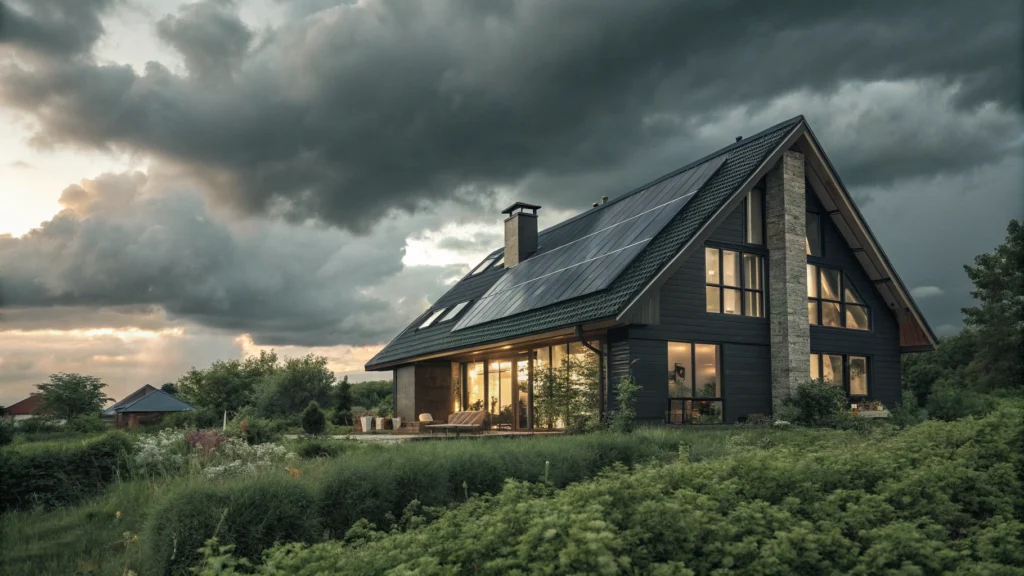
If you want to build a roof that will last for years, you should focus primarily on the technical specifications of the roofing material, rather than solely on its aesthetic qualities. The durability of the material, its watertightness, and its resistance to corrosion and degradation are of key importance. The roofing material should also retain its properties when exposed to sunlight and cyclical temperature changes.
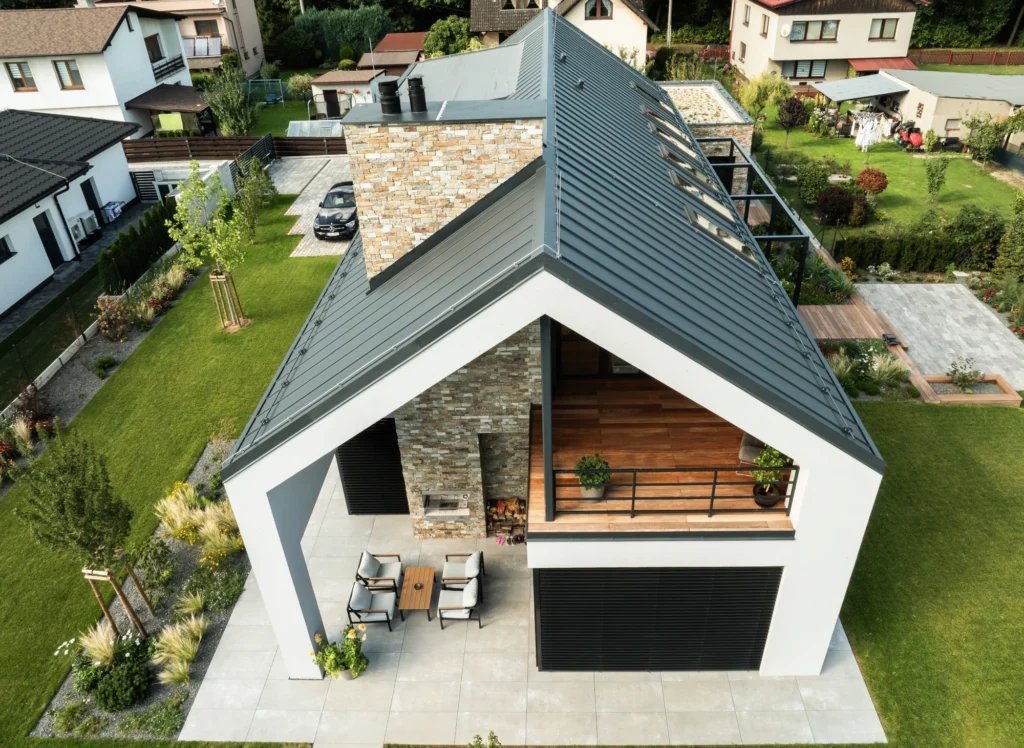
It is also important to choose the right type of roofing material based on the shape of the roof. For complex roof geometries, the best approach is to use system-based solutions that minimize the number of cuts and joints, thereby reducing the risk of leaks. A complete roofing system—including the roofing material, pre-covering, roof accessories, roof access systems, and snow guards—ensures technical consistency, the durability of the entire structure, and safe use.
Life Cycle Cost (LCC) analysis allows you to determine the total expenses associated with a roof over its entire service life. It includes the cost of materials, assembly, inspections, repairs, and any replacement of the roofing material. In residential construction, a 30-year analysis horizon is standard, which corresponds to a typical loan term and the first full service life cycle of most roof coverings. It is during this period that cheaper materials begin to generate the highest costs associated with repairs or replacement, which allows for a realistic comparison of the overall cost-effectiveness of different solutions.
The most important factor in the life-cycle cost is the roof covering. Ceramic roof tiles, such as Braas tiles (BMI Polska), are made from high-quality raw materials and are characterized by very high durability and resistance to external factors. Concrete roof tiles, such as Creaton, are slightly less expensive but are also durable and resistant. Less expensive options, such as Pruszyński Company metal roof tiles or Icopal asphalt shingles, have a shorter lifespan and require repairs more frequently.
Sample material costs for a 200 m² roof:
The higher initial cost of ceramic roof tiles is offset by their long service life and low operating costs over a 30-year period.
The cost of assembly depends on the type of roofing material, the shape of the roof, and the use of additional components, such as roof accessories (e.g., ventilation stacks) or pre-covering. For roofs with complex shapes, assembly requires greater precision, which results in higher labor costs.
Sample assembly costs for a 200 m² roof:
Attention! Proper assembly as part of a comprehensive roofing system minimizes the risk of leaks and extends the service life of the roofing material.
A roof that will last for years requires periodic technical inspections. These are typically performed every 5–7 years and include checks for leaks, the condition of the roofing material, roof components, roof access elements, and the gutter system.
Less expensive roofing materials require more frequent maintenance, which increases operating costs.
Ceramic and concrete roof tiles remain fully functional for 50 years or more, so they generally do not need to be replaced during the 30-year period under consideration. In the case of shingles or inexpensive metal roofing, the need for replacement after 25–30 years entails an additional cost of 30,000–40,000 PLN for a 200 m² roof.
The highest operating costs occur when the roofing material loses its resistance to weather and environmental factors. Strong winds, heavy rain or snow, UV radiation, and air pollution accelerate the degradation of less expensive roofing materials, leading to leaks, roof deformation, and corrosion of metal components. As a result, the risk of having to repair or replace parts of the roof increases, which significantly raises the total cost of ownership.
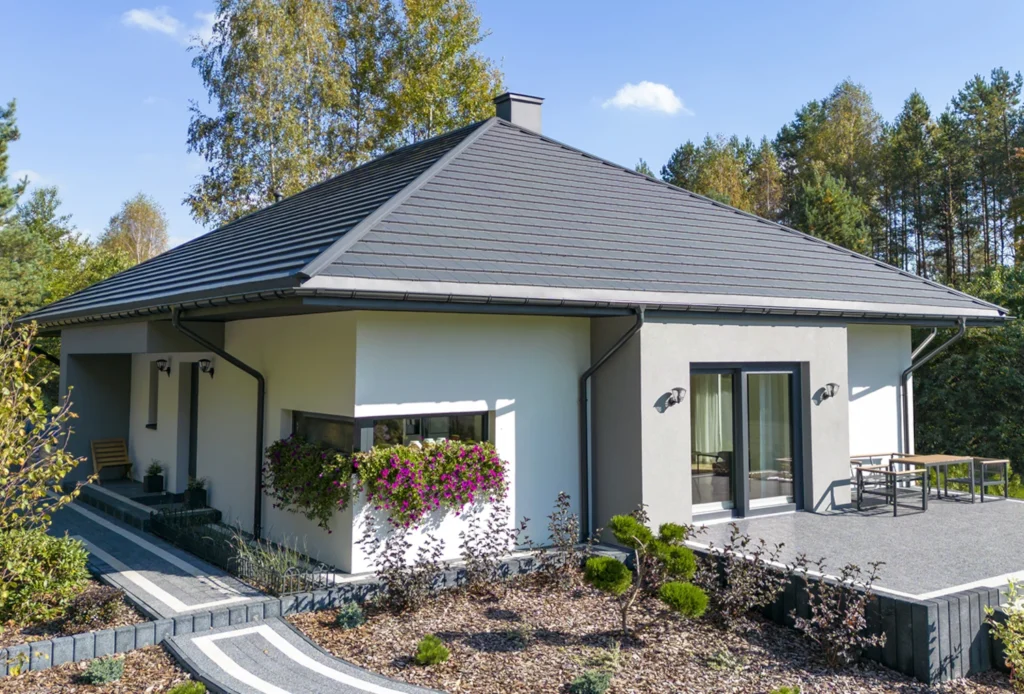
Regular roof maintenance is essential because the roofing is exposed to external factors such as precipitation, strong winds, solar radiation, and air pollution. The most important maintenance tasks include cleaning the roofing and performing a technical inspection.
Roof cleaning involves removing deposits, moss, lichen, leaves, and dust from the roof surface. For ceramic and concrete roof tiles, this is typically done every 8–10 years, depending on the roof’s exposure and the building’s location. The approximate cost of cleaning is 15–25 PLN/m² for ceramic roof tiles, 15–20 PLN/m² for concrete roof tiles, and 20–35 PLN/m² for metal roof tiles. The higher cost for metal roof tiles stems from the need to use gentle cleaning methods that do not damage the painted or anti-corrosion coating, which serves as the material’s primary protection.
A technical inspection (service) includes an examination of the condition of the roofing material, the roof framing, roof accessories, roof access components, snow guards, and gutters. The goal is to detect leaks, damage, deformations, or signs of corrosion at an early stage. It is recommended to perform an inspection every 3–5 years, and even more frequently for green roofs, due to the need to check the waterproofing layers, drainage, and rainwater runoff. The cost of an inspection for a single-family home roof with an area of 150–200 m² is usually 500–800 PLN.
Roof repairs vary depending on the material. Replacing a single ceramic or concrete roof tile costs 20–50 zł per tile, while repairing metal roof tiles is more expensive and time-consuming—about 50–150 zł per square meter. Bituminous shingles require costly repairs and often more expensive surface treatments (40–80 PLN per square meter). Green roofs, on the other hand, require additional maintenance, including repairs to the waterproofing layer, which can cost 50–100 PLN per square meter, depending on the scope of work.
Remember! Regular cleaning, inspections, and repairs significantly extend the roof’s service life, minimize the risk of serious leaks, and protect the structure from moisture damage or corrosion of steel components. As a result, investing in a roof that will last for years remains more cost-effective, and operating costs are predictable and spread out over time.
A steel roof can be cost-effective in the long run, provided that the material used has high corrosion resistance and is treated with appropriate protective coatings. The durability of a steel roof depends largely on the quality of the steel, its chemical composition, and the manufacturing process. Inexpensive steel sheets without anti-corrosion coatings lose their watertightness more quickly, deform under the influence of wind, and become less aesthetically pleasing, which increases operating costs and necessitates earlier replacement of the roofing.
That is why you should choose proven roof coverings. The metal roof offered by Blachy Pruszyński Company deserves special attention. The company uses only high-quality steel from reputable suppliers in their production, and the manufacturing process takes place on modern production lines that ensure consistent sheet specifications and high precision in workmanship. The Blachy Pruszyński Company operates its own research laboratory, where the properties of the steel and protective coatings are tested, and it also collaborates with external research institutions both in Poland and abroad. In addition, the company offers, among other products, protective polyurethane coatings (PURLAK®, PURMAT®) with a thickness of approximately 50 µm, providing high resistance to corrosion, UV radiation, and mechanical damage, backed by long-term Warranties. The product range also includes polyester coatings with good resistance and a wide range of colours, as well as hybrid coatings that combine the features of both technologies.
When properly assembled and maintained, a steel roof can remain watertight and aesthetically pleasing for decades without requiring renovation, and its total cost over a 30-year period is often competitive with that of roof tiles.
The choice of material should take into account a life-cycle cost (LCC) analysis, durability, resistance, maintenance costs, and the availability of system solutions. The most cost-effective roofing solutions are those made from high-quality raw materials, featuring durable coatings, and backed by a comprehensive range of roof accessories.
In practice, a roof that lasts for years is the result of a conscious choice of technology, not the lowest purchase price. System solutions—high-quality ceramic and concrete roof tiles, as well as Blachy Pruszyński Company steel roofing with durable coatings—help minimize operating costs and ensure the building’s safety for at least 30 years.
Innowacyjne rozwiązania sprawiły, że nowoczesne powłoki ochronne blachy dachowe nie pełnią już wyłącznie funkcji zabezpieczającej, ale […]
Read moreBlaszane pokrycia dachowe są uniwersalne, łatwe w montażu i pasują do nowoczesnej architektury. Blacha trapezowa, blachodachówka […]
Read moreWysokie temperatury oraz intensywne promieniowanie słoneczne wpływają na każdy dach, w tym także pokryty blachodachówką. I […]
Read moreNowoczesne dachy zachwycają płaskimi, minimalistycznymi profilami. Niski garb, gładka powierzchnia, symetryczne linie – to estetyka, której […]
Read moreBlachodachówka to popularny materiał pokryciowy, ceniony przede wszystkim za estetykę, trwałość i stosunkowo łatwy montaż. Jednak […]
Read more