MENU
In 2026, modern home designs are dominated by simple forms, subdued colors, and roofing materials with a minimalist look. Architects are eager to use standing-seam panels, flat metal roof tiles, and clay roof tiles, but the choice of material is increasingly based on technical specifications, assembly methods, and the potential for integrating Photovoltaics.

In this post, you’ll learn which roof coverings are in style in 2026 and what factors architects consider when choosing them:
The “Roofs in Practice” series is a technical compendium of knowledge on the construction and maintenance of metal roofs. The articles cover a wide range of topics—from solid structural foundations, through the physics of materials and moisture management, to informed decisions regarding aesthetics and quality. The series organizes knowledge about how a roof really works: why the roof framing determines the durability of the roofing, how sheet metal reacts to temperature changes, and where condensation comes from. A key element is understanding materials—the guide teaches readers to distinguish between nonwoven fabric and membranes, interpret laboratory test results, and make informed assessments of structural solutions, such as a roof without an eave. Taken as a whole, this guide enables you to build and renovate a roof based on technical knowledge, proven materials, and informed choices at every stage of the project.
In this article, you’ll learn which roof coverings are trending in 2026 and what factors architects consider when choosing them. We explain how a building’s style and shape, roof color, technical specifications, and budget influence the choice of the right solution. You’ll also learn which roof coverings best fit current trends, the significance of standing-seam panels, flat metal roof tiles, roof tiles, and trapezoidal sheets, and what to look for when designing a modern roof.
Today’s market offers a wide selection of roof coverings that can be adapted to both modern and more traditional architecture. Solutions used in contemporary designs include:
The choice of a specific material for a modern roof depends on the building’s style, its intended use, its location, local weather conditions, the roof’s technical specifications, as well as the investor’s preferences and budget.
Roofing trends are most often dictated by the building’s architecture. Homes with large windows, a simple form, a modern barn-style design, and a gable roof look great with roof coverings that create a minimalist effect: flat ceramic or concrete roof tiles, standing-seam panels, panel roof tiles, or trapezoidal sheets. Houses with a “cozier” character and an extended roof often feature corrugated roofing patterns.
Of course, this isn’t always the case; the final result depends on architectural creativity—modern design can blend perfectly with classic buildings, and traditional solutions—which are always in style—can be incorporated into contemporary architecture.

Among the solutions mentioned, a trend toward minimalist forms and subdued color schemes is particularly evident in 2026. Modern designs often feature flat roofing materials, standing-seam panels, and solutions that minimize the number of visible details on the roof surface.
Standing-seam panels fit well into designs with simple forms and minimalist architecture. The vertical divisions of the roofing emphasize the roof’s geometry and create a clean, modern look.
Flat metal roof tiles are an ideal solution for builders who want to combine the distinctive look of modern roofing with the properties of sheet metal. Their simple surface complements both modern building designs and more classical architecture.
Flat ceramic and concrete roof tiles create a calm, minimalist roof surface. They are often chosen for buildings with simple geometries, where the roofing is intended to serve as a cohesive complement to the building’s form.
Modular roof tiles remain a popular choice for both new homes and the renovation of existing buildings. The small size of the tiles makes it easy to adapt the roofing to various roof geometries.
Trapezoidal sheets fit right in with the trend toward simple and functional solutions. Thanks to its distinctive profile, they can be used both on buildings with modern architecture and in structures where cost-effectiveness and simplicity of construction are the top priorities.
In the past, red roof coverings were the most popular. This was mainly due to the availability of materials in that particular shade. Today, red is still in style and is considered a timeless classic, but it’s impossible not to notice that manufacturers’ product lines are dominated by shades of gray, anthracite, and even black.
Roof colors range from traditional corrugated metal roofing tiles, through standing-seam panels, to modern, large-format flat roof tiles, are available in several shades of gray, making them versatile and allowing them to complement various building shapes and facade finishes.
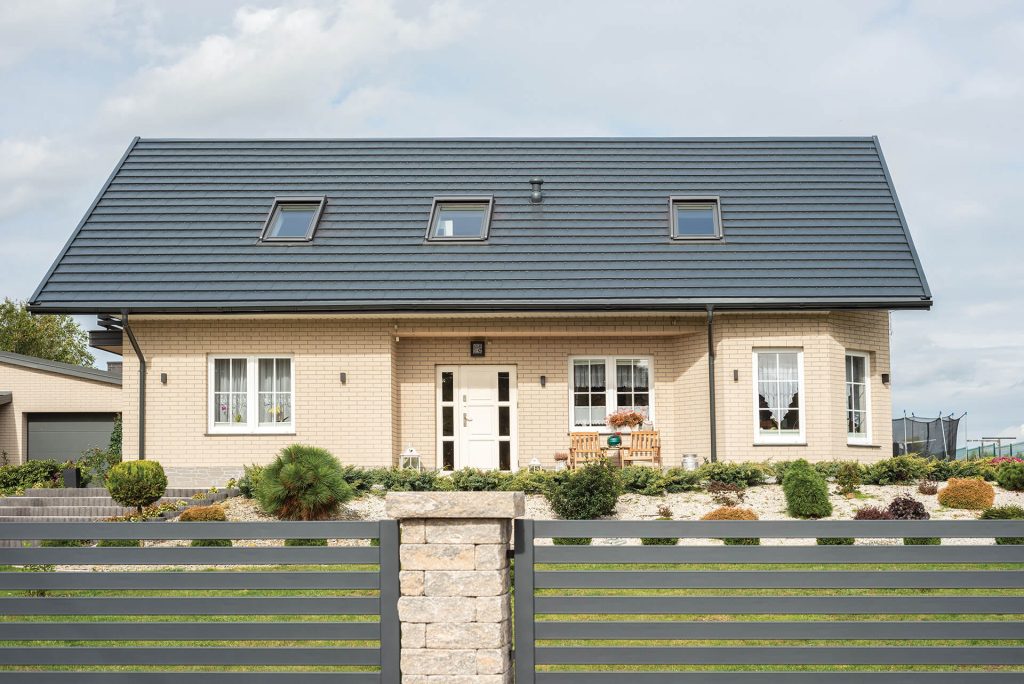
When designing a roof, you need to choose a roofing material that visually complements the building’s overall architecture, but you must also keep in mind the technical considerations that affect its watertightness, durability, and ease of assembly.
Each type of roof covering has a specific minimum safe roof pitch. If a roof has a pitch less than the recommended one, it may require a different type of roof covering or the use of more watertight layers of sheathing.
For complex roof surfaces with many slopes, roof windows, or irregular shapes, smaller-sized elements are more popular, while larger formats—such as large roof tiles, metal roof tiles, or trapezoidal sheets—are a great fit for expansive roofs.
It’s a good idea to take the local climate into account when designing. In coastal areas, materials with high resistance to salt corrosion are ideal—for example, engobed roof tiles or metal roofing with modern polyurethane coatings.
When choosing roof coverings, energy efficiency isn’t a major factor—thermal bridges are a key consideration in the insulation layer. However, it is of crucial importance in roofs with integrated thermal insulation, such as roof sandwich panels.
The selection of roof coverings should also take into account complementary elements, such as roof access, snow guards, and flashings. Matching these elements to the type of roof covering affects both the roof’s functionality and its appearance. It is therefore advisable to consider how the most important details will be executed as early as the design phase, rather than treating them as add-ons selected only during Assembly.
Fastening solutions tailored to a specific type of roof covering ensure maximum stability, while requiring no cutting or drilling into the substructure. They are also finished in a manner nearly identical to the base roofing material, which not only creates a modern look but also ensures that all components have similar resistance and durability over time, while maintaining a uniform, harmonious color scheme across the entire roof.
Modern roof coverings often incorporate trendy elements such as logs or slats, which give the entire structure an elegant look. You can also choose from snow guards and slats designed to prevent snow from sliding off the roof in large drifts. As with roof access systems, it’s best to select snow barriers that use system-specific brackets designed for your specific roofing model.
The finishes on the roof edges, eaves, and Ridge—these are the areas that affect the overall aesthetics of the roof and the entire building. It’s also a good idea to carefully consider modern roof coverings in terms of how these details are finished with flashings.
When choosing a roof covering, budget is a key factor. Aside from a few projects that can afford to go all out, in most cases the choice of roof covering takes into account not only performance and appearance, but also a reasonable price. Modern technologies offer architects and developers many opportunities to reconcile aesthetic requirements with functionality. Traditional craftsmanship solutions, such as sheet metal with hand-folded standing seams, can be replaced with ready-made standing-seam panels, and time-consuming shingles that require periodic replacement can be replaced with durable, quick-to-assemble metal roof tiles featuring the appropriate texture. Cost-effective trapezoidal sheets are gaining popularity, and there is no shortage of affordable roof tile options. Their trendy colors can be easily tailored to specific preferences, and advanced manufacturing technologies for modern roof coverings ensure durability and a fresh appearance for many years to come.
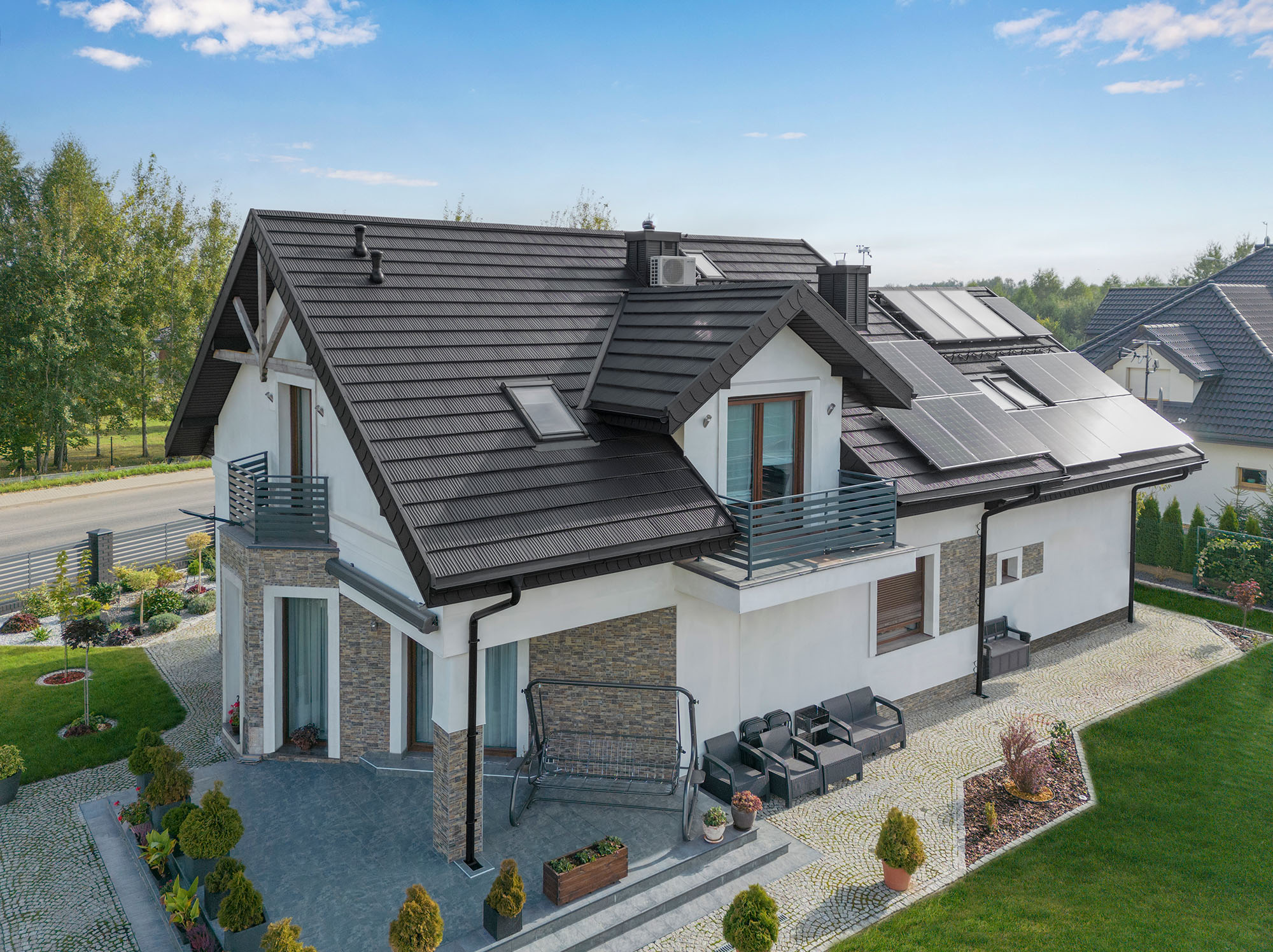
Regulations require architects and developers to design buildings with systems that utilize renewable energy sources, such as Photovoltaics. The most intuitive location for this is the roof, which is why roof coverings manufacturers offer a wide range of system solutions for mounting or even fully integrating solar cells into the roof surface. Modern PV system solutions also feature designs tailored for easy assembly on various types of roof coverings.
Solar panels have already become an integral part of built-up areas, both in rural and urban settings, and this trend—given the real savings that come from using renewable energy sources—will only intensify in the coming period, in line with market-driven changes in the efficiency and aesthetics of these systems.
Regardless of trends that change every few years, there are roof coverings that will never go out of style. These include standing-seam metal roofing, carp-style roof tiles, and materials such as shingles, thatch, or natural slate. These types of solutions are expensive and technically demanding, which is why they’re typically reserved for unique, custom projects. Due to their uniqueness, they’re popular among architects and developers who view a modern roof as a special challenge.
In the era of climate change, eco-friendly solutions aimed at reducing the “heat island” effect are all the rage. Green roofs serve as an excellent thermal buffer, absorbing a significant portion of solar radiation and preventing heat from escaping the roof’s surface. They also add an interesting visual element to a building, and in the case of flat roofs, they allow the surface to be used functionally as a terrace.
In 2026, it’s impossible to pinpoint a single “trendiest” roof covering that would suit every project. In modern architecture, however, there is a clear trend toward simple forms, flat surfaces, and subdued colors. Standing-seam panels, flat metal roof tiles, modular roof tiles, and flat roof tiles all allow for a minimalist look, but each of these solutions has different technical requirements and applications.
Therefore, when choosing a roof covering, it is important to first consider the roof’s geometry and pitch, local conditions, construction methods, and any planned additional features, such as Photovoltaics. Only by combining these factors with the desired appearance can you select the right roofing material for a specific project.
In 2026, flat roof coverings, standing-seam panels, flat metal roof tiles, and flat ceramic and concrete roof tiles are particularly prominent in modern architecture. Solutions with a minimalist appearance and a limited number of visible details are gaining popularity.
Modern designs are dominated by shades of gray, anthracite, and black. Roofs in traditional shades of red are also still popular and remain a timeless choice. The choice of color should complement the building’s structure and the color scheme of the facade.
Yes. Flat metal roof tiles and panel roof tiles complement the simple, modern form of the building well. They allow you to combine the minimalist look of the roof with the properties of a metal roof.
In addition to appearance and price, other factors to consider include the roof pitch, the complexity of the roof surface, local weather conditions, and the assembly method. Planned additional features, such as Photovoltaics, may also be important.
Yes. For roofs with complex geometries, featuring numerous slopes or roof windows, the format of the roof coverings and the ability to easily adapt them to the roof surface can be important. On large, flat surfaces, however, larger formats or solutions that allow for quick assembly can be used.
Are you planning an energy-efficient roof? Check out the Blachy Pruszyński Company’s selection of roof coverings and choose the solution that’s right for your home. Find an authorized dealer in your area and ask about the available types of roof coverings and solutions.
Zapraszamy na cykl filmów instruktażowych o Panelach Na Rąbek. W odcinku pilotażowym przedstawimy inwestycję “Osiedle Miodowe” […]
Read morePrzed Państwem ostatni odcinek naszej serii Akademia Rzemiosła. Przez ostatnie 13 tygodni w każdą środę przedstawialiśmy […]
Read moreDobrze znany naszym widzom Artur Falkowski ponownie stanie przed kamerą, żeby podzielić się swoimi doświadczeniami i […]
Read more