How much will trapezoidal sheets cost per square meter in 2026? The price depends primarily on the profile, the thickness of the steel, the type of coating, and the coverage width. Therefore, two products that look similar may cost very different amounts.
In this article, we examine current prices, compare them with those from 2025, and explain how to choose the right trapezoidal sheets for a specific project.

In this post, you’ll learn:
The price of trapezoidal sheets in 2026 depends on the specific profile and its specifications. In the basic price list for 0.5 mm-thick sheet metal, the gross prices per square meter are as follows:
Profile | Application | Price 2025 | Price 2026 | Increase |
T6 | Facades | 36,47 zł/m² | 39,76 zł/m² | +9,0% |
T18 | Roof | 37,70 zł/m² | 41,10 zł/m² | +9,0% |
T35E | Roof and Facade | 40,57 zł/m² | 41,10 zł/m² | +9,0% |
T50P | Larger constructions | 40,76 zł/m² | 41,10 zł/m² | +9,0% |
The values listed apply to 0.5 mm-thick galvanized versions and are gross prices per square meter.
However, these are only some of the available options. The price of trapezoidal sheets may be higher if you choose a different coating or a thicker gauge of steel. For example, T18 with a thickness of 0.5 mm and T18 with a thickness of 0.7 mm are two different product variants. Similarly, the price will change if a different coating is selected. Therefore, the statement “trapezoidal sheets cost about 40 PLN/m²” alone is not sufficient to prepare a quote for a specific roof.
In the analysis, the prices of selected profiles increased by about 9%. Per square meter, this amounts to:
This comparison applies to specific variants. You should not assume, based on this, that all trapezoidal sheets will have increased in price by exactly 9% in 2026. The change may vary depending on the coating, thickness, or profile.
The price per square meter is a convenient point of reference, but it does not always reflect the actual cost of the roofing. When purchasing trapezoidal sheets , it is important to distinguish between total square meters and effective square meters—that is, the usable area. The total width is the full dimension of the sheet. The usable width, on the other hand, accounts for the overlap between adjacent sheets and determines the actual coverage width.
For T18:
This means that part of the sheet’s width is used to join it to the next piece.
Two sheets of metal may have a similar price per total square meter, but differ in their effective width. As a result, the amount of material needed to cover the same roof may vary.
When comparing offers, it’s a good idea to check the following:
The price per square meter alone does not provide a complete picture of the material’s cost.
Several key factors influence the price of trapezoidal sheets. Two products may look similar but differ in price due to differences in their material specifications.
The thickness of the steel affects the product’s weight, stiffness, and price. Depending on the profile, different material thicknesses are available. However, this does not mean that the thickest sheet will always be the best choice. The thickness should correspond to the requirements of the specific structure, profile, support spacing, and anticipated loads.
The coating affects the surface’s appearance, its protection, and the product’s price. Depending on the variant, options include metallic coatings, glossy polyester, and more advanced solutions.
The height of the corrugation affects the sheet’s rigidity and its application. Low-profile sheets are primarily used in facade applications, while higher-profile sheets are used in larger structures.
The prices of steel building materials are also influenced by the prices of steel and other raw materials, energy, fuel, transportation, and the costs of producing coatings. Regulatory changes and the situation on global markets may also play a role. This does not mean that a change in any one of these factors automatically translates into a specific product price. The price is the result of the entire cost chain.
Trapezoidal sheets vary in profile height, usable width, and intended use. The selection of the appropriate type should be based primarily on the type of structure, its design, and the location of use. Profiles are available in a wide range—from low-profile facade trapezoidal sheets to high-profile construction trapezoidal profiles.
The T6, T7P, and T8 profiles have a low rib height and are primarily used on facades and in lightweight structures. They are well-suited for, among other things, garages, outbuildings, shipping containers, and other structures where a low profile height and surface aesthetics are important. However, the choice of a low-profile sheet should not be arbitrary. If the sheet metal is to be used as a roof covering, you should verify that the specific profile and its parameters are suitable for the given structure.
T14 and T18 are profiles used, among other things, in single-family home construction, as well as for garages and outbuildings. The T18 is a popular choice for flat roofs. When selecting this profile, it is not only the dimensions of the profile itself that matter, but also the roof structure, the spacing of the supports, the length of the sheets, the roof pitch, and the anticipated loads. This type of profile can be used on both small structures and other buildings with appropriately selected specifications.
TP26 SUPER stands out thanks to its design, which differs from typical trapezoidal profiles. It is available exclusively in a micro-wave profile, giving it a look reminiscent of modern, minimalist roof coverings. At the same time, it remains an easy-to-assemble trapezoidal profile and is compatible with most accessories used for this type of roofing.
The profile has a height of 26 mm, a total width of 1,114 mm, and a usable width of 1,090 mm. It is designed, among other things, for the roofs of homes and commercial buildings, as well as for applications such as garage doors. TP26 SUPER is available in various coating options, including PMG, TOPMAT, ULTRAMAT, and PURMAT. Depending on the selected coating and material thickness, its properties and the range of available options vary.
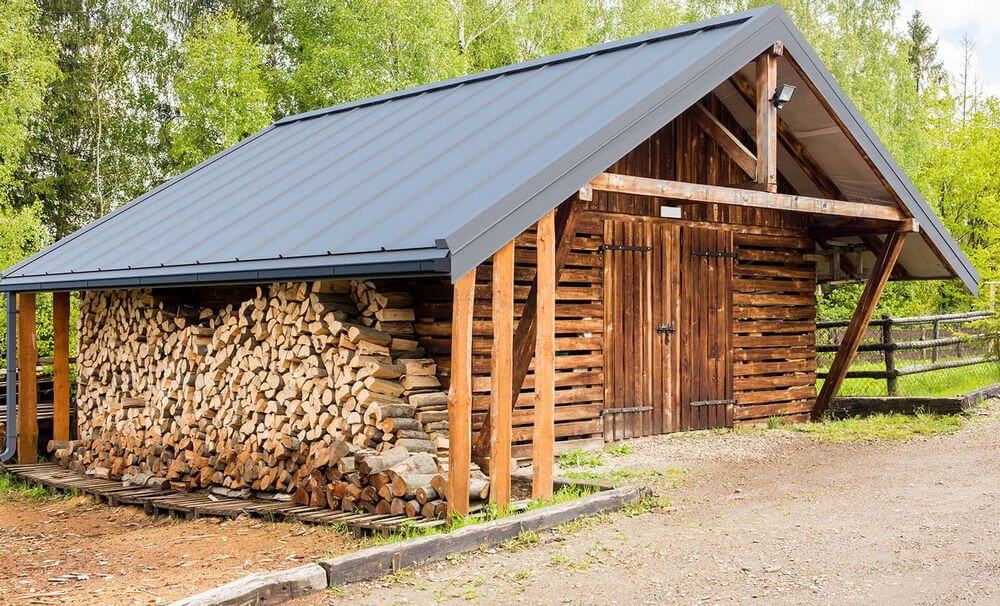
The T35E is one of the taller profiles used on roofs and facades. As the profile height increases, its properties and applications change. When selecting the T35E, the primary considerations should be the structure, the spacing of the supports, and the loads acting on the roofing. It is not advisable to choose a profile based solely on its height—it should be tailored to the specific structural design.
The T50P and higher trapezoidal profiles are used in larger structures, including industrial facilities and warehouses. In such applications, construction profiles are of particular importance. The profile height, thickness, and support spacing all affect how the entire roofing system functions. The choice of material should therefore be based on the specific requirements of the structure.
The product line also includes high-strength construction profiles up to T200, designed for applications that require adequate load-bearing capacity and stiffness.
There is no single profile that is suitable for every application. Before making a choice, it is a good idea to determine:
Only after these parameters have been determined should you proceed to compare specific material options.
When comparing prices, you must always compare the same profile, the same thickness, and the same coating option. For the basic options listed in the table, prices rose by approximately 9% between 2025 and 2026. The difference per square meter ranges from 3.29 PLN to 3.67 PLN. For larger areas, this naturally results in a greater change in the total cost of the material.
The coating is one of the most important factors that affect the price of trapezoidal sheets.
This is the basic option for surface protection, for which the main table comparing prices for 2025 and 2026 is provided.
Aluzinc is an alternative to traditional galvanized steel. The source material indicates that, in the cases analyzed, the price difference compared to galvanized steel is approximately 1.36 PLN/m².
PS is a classic finish for coated sheet metal. In this case , the price difference compared to galvanized sheet metal is approximately 1.89 PLN/m². For a surface area of 100 m², this amounts to a difference of just under 200 PLN.
More advanced solutions include, among others, TOPMAT and PURMAT. The reference material lists prices of approximately 80 PLN/m² and Warranty periods ranging—depending on the specific solution—from 30 to 50 years.
However, this does not mean that the most expensive coating will be suitable for every building. The choice should be based on the conditions of use, expected durability, aesthetics, and budget.
Thicker steel means more material is used to produce the sheet, and thus usually a higher price.
For example, for the T18 with a PS coating:
[
Variant | Gross price /m² |
T18, 0,5 mm | 42,99 zł |
T18, 0,7 mm | 67,63 zł |
The difference is 24.64 PLN per square meter.
For the T35E:
Variant | Gross price /m² |
T18, 0,5 mm | 42,99 zł |
T18, 0,7 mm | 67,63 zł |
The difference is 27.79 zł/m².
This shows just how much thickness can affect the price. However, you should not choose it based solely on cost. The right option should be suited to the structure and the expected loads.
Instead of just asking:
“How much does a meter of trapezoidal sheets cost?”
It’s better to ask:
“How much does a specific product cost, and what do I get for that price?”
When comparing offers, it’s a good idea to check the following at the same time:
Only such a comparison reveals the actual difference between the offers.
At first glance, two products may look very similar. However, differences may exist in the thickness of the steel, the type of protection, the coating, its specifications, or the scope of the Warranty. Therefore, the appearance of the sheet alone is not sufficient to evaluate the product. When comparing offers, it’s best to compare products with similar specifications, rather than just the prices listed next to their names.
Sheet metal is one of the materials needed to install a roof.
Depending on the project, the following may also be needed:
The shape of the roof also affects the final cost. A single-slope roof will require a different layout of roofing material than a multi-slope roof with numerous angles and details.
That is why a comprehensive valuation prepared specifically for a given investment is the most reliable.
Price is important, but it shouldn’t overshadow the technical specifications. When choosing trapezoidal sheets, it’s also worth considering the assembly method and the preparation of the entire roofing system.
Among other things, the following are important:
Metal roofing also reacts to temperature changes. It heats up, expands, and contracts as the temperature drops. This is a natural phenomenon that must be taken into account when designing and installing the roofing. The conditions under which the roof operates are also important. Humidity, sunlight exposure, air pollution, and the building’s surroundings can all influence the selection of materials and coatings. That is why it is important to view roof coverings as a whole:
selection of the profile + appropriate thickness + proper coating + correct assembly.
The price per square meter of trapezoidal sheets is a good starting point for planning an investment, but it is not the only factor to consider. The most important thing is to correctly match the profile, thickness, and coating to the specific application. Only after determining these parameters can prices be reliably compared. When analyzing quotes, it’s also worth paying attention to the effective width, the amount of material needed, and the scope of the entire quote.
The best deal isn’t necessarily the one with the lowest price per square meter. What matters most is what you get for that price and whether the chosen material meets the requirements of the specific project.
If you already know the profile and specifications of the material, the next step is to prepare a quote for a specific roof or facade. Find the nearest Blachy Pruszyński Company retail location and ask about available profiles, coating types, and a quote for the material needed for your project.
Where can I buy trapezoidal sheets? – Network of retail locations
The profile must be selected based on the application and structural parameters. The requirements will differ for a house or garage roof, a building facade, and a warehouse or large industrial facility. Factors such as the spacing of the supports, anticipated loads, and the building’s intended use are all important.
There is no single thickness that is suitable for all applications. The choice depends on the profile, design, and anticipated loads. Greater thickness means greater material weight and, typically, a higher price; therefore, there is no need to choose the thickest sheet metal available without a technical justification.
The choice of coating depends on the expected durability, appearance, and conditions under which the coating will be used. Both basic protective options and more advanced coatings with enhanced performance are available. When making your selection, it’s a good idea to compare their properties and Warranty terms.
The total width refers to the full dimension of the sheet, while the effective width accounts for the overlap created during Assembly. It is the effective width that determines the actual coverage area. For example, for T18, the total width is 1,173 mm, and the effective width is 1,128 mm.
Before making a purchase, it’s important to check, first and foremost, the profile, steel thickness, type of coating, usable width, and length of the sheets. It’s also important to determine the amount of material needed for a specific roof section and to review the Warranty terms. Only after compiling these parameters should you compare prices.
Znalezienie rzetelnej ekipy budowlanej jest sporym wyzwaniem. Warto za poszukiwania zabrać się minimum 2-3 miesiące przed […]
Read moreJak czyścić blachodachówkę Blachodachówka na dachach polskich domów jest spotykana najczęściej. Inwestorzy doceniają jej wysoką jakość, […]
Read moreWymiana starego pokrycia dachowego – na co warto zwrócić uwagę? Wymiana starego pokrycia to nie tylko […]
Read more