Safety standards in modern buildings, particularly large-scale structures such as shopping centers, warehouses, and industrial facilities, are a key criterion for obtaining building and occupancy permits. One of the greatest hazards is fire, along with the accompanying smoke and toxic gases. One way to limit their uncontrolled spread is to install smoke curtains, which, in accordance with the PN EN 12101-1 standard, can contain smoke and gases with temperatures exceeding 600°C, but are not intended to perform the same function as fire barriers.
In addition to burns, fire-related gases are the most common cause of fire-related deaths; therefore, designing and installing smoke curtains to limit the spread of smoke is a critical task in the construction of modern, large-area buildings. Smoke curtains are an essential component of a building’s gravity-based smoke exhaust system. According to the PN-EN 12101-1:2007 standard, a smoke curtain is defined as any type of barrier that restricts the movement of hot fire gases mixed with smoke. Made of material with enhanced heat and fire resistance, such as made of non-flammable fabric, galvanized sheet metal, or coated sheet metal. We generally distinguish between two types of smoke curtains: flexible smoke curtains (roll-up curtains) and fixed smoke curtains.
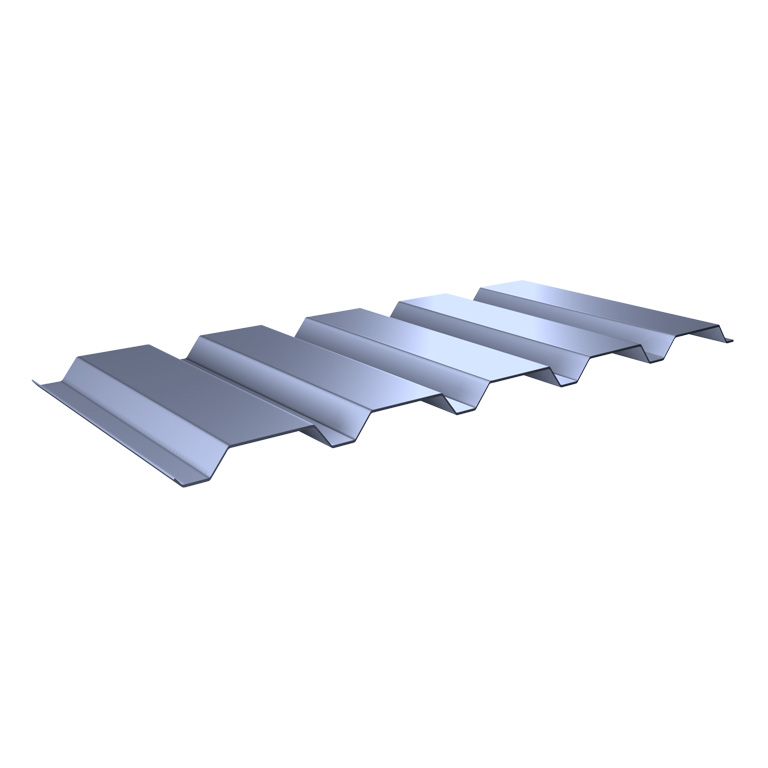
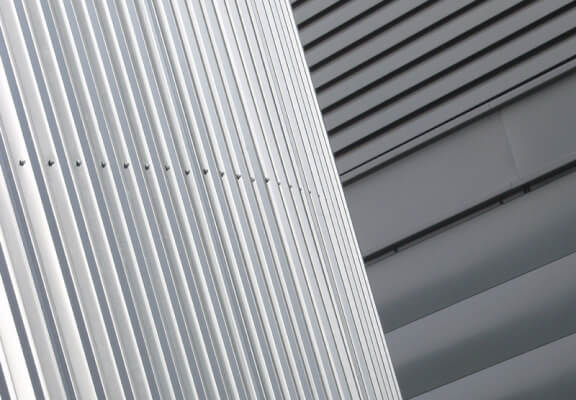
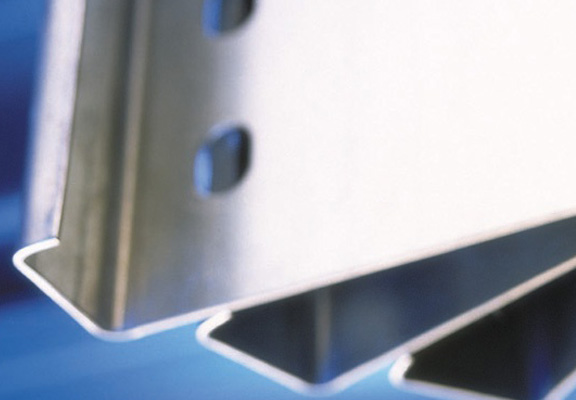
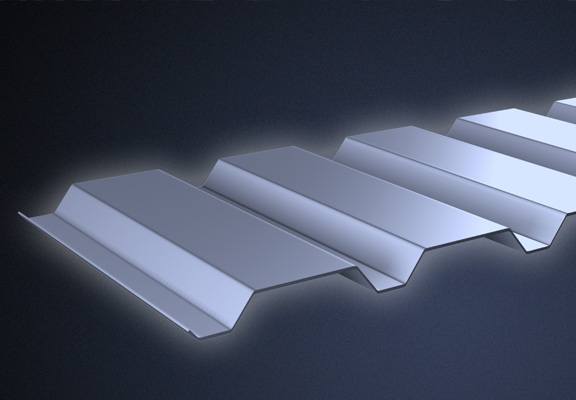
Blachy Pruszyński Company offers fixed smoke curtains (T35KD) that create smoke compartments in accordance with the standards adopted for design. Our curtains are made of 0.60 mm thick sheet metal, and the minimum steel grade used in their production is S280GD. To enhance the aesthetics of interior spaces, the sheet metal used for the smoke curtains is coated on both sides with an organic polyester (SP) coating with a maximum thickness of 35 µm and powder-coated in any color from the RAL palette. Their maximum height is 450 cm.
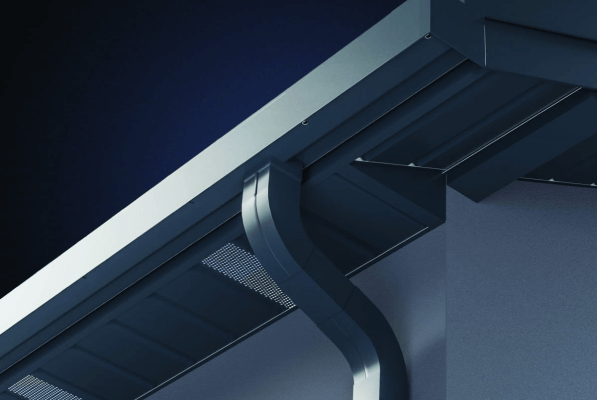
We also offer flashings designed to fit T35 KD curtain walls, made from the same high-quality sheet metal as the curtain wall itself. Our standard offering includes 4 types of flashings:
Smoke curtains are primarily used in large-scale commercial facilities due to their fundamental role in preventing the uncontrolled spread of fire. These types of buildings are particularly vulnerable to heavy smoke during a fire, which not only hinders rapid evacuation but also impedes effective firefighting efforts. It is therefore crucial to create separate smoke compartments and then direct the smoke to appropriately designed smoke exhaust systems.


The role of a smoke curtain is not to stop the spread of fire; that is the responsibility of fire barriers. Smoke curtains support a building’s fire safety system and are an integral part of it, serving to prevent the uncontrolled spread of smoke, that is:
It is worth remembering that some large-scale commercial buildings are used as storage facilities, and the products stored there may emit various types of smoke when burned—smoke that is toxic and hazardous to humans. That is why it is so important to designate smoke accumulation zones and create smoke-free zones.
Both smoke curtains and fire doors or gates are part of a building’s fire protection system; however, their functions and modes of operation differ. One of the main functions of fire doors is to cut off the oxygen supply to a room, which limits the spread of fire, while smoke curtains are responsible for containing and venting smoke outside the building. Fire doors are manufactured from steel, galvanized sheet metal, or stainless steel, and their operation is based on a special technology that joins the door leaf sheets by bending and riveting. Since they serve as a visible element of interior design—such as office doors, elevator doors, garage doors, or entrances to office building floors—developers pay greater attention to their aesthetic appearance and color, ensuring they match the style and character of the building. Polish building code requires that fire doors be installed in passageways between a garage and a multi-family building. In the case of single-family homes, the decision to install such doors rests with the developer or owner.
Fixed and retractable smoke curtains are available on the market; they deploy from a rolled-up position to a fully extended position upon receiving the appropriate signal. Smoke curtains can be made of high-quality sheet metal or non-flammable fiberglass fabric coated on both sides with polyurethane, and their selection may be based on architectural, technical, or aesthetic considerations. Curtains made of fabric have adequate resistance to smoke permeability and high temperatures, and their lower edge is weighted with a galvanized steel ballast strip. This type of solution is available as a fixed curtain or a curtain with automatic control via a control panel. The fabric is wound onto a roll shaft enclosed in a steel sheet housing, so in the event of a fire, the control systems lower the curtain to a specific, predetermined height above the floor. In this way, the curtain—or several interconnected curtains—create a space where smoke accumulates. Smoke curtains can also operate in a gravity-fed, non-electric version—in the event of a fire alarm, the electric latch is released and the curtain automatically unrolls from the shaft under its own weight to a preset level above the floor. Permanent smoke curtains are permanently installed in their fire-response position (such as those manufactured by the Blachy Pruszyński Company). Building structural elements may be used as static smoke curtains and supplemented or replaced by other fixed or movable smoke curtains, provided that the requirements of the PN-EN 12101-1 standard are met. High-quality sheet metal, fiberglass fabrics, glass panes, fire-resistant panels, or mineral wool can serve as fixed smoke curtains. The advantage of fixed smoke curtains is the ease of creating openings for other systems, and in the case of automatic smoke curtains, the ability to match the interior aesthetics, as the cover strips can be manufactured in any color from the RAL palette. Some smoke curtains can be assembled in a modular fashion, which allows for the creation of barriers of unlimited dimensions.
The facility designer is responsible for selecting smoke curtains for a specific application. The selection of smoke curtains may be based on architectural, technical, or aesthetic considerations. Movable smoke curtains are most commonly used in shopping centers and entertainment complexes, where the goal is to maintain an open atrium or shopping arcade. They are designed to limit the spread of smoke in the space above the ceiling or under the roof in facilities where a fixed smoke curtain cannot be installed.
The most common mistake is choosing the wrong smoke curtain. It is important to select a curtain with the appropriate width and height, as well as the appropriate fire resistance rating, depending on building code requirements and the nature of the room. Incorrect placement of the curtain is also a common mistake. Smoke curtains should be installed in locations where they are intended to prevent the spread of smoke and fire. It is important to position the curtain at an appropriate distance from other equipment, such as fans or air conditioners, so as not to interfere with their operation.
That is why it is so important to entrust the design work to a specialist. The designer must design smoke curtains suitable for the conditions prevailing in a given facility (temperature during a fire, rate of temperature rise, etc.) and specify the parameters regarding the temperature the smoke curtain material must withstand (Class D or DH) as well as the duration for which the curtain must maintain its smoke barrier at a given temperature.
Our company offers a wide range of products that are ideally suited for most construction projects.
The T35KD smoke curtains from the Blachy Pruszyński Company are custom-made to ensure the best selection and fit. Our specialists advise on optimal design solutions and recommend the most suitable products. We therefore invite you to use the contact form.
We encourage you to explore other structural solutions that can be used in industrial facilities currently being designed and constructed.