
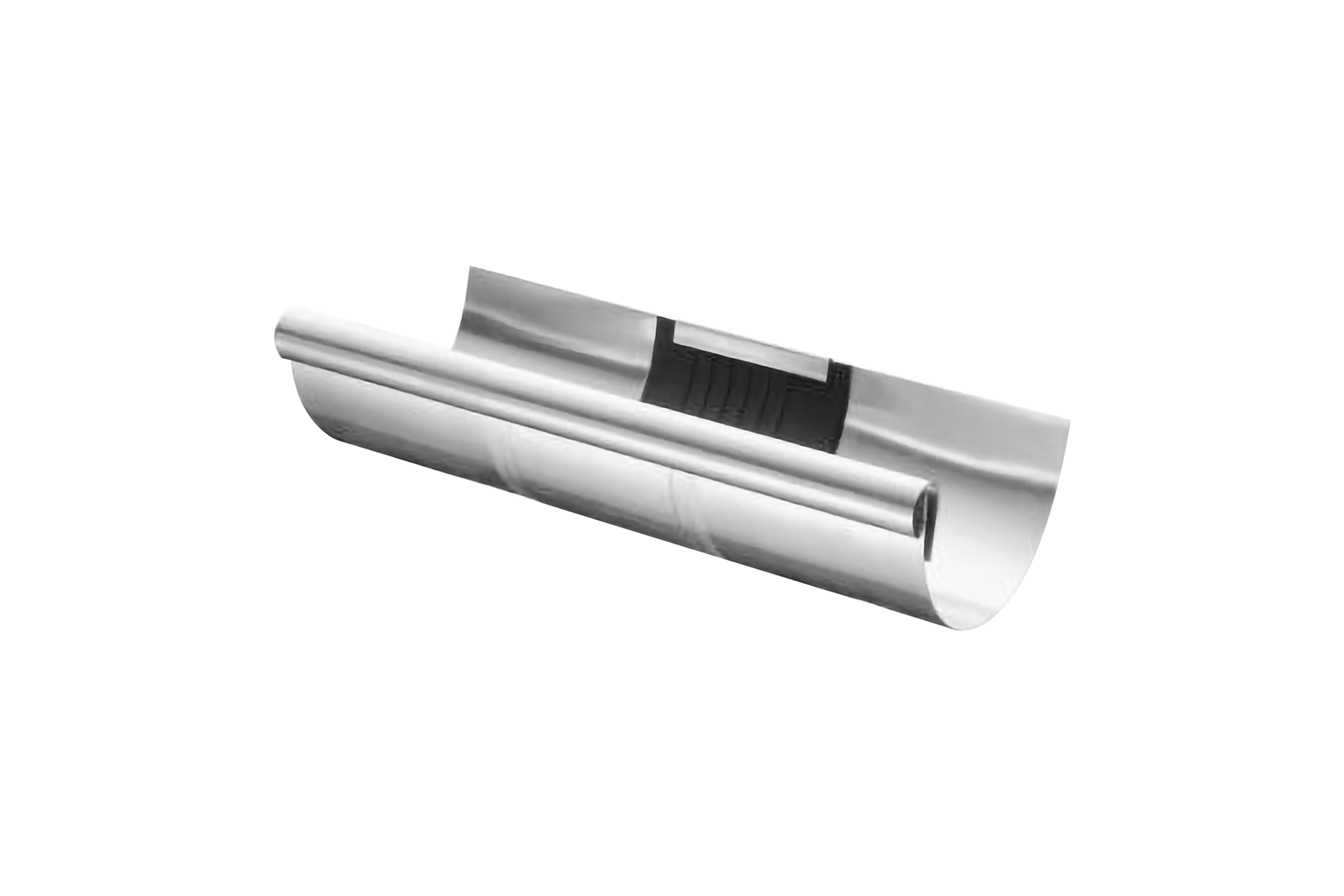
Expansion joint - NIAGARA Titanium-Zinc
Gutters. An expansion joint is a component that allows two gutters to be connected flexibly, preventing damage caused by changes in length due to temperature fluctuations.
Technical specification
Cross-Section and Technical Specifications
The components of the NIAGARA Titanium-Zinc system are manufactured from a top-quality alloy consisting of a precisely defined mixture of steel, titanium, and zinc with an admixture of copper. By using these materials, we can be certain of achieving the highest resistance to weather conditions as well as unique performance characteristics. The expansion joint is made from the same materials as the pipes and gutters. Please check the size availability for NIAGARA-AVAILABILITY
Length
Since gutters expand and contract due to temperature changes, we use an expansion joint to compensate for this phenomenon. The longest continuous section of gutter (permanently joined) without an expansion joint is 15 meters, and in the case of corners or wall-mounted ends, the maximum is 7.5 meters. If these values are exceeded, a compensation joint must be installed between the connected gutter sections.
| Size |
| 125 |
| 150 |
Recommendations
Transport and StorageGutters, pipes, and other system components must be transported in clean, dry, and covered vehicles. They must not get wet during transport and storage, as contact with water can trigger the initial stage of the patination process, characterized by the formation of zinc hydroxide—a white coating on the surface of the material. This phenomenon is a natural process; it does not constitute a material defect, but it is undesirable during storage for aesthetic reasons.
- Short-term storage: On the construction site, gutters, pipes, and other system components should be stored on pallets in their original packaging, under a roof.
- Long-term storage: Rooms used to store zinc-titanium components should be dry and well-ventilated, and the temperature inside them must not fall below 0°C. Stored materials must be protected from moisture and kept separate from active chemicals.
Gutters, pipes, and other system components must be transported in clean, dry, and covered vehicles. They must not get wet during transport and storage, as contact with water can trigger the initial stage of the patination process, characterized by the formation of zinc hydroxide—a white coating on the surface of the material. This phenomenon is a natural process; it does not constitute a material defect, but it is undesirable during storage for aesthetic reasons.
- Short-term storage: On the construction site, gutters, pipes, and other system components should be stored on pallets in their original packaging, under a roof.
- Long-term storage: Rooms used to store zinc-titanium components should be dry and well-ventilated, and the temperature inside them must not fall below 0°C. Stored materials must be protected from moisture and kept separate from active chemicals.
Combining with Other Materials
- COPPER – Components made of different metals must not come into contact with one another if this could lead to contact corrosion or other adverse effects. In the presence of an electrolyte (rainwater, moisture contained in building materials), there is a risk of electrochemical corrosion (formation of galvanic cells). Copper ions in runoff water can contribute to surface corrosion of zinc-titanium sheet metal. Therefore, this sheet metal should not be located below any copper materials used, relative to the direction of water flow. On the other hand, unprotected steel components corrode relatively quickly and can cause rust stains that are difficult to remove.
- BITUMEN ROOFING – When zinc-titanium sheet metal comes into direct contact with water running off bitumen surfaces, an undesirable phenomenon known as bitumen corrosion may occur. This situation occurs when metal drainage systems and flashings are used under roofs covered with bituminous materials, such as roofing felt. A bituminous surface exposed to UV radiation, atmospheric moisture, and chemical compounds in the air emits aggressive, acidic chemical compounds that, when in contact with the sheet metal, can cause zinc corrosion.
- COPPER – Components made of different metals must not come into contact with one another if this could lead to contact corrosion or other adverse effects. In the presence of an electrolyte (rainwater, moisture contained in building materials), there is a risk of electrochemical corrosion (formation of galvanic cells). Copper ions in runoff water can contribute to surface corrosion of zinc-titanium sheet metal. Therefore, this sheet metal should not be located below any copper materials used, relative to the direction of water flow. On the other hand, unprotected steel components corrode relatively quickly and can cause rust stains that are difficult to remove.
- BITUMEN ROOFING – When zinc-titanium sheet metal comes into direct contact with water running off bitumen surfaces, an undesirable phenomenon known as bitumen corrosion may occur. This situation occurs when metal drainage systems and flashings are used under roofs covered with bituminous materials, such as roofing felt. A bituminous surface exposed to UV radiation, atmospheric moisture, and chemical compounds in the air emits aggressive, acidic chemical compounds that, when in contact with the sheet metal, can cause zinc corrosion.
Available colors


The Pruszyński Company guarantees that each individual order will be produced in the same color (shade). However, due to the complexity of the coating processes, slight variations in shade may occur between individual shipments.
Accordingly, liability for color is limited to a single shipment.
Therefore, when reordering sheet metal for a specific batch, please be sure to indicate on the order form or inform your sales representative that this is a follow-up order and to provide a color sample.
To ensure color consistency between sandwich panels and other components, such as flashings, they should be ordered from a single supplier.
Product Description
NIAGARA Titanium-Zinc
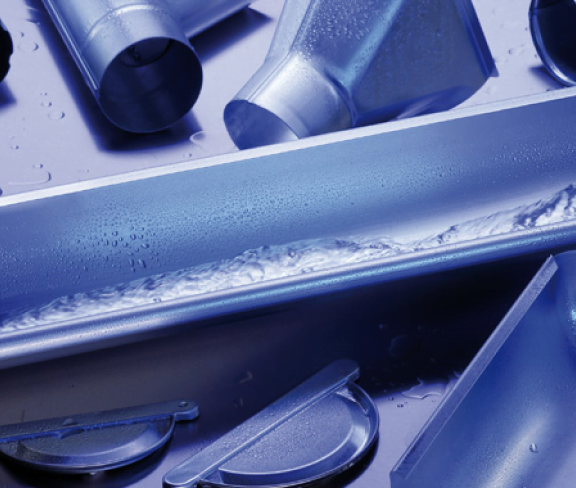
The Titan-zinc Natura gutter system, offered by our company, is a complete and durable gutter system, ideal for both new construction projects and the renovation of older buildings and historic structures, to which it lends a classic, elegant appearance.
Made of raw titanium-zinc in the “Natura” version, the system retains the material’s natural finish, which gives it a subtle charm and timeless character. In the “Patyna” version, it is factory-matte-finished and undergoes a controlled aging process.
Titanium-zinc is a special zinc alloy containing titanium, copper, and aluminum, which ensures high strength and resistance to changing weather conditions. This system is available in six size variants: 110/90, 125/90, 125/100, 150/100, 150/120, and 190/120, allowing it to be adapted to various needs and building types
The Tytan-Cynk Natura system is the perfect combination of aesthetics and functionality, which not only effectively drains water but also highlights the architectural style of any building. The Patina variant, on the other hand, offers a unique, slightly matte, rustic look that pairs perfectly with stylish buildings inspired by traditional forms.
Tags
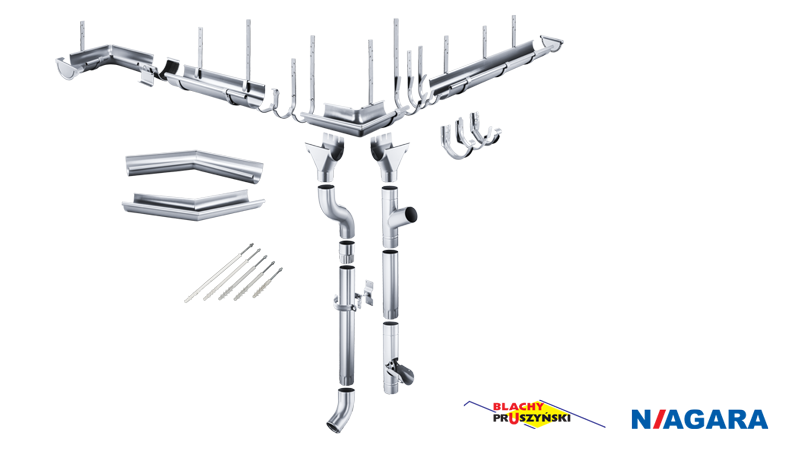
NIAGARA Titanium-Zinc System Components (Configurator)
System configurations
Types of Systems
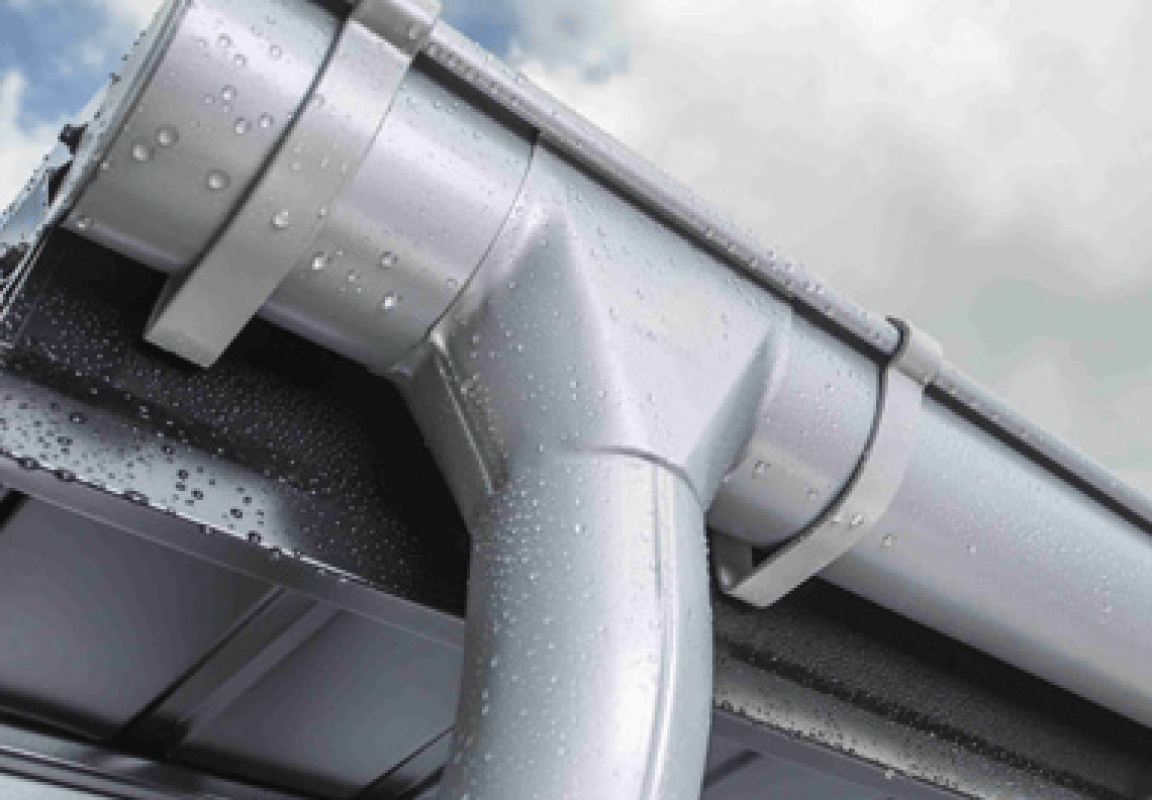
The versatility of NIAGARA steel gutters means they are available in a wide range of configurations, tailored to different types of buildings.
The choice of system depends on the type of building and the roof area. Depending on the roof area, dual-pipe systems can be used to optimize water drainage efficiency. Our product line also includes a wide selection of materials used to manufacture our gutter systems. In particular, the NIAGARA Titanium-Zinc gutter system is available in two variants: Natura and Patina. They share the same functional qualities and technical specifications; the difference lies in their appearance, which results from the use of specific manufacturing processes in each case.

Single-Family Housing

Industrial Construction
Pruszyński Sp. z o.o
Sokołów, 05-806 Komorów
ul. Sokołowska 32b
Tel. (48-22) 738 60 00
Fax (48-22) 738 61 01
Infolinia: 880 222 444